



CDL Medical Exam: Costs, Forms, and Certificates Explained


As a fleet owner, your responsibilities go far beyond keeping trucks on the road. You need to ensure your drivers are safe, certified, and fully compliant with federal regulations. For fleets bringing in new drivers, exploring CDL Schools nearby can also help ensure recruits receive proper training before entering service.
Coordinating CDL medical exams might seem like a small task, but getting it wrong can lead to fines, delayed shipments, and fleet downtime. We will provide facts, realistic cost ranges, and the best tactics for scheduling multiple drivers.
Key Facts:
- A CDL/DOT medical exam is required for commercial drivers to verify physical and mental fitness to operate heavy vehicles safely under FMCSA regulations.
- Exams must be conducted by FMCSA-certified medical examiners listed on the National Registry of Certified Medical Examiners.
- A standard Medical Examiner’s Certificate is typically valid for up to 24 months, though shorter certifications may be issued for monitored health conditions.
- Starting June 2025, DOT medical exam results are required to be submitted electronically to the FMCSA, with data integrated into the driver’s MVR and state licensing systems.
- During the transition period through April 2026, drivers may still carry paper certificates for up to 60 days in certain cases where digital systems are not fully adopted.
- CDL medical exam costs generally range from $75–$150, with additional tests (EKG, labs, vision, hearing) potentially increasing total costs depending on medical requirements.
What Is a CDL/DOT Medical Exam?
A DOT medical exam, often called a DOT physical, is a health check required by the federal government for anyone holding a Commercial Driver’s License. The idea is simple. Heavy trucks are big and heavy for a reason. You want drivers who are physically and mentally capable of handling them safely.
During a typical CDL license medical exam:
- A certified medical examiner checks vital signs, vision, hearing, reflexes, and general health.
- The examiner evaluates any ongoing health issues, such as high blood pressure or diabetes.
- If the driver passes, they get a Medical Examiner's Certificate CDL, typically valid for up to 24 months.
- If a driver has a medical issue that needs follow-up, the certificate may be valid for a shorter period so the condition can be monitored.
You May Also Like: Federal Regulations: Drug and Alcohol Testing in Commercial Trucking
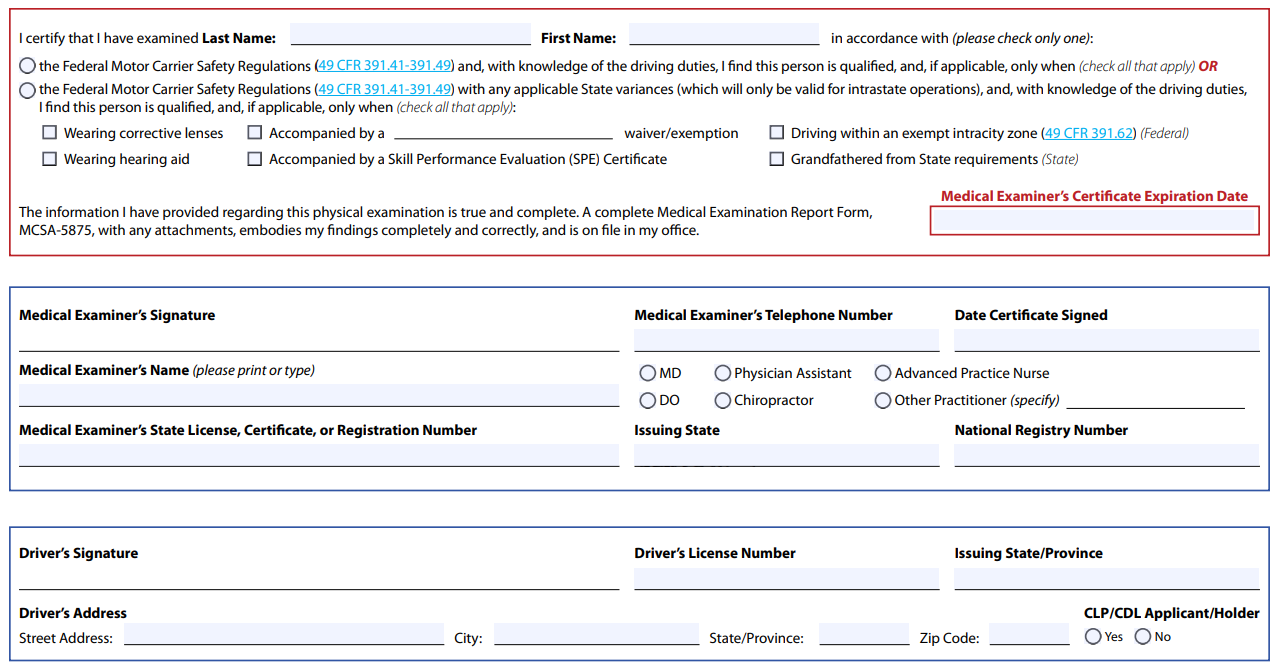
All CDL DOT medical exams for DMV must be conducted by professionals listed on the FMCSA National Registry of Certified Medical Examiners. This ensures the examiner is authorized and trained to issue a commercial driver’s license medical examiner’s certificate.
While the registry confirms authorization, it doesn’t provide all the practical details fleet owners need, such as clinic hours, phone numbers, amenities, or fleet services.
New 2025–2026 Regulatory Landscape
As you know, starting in June 2025, the FMCSA requires DOT medical examination results to be submitted electronically. Examiners must upload results to the FMCSA National Registry no later than the next day. Once submitted, the dot medical exam certificate automatically appears on the driver’s motor vehicle record and is shared with the state licensing agency.
Once submitted, the results automatically appear on the driver’s motor vehicle record (MVR) and are shared with the state licensing agency.
What this means for you:
- In most cases, drivers no longer need to hand-carry paper certificates. The electronic record becomes the official proof of certification.
- Because technology rollouts are not uniform across states, the FMCSA allows drivers to carry a paper CDL medical exam certificate for up to 60 days through April 2026, during the transition to a fully digital system.
- Fleet owners should plan for a future where the CDL health exam is entirely paperless.
With regulatory compliance clarified, the next consideration is cost, as budgeting for exams across your fleet can be challenging.
How Do CDL Medical Exam Costs Break Down in 2026?
Preventing Common Exam Failures
Missed exams or unrecorded CDL medical exam certificates can have serious consequences:
- Drivers may be considered unqualified, putting them out of service until compliance is restored.
- Licenses may be downgraded or temporarily suspended.
- Fleets face fines and regulatory scrutiny.
- Delays in freight movement can cost significant revenue.
In a notable case, thousands of medical certificates were voided because examiners failed to submit results electronically. Fleets had to reschedule exams immediately, causing operational disruptions.
Many exam failures can be avoided with preparation:
- High blood pressure: Encourage drivers to monitor and manage readings before the DOT medical exam.
- Vision or hearing issues: Make sure drivers bring corrective lenses or hearing aids and have up-to-date prescriptions.
- Incomplete medical records: Chronic conditions like diabetes require proper documentation, including logs and physician notes.
Prepared drivers increase the likelihood of obtaining a full 24-month medical examiner's certificate, reducing repeat clinic visits and downtime.
Scheduling and Tracking Exams
Efficient scheduling and tracking can save hours of headaches:
- Set reminders 60 and 30 days before certificate expiration.
- Schedule multiple drivers in the same region to save travel time.
- Use shared dashboards that sync with MVR results after each exam.
This proactive approach transforms CDL DOT medical exam management from a reactive task into a streamlined, predictable process.
Fleet owners can focus on operations instead of paperwork while ensuring all drivers maintain valid CDL medical exam certificates. All these elements tie together to create safer, more reliable fleet operations.
When you connect every piece, you create a fleet management system that is safe, compliant, and ready for the future


