



FMCSA Warning: Stop Buying USDOT & MC Numbers or Risk Losing Your Authority


On March 13, 2026, the Federal Motor Carrier Safety Administration issued a clear message to every trucker and carrier: stop buying, selling, or leasing USDOT numbers and MC authority unless it is part of a legitimate corporate transaction.
After years of ongoing violations, the agency is enforcing stricter oversight and making it clear that these practices will not be tolerated.
Quick Summary:
- On March 13, 2026, the FMCSA warned carriers against buying, selling, or leasing USDOT and MC numbers outside of legitimate corporate transactions.
- USDOT numbers are permanent identifiers tied to a specific legal entity under 49 CFR 390 and cannot be freely transferred between unrelated parties.
- Operating authority violations can trigger deactivation and enforcement actions under 49 U.S.C. 13901–13905 and related safety regulations.
- Improper or undisclosed transfers can lead to civil penalties reaching tens of thousands of dollars depending on severity and circumstances.
- FMCSA requires new ownership reporting via the MCS-150 update within 90 days after mergers, acquisitions, or structural changes.
- MC operating authority transfers require FMCSA approval, and sole proprietors must file an OP-1 out-of-business notice when selling a carrier operation.
Why This Announcement Came at This Exact Time
In recent years, the trucking world has seen an uptick in unauthorized transfers of USDOT and MC numbers. Often, operators with strong safety records transfer credentials to outfits with poor compliance histories.
These arrangements resemble what many in the industry call “chameleon carriers,” where a new or different entity appears compliant while masking past violations and enforcement history. This creates real risk for freight safety, reliability, and overall operational integrity.
You May Also Like: Stricter CDL Checks for Non-Citizens Aim to Protect American Roads
Cases like this show how quickly an operation can be disrupted when ownership changes are not handled exactly the way the regulations require. For example, a Midwest fleet that made a paperwork error during an acquisition saw its trucks sit idle for weeks, resulting in approximately $50,000 in lost revenue before restarting the application process from scratch. Such scenarios highlight the steep financial and operational costs of getting these transfers wrong.
Violations tied to undisclosed affiliations or improper filings can expose carriers to significant civil penalties under existing federal law, which can reach well into the tens of thousands of dollars depending on the circumstances. The agency’s enforcement posture makes clear its intent to hold carriers accountable and prevent repeat violations.
USDOT Numbers: Your Permanent Trucking ID
USDOT numbers, issued under 49 CFR 390*, serve as permanent identifiers tied to a specific legal entity. Misuse can trigger immediate deactivation and revocation of all related operating authority, including safety registrations under 49 U.S.C. 31134 and operating authority under 49 U.S.C. 13901 to 13905. For carriers, this is a serious matter because violations can halt operations quickly.
49 CFR 390 is a foundational set of U.S. federal trucking regulations that defines key terms, scope, and general rules for commercial motor vehicle safety compliance.
For sole proprietors, USDOT numbers are non-transferable. Anyone purchasing a business must obtain a new USDOT number through the FMCSA portal. The process is simple, takes only a few minutes online, and involves minimal cost.
Corporations or LLCs have some flexibility during mergers or acquisitions, but only when proper procedures are followed. New owners must file an MCS-150 update within 90 days to report officers, addresses, and control parties. Missing or late filings can put the operation at risk of enforcement action.
Operating Authority: Fewer Transfers, More Accountability
MC numbers grant interstate for-hire authority and are not commonly transferable. Transfers require FMCSA approval and careful documentation. Sole proprietors selling their business must submit an out-of-business notice on the OP-1 form*.
The OP-1 form is an application used by trucking companies, freight brokers, and freight forwarders to request legal authority to operate in interstate commerce in the United States.
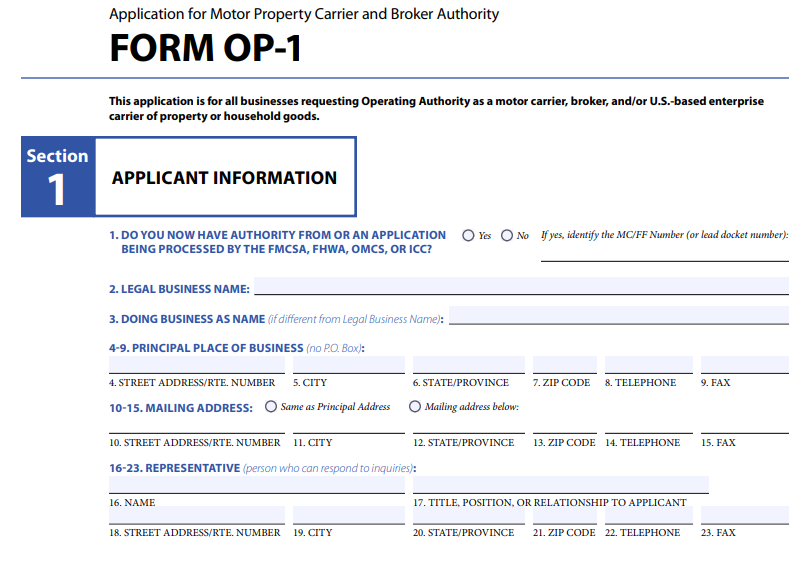
Buyers must either apply for a new authority or request approval for a transfer. Corporations generally update ownership on the MCS-150 form if safety procedures remain consistent after a merger. Any errors in these filings can result in the revocation of authority.
What This All Means for Your Daily Grind
FMCSA’s renewed enforcement is designed to keep unsafe or non-compliant operators off the road. Following these rules helps maintain lower crash rates and ensures carriers operate with proper oversight.
Trucking companies and owner-operators are advised to verify credentials using the Licensing and Insurance database before buying or selling a business. Maintaining legitimate authority helps keep CSA scores low, reduces insurance costs, and ensures brokers continue offering access to reliable loads.
For those considering a business sale or acquisition, consulting a transport attorney who is knowledgeable in 49 CFR regulations is strongly recommended. Spending a few thousand dollars upfront can prevent tens of thousands in potential losses, fines, and operational disruptions. FMCSA is not introducing new rules, but enforcement of existing regulations has become stricter.
Carriers who comply can continue operating safely and profitably without the risk of unexpected regulatory interruptions.


