



Know Your Limits: Speed Rules on USA Highways and Interstates

Speed limits may seem simple, but when it comes to highways in the USA, they can be quite different from one place to another. Some states allow drivers to travel at speeds of up to 85 miles per hour. Others keep limits much lower, especially in cities.
Here, we will explain the speed limit on American highways, including rural and urban roads, as well as interstate highways, and address common questions and myths.
Key Facts:
- Maximum posted speed limits reach up to 85 mph in limited rural sections of Texas
- Typical interstate speeds range from 55 mph (urban zones) to 80 mph (rural Western states)
- Minimum speeds on interstates are commonly 40–50 mph where posted
- Interstate speeds vary significantly even on the same highway (e.g., I-80 or I-95)
- Heavy enforcement zones often reduce speeds near cities, construction, and congestion
- Speed limits are set entirely by state law and local transportation authorities
What Is the Speed Limit For Trucks on US Highways?
In the United States, speed limits are set by each state. That means the speed limit on highways can vary depending on where you drive. It also depends on the type of road and the kind of vehicle.
Some states allow higher speed limits on rural interstate highways to help drivers cover long distances faster, while others reduce speeds near cities or construction zones to keep everyone safe.
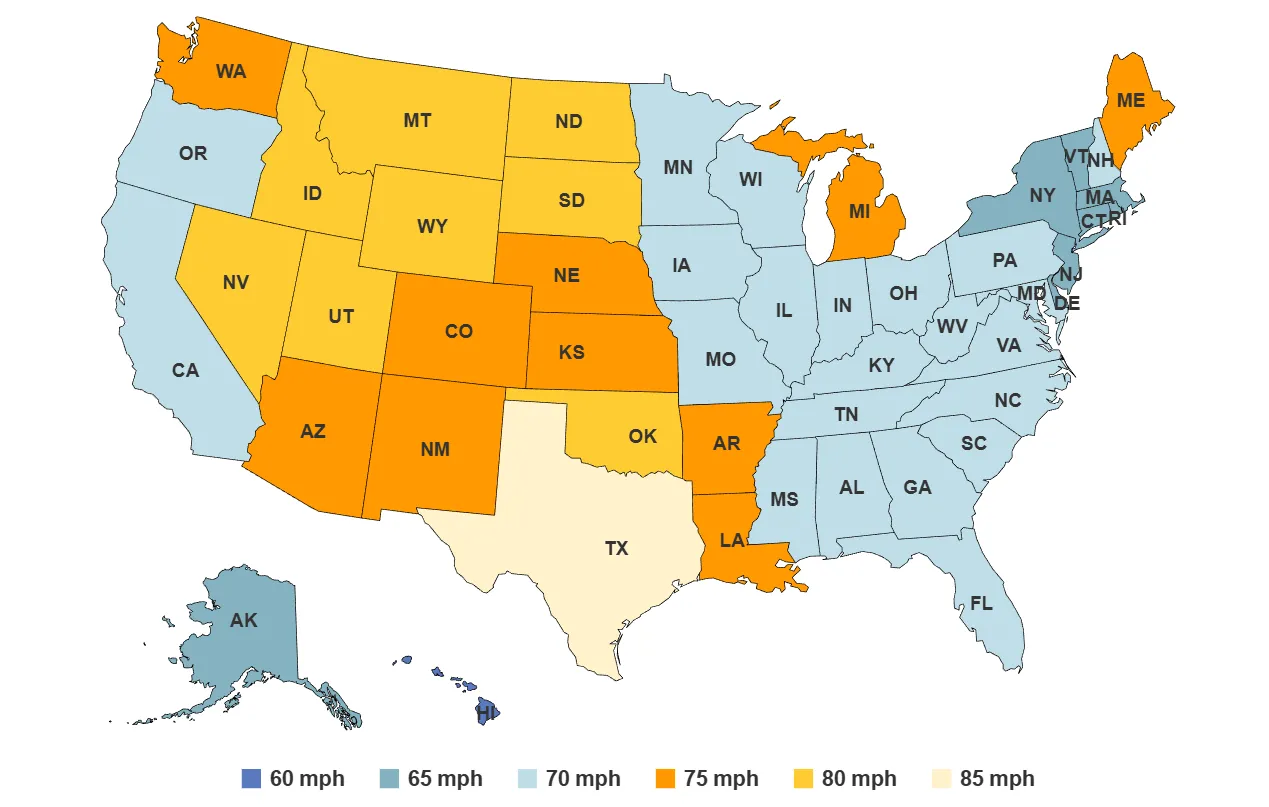
To help you understand how the highway speed limit in the USA varies, here’s a chart showing the maximum limits by state. Keep it handy if you travel across state lines often.
You May Also Like: Top Deadly Highways in the US Every Trucker Must Know
Now, let's talk about the speed limits you'll probably see on the big interstate highways.
Interstate Speed Limits on Major Routes
When hitting the interstate, speed limits aren’t one-size-fits-all. They can change depending on where you are, the type of area, and traffic conditions.
Here are some of the busiest interstate highways across the country and what speed limits you can expect on each:
- Interstate 5 (I-5) on the West Coast often limits speeds to 65 to 70 mph in California due to heavy traffic and urban sprawl.
- Interstate 10 (I-10) in Texas shifts between 70 and 75 mph depending on the segment, balancing traffic flow and safety.
- Interstate 15 (I-15) runs from California to Montana, with speed limits that can reach 75 mph in rural sections.
- Interstate 35 (I-35), a major north-south route through the central U.S., has speed limits generally between 65 and 75 mph, depending on the state.
- Interstate 40 (I-40) runs from California to North Carolina with speed limits generally between 65 and 75 mph, depending on the state and local conditions.
- Interstate 70 (I-70) stretches from Utah to Maryland, where speed limits commonly range from 65 to 75 mph, adapting to varying terrain and urban areas.
- Interstate 80 (I-80) stretches from the East to the West Coast and usually allows speeds between 65 and 80 mph. States like Nebraska and Wyoming permit higher speeds on their long, open stretches to help drivers cover distance efficiently.
- Interstate 90 (I-90) crosses the northern U.S., with rural sections in South Dakota allowing speeds up to 80 mph, making travel through less populated areas faster.
- Interstate 94 (I-94) connects Montana to Michigan, with speed limits typically around 65 to 70 mph, shifting based on traffic and road conditions.
- Interstate 95 (I-95) runs along the East Coast, with speed limits ranging from 55 mph in congested cities to 70 mph in rural areas. This variation reflects how much speed depends on your surroundings.
When you hit the interstate, speed limits aren’t the same everywhere. They shift depending on whether you’re cruising through busy cities or open countryside. Being aware of these changes keeps you safe and helps you avoid surprises from tickets.
What Are the Minimum Speed Limits on US Interstates?
Minimum speed limits on U.S. interstates usually sit around 40 to 50 mph, depending on the state and the road. They are not really about forcing people to drive fast. They exist because highways only work properly when traffic keeps moving in a steady rhythm.
On an open interstate, everything is built around flow. The moment one vehicle is moving much slower than everyone else, you can feel the change immediately. Even a gap of 10 to 20 mph is enough to throw things off. Cars behind start stacking up, people start braking earlier than they should, and lane changes become more frequent and less predictable.
That is why lane behavior matters just as much as speed itself. Highways are basically organized movement systems. The right lane carries slower, steady traffic. The left lane handles passing and faster flow. When that structure breaks, everything becomes harder to read and more stressful for everyone involved.
If you spend enough time driving interstates, you start noticing a pattern. When traffic is healthy, most vehicles naturally sit within a 10–15 mph window of each other. It feels calm, almost effortless. But once speeds start spreading out too far, the road changes character.
With that in mind, let’s clear up some common myths and share the facts about speed limits that every driver should have on their radar.
Myths and Facts About Speed Limits in 2026
Speed limits in the U.S. are one of those things everyone “knows,” but very few people actually understand in full context. Most confusion comes from how normal driving habits slowly turn into assumptions about what the rules must be. In reality, speed limits are less about tradition and more about how roads behave under pressure.
The key idea that often gets missed is this: highways are not just about individual speed, they are about group behavior. Once you see traffic as a moving system instead of separate cars, a lot of these myths start to fall apart.
Below is a breakdown of common myths compared with what traffic data and enforcement practice actually show.
What sits behind all of this is something most drivers feel but rarely put into words. Highways only really work when traffic moves in a predictable rhythm. Not perfectly identical speeds, but close enough that nobody is constantly reacting to surprises from the next lane over.
That is also why speed limits are not just “maximum numbers.” They act more like a stability range. Road engineers design highways so that, under normal conditions, most drivers naturally settle into a similar band of speeds. When traffic stays inside that band, everything feels steady and controlled. When speeds spread too far apart, the road starts to feel messy and reactive, even if nobody is doing anything extreme on their own.
This is where both extremes matter. Driving too fast reduces the time everyone has to react, especially for the cars behind. Driving significantly slower than the flow creates a different kind of risk, because it forces constant adjustments, lane changes, and braking that ripple through traffic like a chain reaction. The safest driving environment is usually the one where speed differences stay small enough that nobody has to constantly compensate for someone else.
Speed limits themselves are also not fixed conditions in the real world. They can change quickly based on weather, construction, or traffic incidents. That’s why it’s smart to check current road conditions before your trip. Always pay attention to signs and be ready to slow down or speed up, and remember to watch for interstate road cameras.
Stay informed, drive smart, and respect speed limits wherever you are. Check your route ahead of time, keep an eye on signs, and enjoy the journey safely!
Frequently Asked Questions
What is the maximum speed limit in the US?
The highest posted speed limit in the United States is 85 mph. It exists on a limited section of State Highway 130 in Texas. Most rural interstate highways in western states are posted between 75 and 80 mph.
What state has no speed limit?
No U.S. state currently has no speed limit. Every state has posted or statutory speed limits. Montana was the last state to use a “reasonable and prudent” daytime speed rule on some highways, but that ended years ago.
Is there a 100 mph speed limit in Texas?
No, Texas does not have a 100 mph speed limit. The highest legal speed limit in Texas is 85 mph on parts of State Highway 130. No public road in the United States has a posted speed limit of 100 mph.
Do truck speed limits differ from car speed limits?
Yes, in some states truck speed limits are lower than passenger vehicle speed limits. For example, trucks are generally limited to 55 mph in California, even when cars can legally travel faster. In other states, trucks and passenger vehicles follow the same posted speed limits. Truck drivers should always watch for signs because limits can vary by state and highway type.


