



What Causes Trailer Sway and How to Keep It Under Control

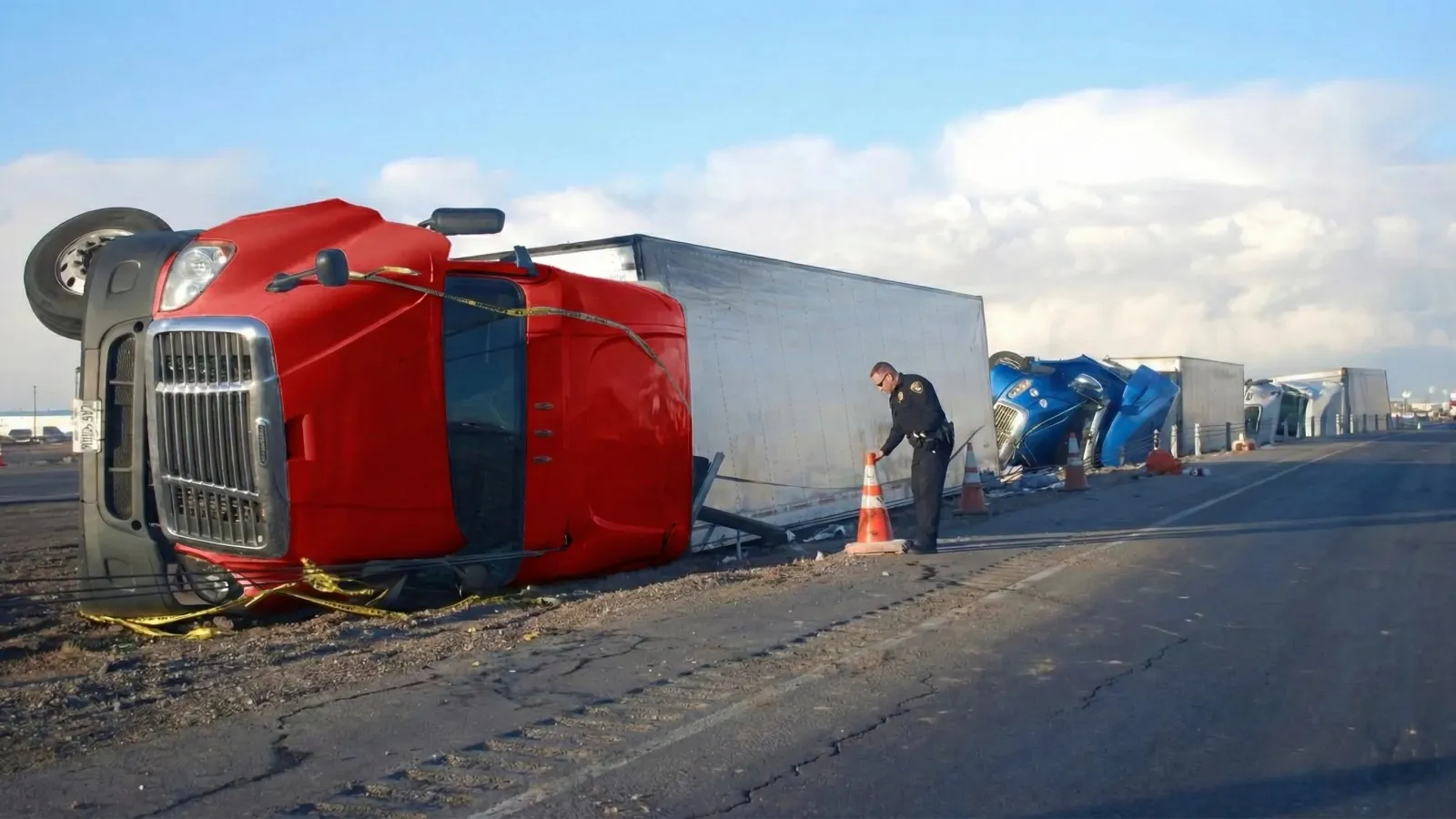
Fishtailing happens when a trailer loses stability and begins moving side to side, usually because of poor weight distribution, low tongue weight, high speeds, or sudden wind and road forces. Keeping more weight toward the front of the trailer, maintaining proper tire pressure, and slowing down in difficult conditions are the main ways drivers prevent sway from getting out of control.
The dangerous part is that trailer sway rarely starts as a major event. Most drivers first notice a small pull, light movement, or slight fishtail that seems easy to ignore before the trailer gradually becomes harder to control.
Here’s what towing and safety experts consistently agree on, explained in plain language and backed by what actually happens on the road.
Key Facts:
- Trailer sway (fishtailing) is a side-to-side instability that can escalate rapidly at highway speeds.
- Light or rear-heavy loads reduce tongue weight, increasing the likelihood of sway.
- Wind, passing trucks, and road irregularities are common triggers of lateral trailer movement.
- Empty trailers are more unstable due to reduced load, lower tire grip, and weaker damping.
- Higher speeds increase aerodynamic forces and reduce the time available for the trailer to stabilize.
- Proper tongue weight, forward-biased loading, and correct tire pressure are key stability factors.
What Trailer Sway Really Is
Trailer sway is a side-to-side instability that begins when the trailer stops calmly following the tow vehicle and starts reacting on its own. At first, it feels like a light movement in the wheel or seat. If conditions are wrong, that movement builds into full fishtailing before you have much time to think about it.
Mechanically, the trailer acts like a weight hanging behind the hitch. When the load is balanced right, the hitch and tires naturally pull the trailer back into line after small disturbances. When the balance is off, those same disturbances push the trailer farther out instead of settling it down.
Put simply, the hitch loses leverage.
If the trailer’s center of mass sits too far toward the rear, there is not enough downward force at the hitch to keep everything pointed straight. Light tongue weight makes this worse. The trailer starts to pivot easily, and once it starts swinging, it tends to keep swinging.
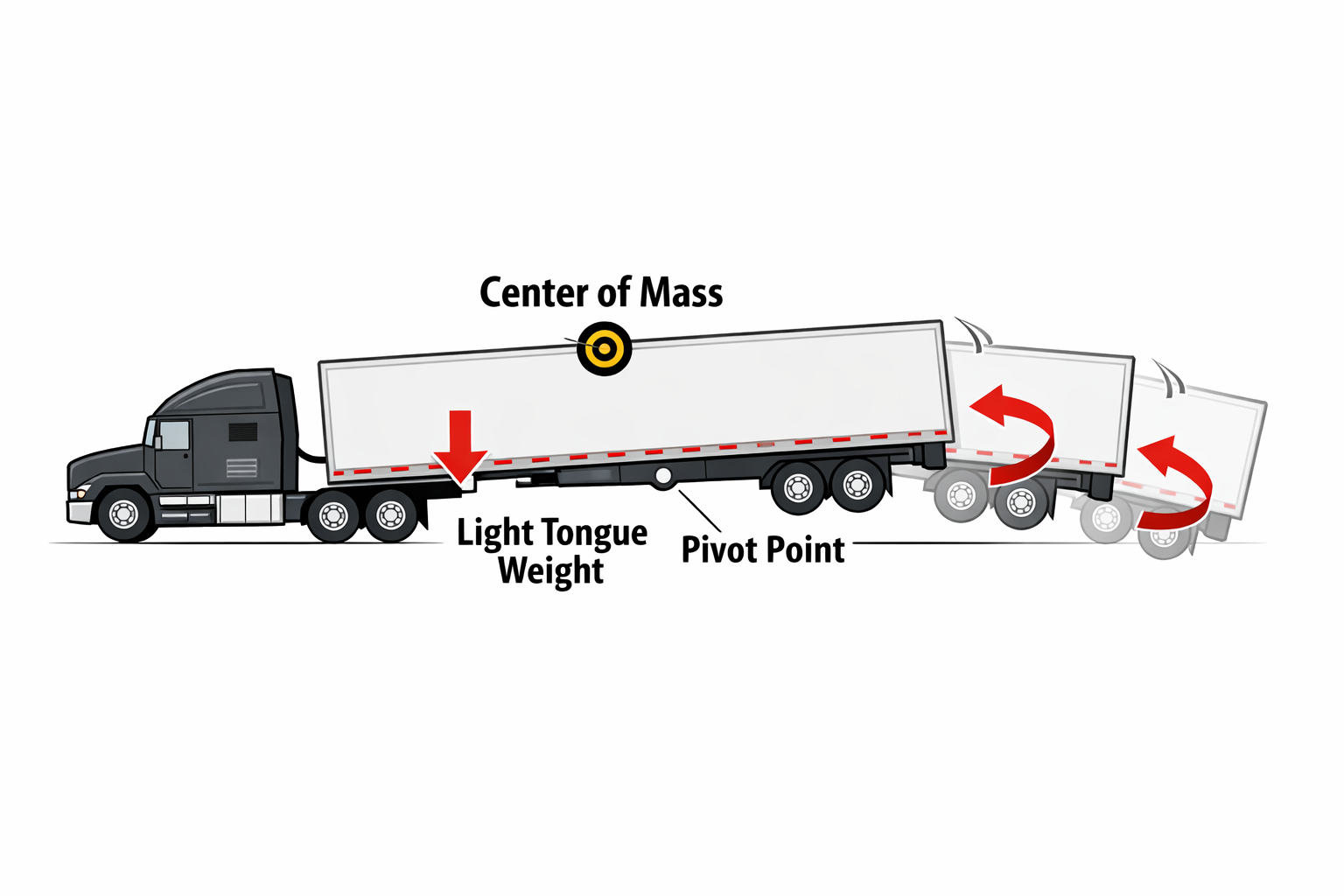
Most sway events start with something minor. A gust of wind. A dip in the road. A semi is passing too close at speed. On a well-set trailer, those forces get absorbed and forgotten. On a poorly balanced one, they stack up.
As the trailer moves sideways, its tires load unevenly. That uneven grip feeds force back through the hitch and into the tow vehicle. The next swing is a little bigger. Most drivers don’t feel this happening in steps. They just feel the rig getting looser with every oscillation.
Instead of calming down, the motion builds.
Speed is what turns this from uncomfortable into dangerous. The faster you go, the harder the wind pushes on the trailer and the less time the system has to recover. That’s why a setup that feels mostly fine at 50 mph can suddenly feel out of control at highway speed. Almost everyone who’s experienced sway thought everything was fine just moments earlier.
Proper tongue weight and forward-biased loading give the hitch something to work with. They add resistance to unwanted motion and help the trailer straighten itself after small movements. Empty trailers and rear-heavy loads do the opposite. They take that resistance away and let the sway grow.
The key thing to understand is this. Trailer sway is not bad luck, and it is rarely caused by one single mistake. It’s a chain reaction that starts with balance, gets amplified by speed, and ends when the trailer has more influence than the tow vehicle.
Get the balance right and slow things down when conditions call for it, and the problem usually never shows up in the first place.
What Causes Trailer Sway
Most trailers don’t start swaying because of one obvious error. It usually comes from several small factors lining up at the wrong moment.
A lightly loaded or rear-heavy trailer already has reduced stability. Add highway speed, a crosswind, or a passing truck, and the margin for error disappears. The trailer gets pushed sideways just enough to start a yaw movement. If the setup lacks damping, that movement doesn’t fade. It comes back stronger.
Wind is a major trigger, especially for enclosed or tall trailers. Side force from the wind doesn’t act at ground level. It hits higher up on the trailer body, creating a twisting force around the axle. The taller and flatter the sides, the more leverage the wind has.
You May Also Like: What Wind Speed Is Dangerous for Semi-Trucks?
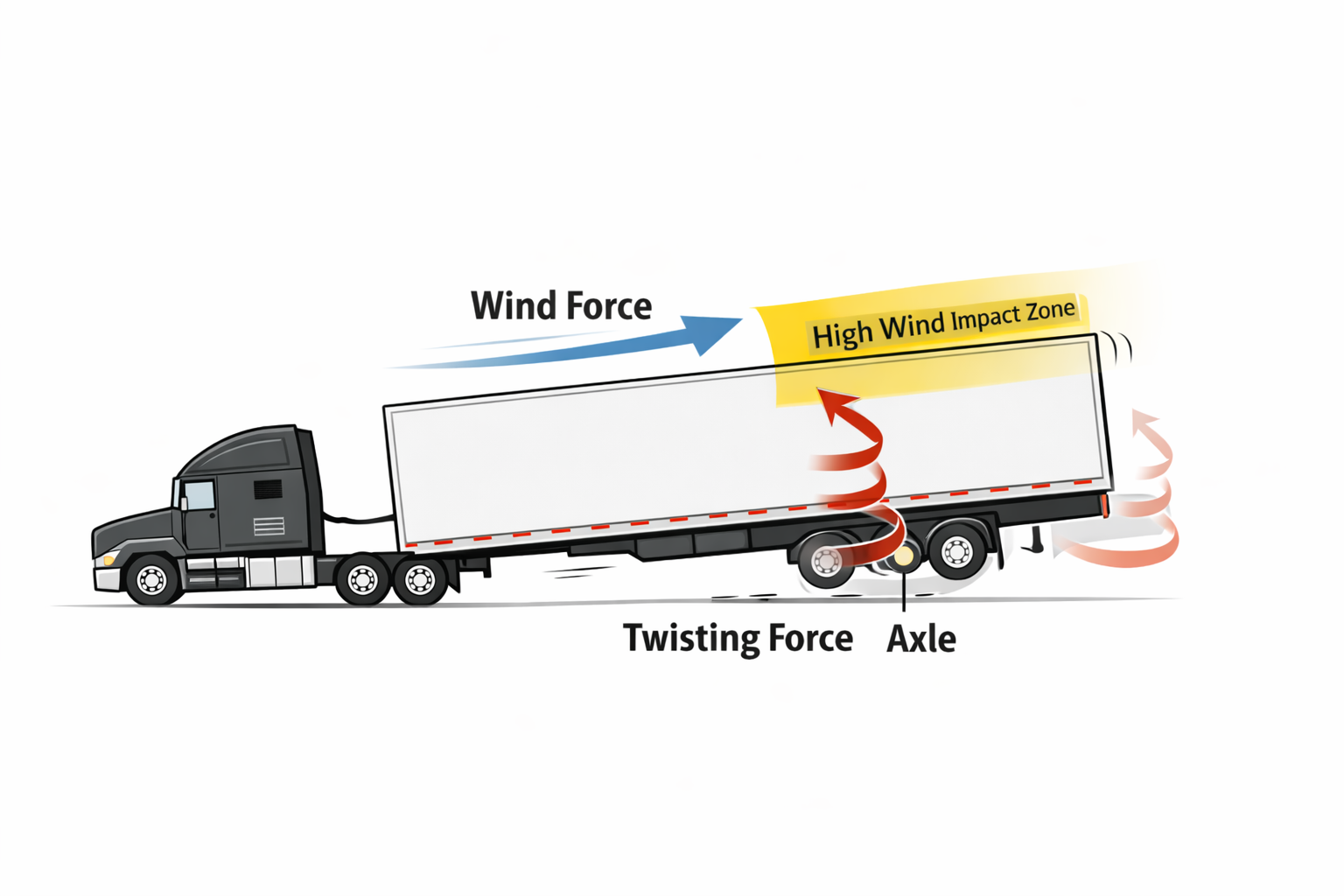
Road inputs matter too. Expansion joints, ruts, uneven pavement, and sudden steering corrections can all introduce lateral forces. On a stable setup, the suspension and tires absorb those inputs. On an unstable one, they turn into sway.
That’s also why sway can appear suddenly after miles of smooth driving. Conditions change. Speed creeps up. The wind shifts angle. The system crosses a stability line, and the motion starts.
Why Does the Trailer Sway When Empty?
Empty trailers are deceptive. They feel light and easy to pull, but mechanically, they are often less stable.
With little cargo weight, the tongue weight drops below the ideal range. Tire contact patches carry less load, which reduces lateral grip. Suspension components sit higher in their travel, limiting how much movement they can absorb. All of this makes the trailer quicker to react and slower to settle down.
Car dollies are a classic example. When empty, most of their weight sits close to or behind the axle. There is very little tongue weight and almost no margin for error. At speed, even mild wind can start sway.
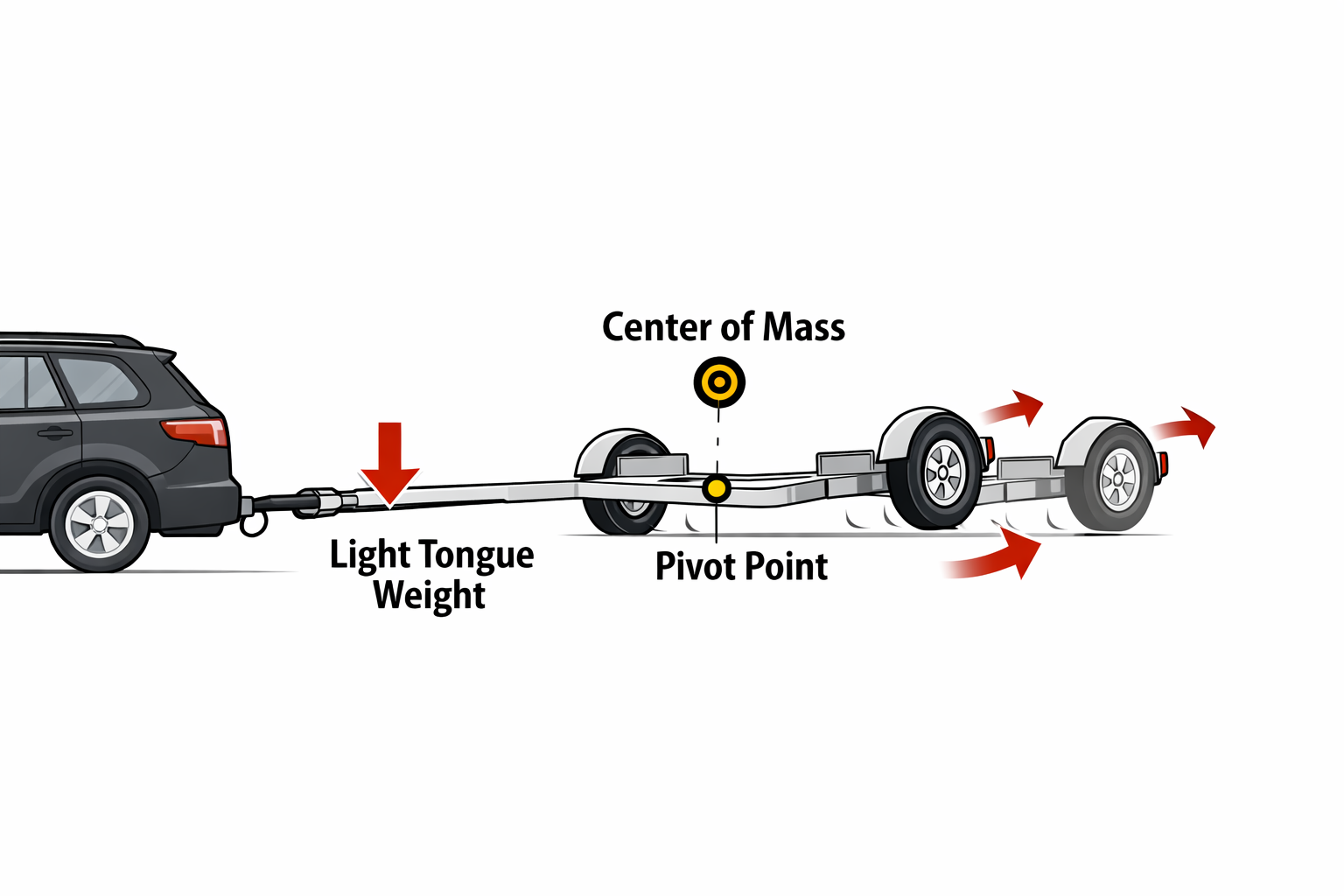
That’s why experienced drivers slow down with empty trailers, even when everything feels fine at first.
Why Does the Trailer Sway at High Speeds?
As speed increases, aerodynamic forces rise sharply and reaction time shrinks. The trailer experiences stronger side loads and cycles through sway motions more quickly. Each swing has less time to settle before the next one begins.
You May Also Like: Truck Troubles? The Essential Guide for Every Driver
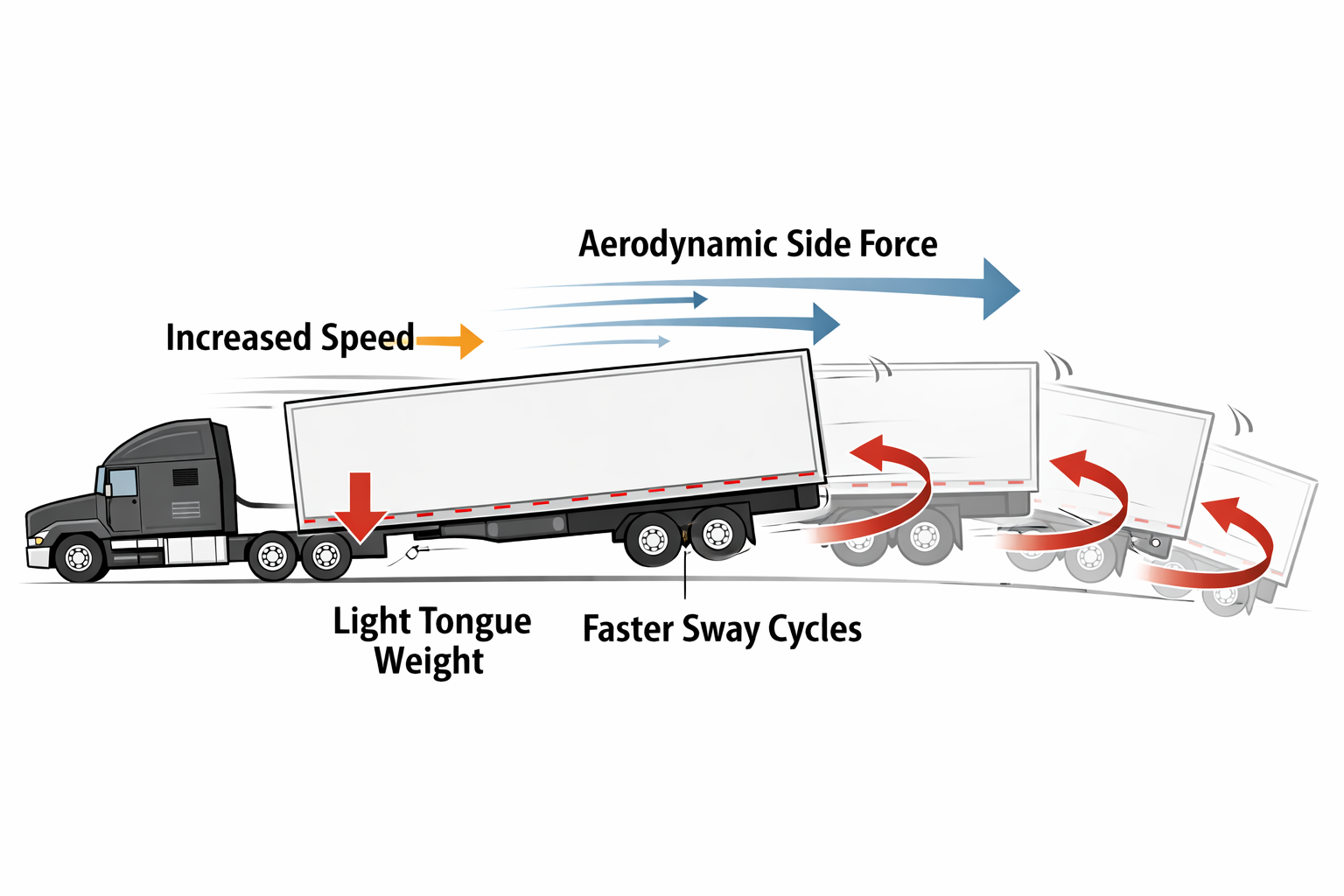
This is also why braking hard during sway often makes things worse. Sudden braking shifts weight forward, reducing rear traction and sometimes reducing effective tongue load. Instead of calming the motion, it can intensify it.
Most experienced drivers learn that the safest response is usually the least dramatic one.
What Actually Stops Sway Once it Starts?
When sway begins, the goal is to remove energy from the system, not add more.
Ease off the throttle. Hold the steering wheel steady. Let the rig slow naturally. If you have a trailer brake controller, gently applying the trailer brakes can help pull the trailer back into line and break the sway cycle.
Once things settle down, stopping to reassess is critical. Continuing without fixing the root cause almost guarantees the problem will come back.
Setting Yourself Up for Stability Before You Tow
The most effective sway prevention happens before the wheels turn.
Correct tongue weight gives the hitch leverage to control the trailer. Forward-biased loading keeps the center of mass where it belongs. Proper tire pressure and good suspension components add damping that absorbs disturbances instead of amplifying them.
Weight distribution hitches and sway control systems work by increasing resistance to yaw motion and redistributing forces more evenly between axles. They do not replace good loading practices, but they greatly expand the safe operating window.
Ready to tow safer and smarter? Make sure your trailer is properly balanced, your tires are in top shape, and your hitch setup matches your load. If you’re not sure about your rig’s sway control, consult a professional or invest in quality sway prevention tools.
Take care out there!


