



CVSA Updates Guidance on False Logs and ELD Tampering Ahead of Roadcheck

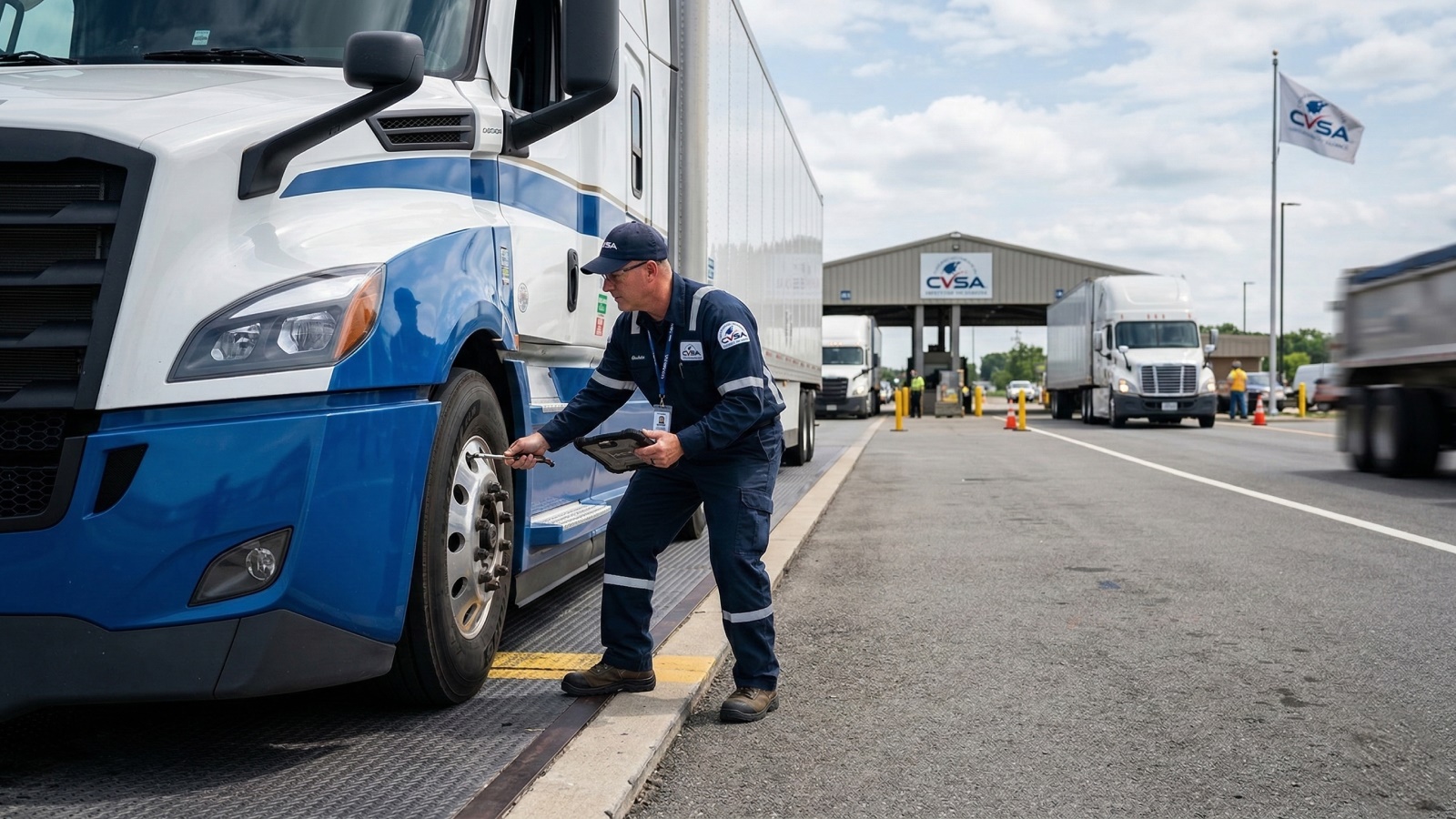
The Commercial Vehicle Safety Alliance (CVSA) has released updated guidance for inspectors ahead of the International Roadcheck, scheduled for May 12–14, 2026. The focus is on ensuring that drivers and carriers comply with Hours-of-Service (HOS) regulations while addressing false Records of Duty Status (RODS) and ELD tampering.
Key Facts:
- CVSA issued updated enforcement guidance ahead of the International Roadcheck scheduled for May 12–14, 2026, with emphasis on Hours-of-Service (HOS) compliance and ELD integrity.
- False or inaccurate Records of Duty Status (RODS) do not automatically trigger an out-of-service order if the driver remains within HOS limits.
- Exceeding HOS limits is treated as an imminent hazard and results in an immediate out-of-service order until compliance is restored.
- ELD tampering, including altering or interfering with driving records, results in an automatic 10-hour out-of-service violation.
- Inspectors are prioritizing detection of violations such as personal conveyance misuse, unassigned driving time, and falsified or duplicate driver accounts.
- Roadside inspections during Roadcheck 2026 will cross-check ELD data with supporting records such as receipts, GPS data, and shipping documentation.
False Logs Don’t Automatically Put You Out of Service
Here’s the first important point you need to understand: simply having false logs does not automatically mean you’ll be pulled off the road.
According to CVSA guidance:
👉 If your logs are inaccurate but you are still within your Hours-of-Service (HOS) limits, you will likely receive a citation but can continue driving.
👉 If you exceed your HOS limits, then you are considered an imminent hazard, and inspectors will place you out of service until you are back in compliance.
Think about it this way: if you accidentally misreport driving as personal conveyance or forgot to assign a few minutes of drive time, you won’t be stopped — as long as you aren’t over your hours.
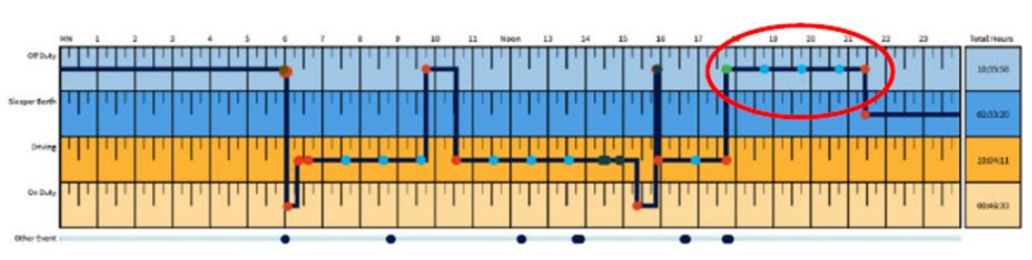
Here’s an example of how an ELD log looks in practice. Note how driving, sleeper berth, and off-duty times are recorded. Inspectors use these visual logs to determine if any falsification occurred, and whether the driver is over the Hours-of-Service limits.
You May Also Like: DOT Inspections Checklist: What Every Trucker Needs to Know
When You Could Be Placed Out of Service
While small log errors may not stop you, there are clear situations where you will be removed from service. Inspectors are now being instructed to consider whether a violation creates a real safety risk, not just whether it’s on paper.
👉 That means if your logs hide overhours driving or your ELD has been tampered with, there’s no leniency.
Here’s when inspectors must remove a driver from service:
1. Exceeding Hours-of-Service limits – If your log shows you’ve driven too many hours, you will be taken out of service. Even 45 minutes over HOS can trigger this if it pushes you past the limit.
2. ELD tampering – Reprogramming, altering, or otherwise interfering with your ELD so inspectors cannot verify driving time will result in an automatic 10 consecutive hours out of service.
3. Imminent hazard conditions – Any activity that presents a real safety risk, such as driving over HOS with falsified logs or attempting to hide driving time through unassigned hours.
Sometimes, drivers or carriers manipulate ELDs to gain extra driving hours. Inspectors are trained to catch these reengineered logs, especially when the time and location of driving or rest cannot be verified.

In this example, the driver’s log shows being off duty in one state, but fuel receipts reveal driving on another date and state. This mismatch is a clear red flag for inspectors and would result in an automatic 10-hour out-of-service order.
Inspectors Are Watching Specific Behaviors
The bulletin also notes that inspectors are focusing on common patterns in the industry. Some drivers and carriers try to skirt the rules, but CVSA wants these actions documented and enforced consistently. You need to know what they’re watching so you don’t get caught unaware.
Some behaviors inspectors are targeting include:
👉 Personal conveyance misuse – Logging drive time as personal use to bypass HOS limits is under scrutiny. Inspectors have been told to verify if personal conveyance was used appropriately. You need to be honest here, because abusing personal conveyance is now a clear violation.
👉 Unassigned driving time – If you drive and don’t log it, or shift your logs to make it appear as non-driving time, inspectors can catch this when comparing receipts, timestamps, or supporting documentation.
👉 Fictitious driver accounts – Some carriers have created duplicate or slightly altered driver accounts to continue driving after hitting HOS limits. Slight alterations, like changing uppercase/lowercase letters in names, modifying CDL numbers, or swapping accounts mid-shift, are now being actively verified.
You May Also Like: Stricter CDL Checks for Non-Citizens Aim to Protect American Roads
All of these areas are now considered high-priority for inspectors, meaning even small errors can be flagged during a roadside check.
Practical Tips for Roadcheck in 2026
Roadcheck is one of the busiest enforcement periods of the year, and the focus this year is clear. Inspectors will pay close attention to ELD tampering, hours-of-service compliance, and cargo securement.
Here’s what you should do to stay compliant:
👉 Keep your logs accurate and up to date. Even minor errors may trigger a citation.
👉 Use personal conveyance correctly and don’t log drive time as personal unless it truly is.
👉 Avoid any tampering or adjustments to your ELD. If your device cannot verify driving and rest time, you’ll face an automatic out-of-service order.
👉 Be aware that inspectors will compare your logs with receipts, shipping documents, and GPS records, so documentation matters.
Following these steps helps ensure that minor mistakes don’t turn into serious violations.
CVSA’s updated guidance emphasizes safety and compliance over punishment. You can continue driving with minor log errors if you are within HOS limits, but any attempt to hide hours, manipulate your ELD, or use multiple driver accounts will be treated strictly.
Good luck!


