



Speeding Ticket Lookup for Truck Drivers: Find, Fight, and Avoid Points

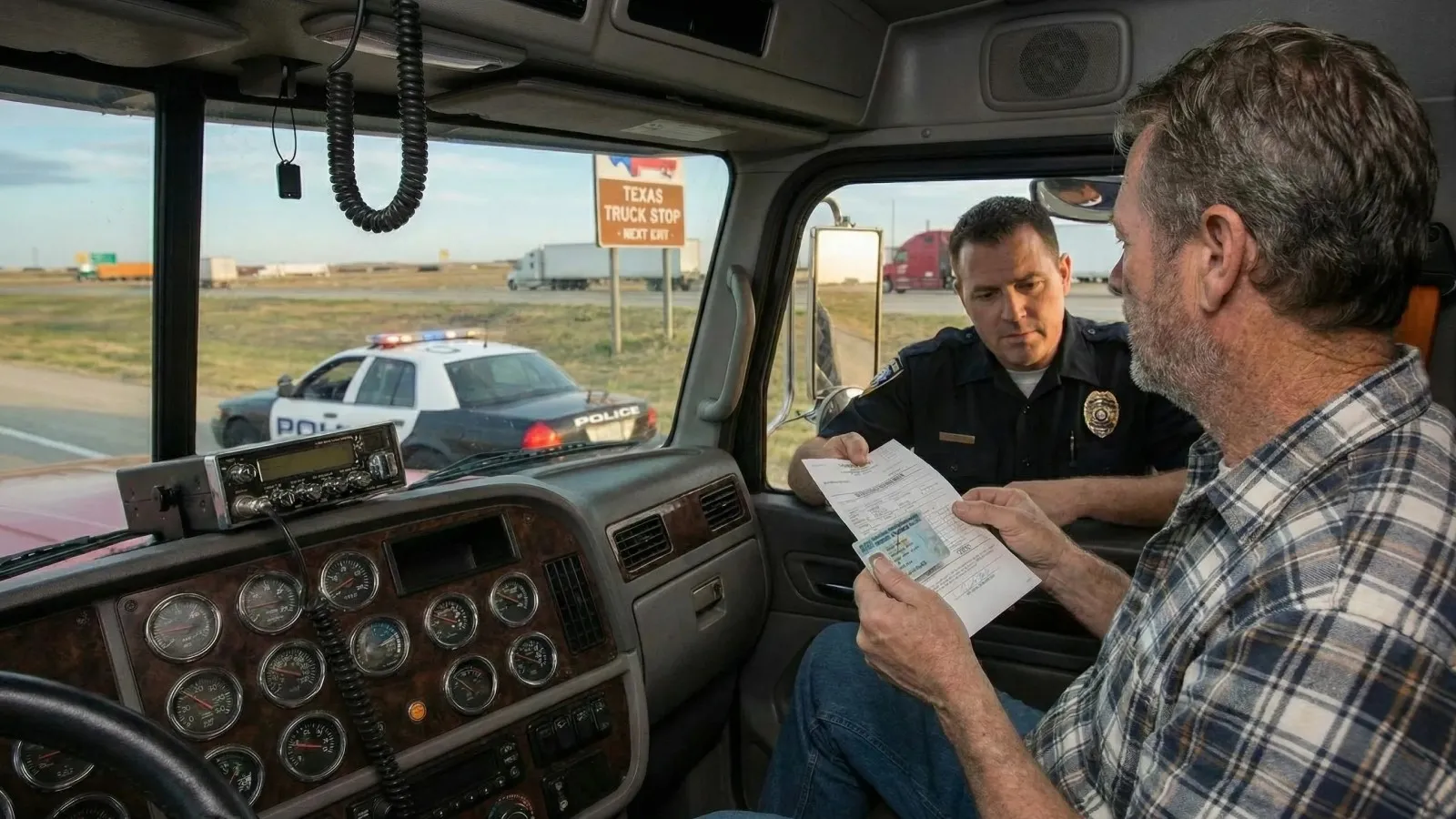
You know how it goes. One quick moment on the highway and suddenly you are dealing with a ticket you did not plan for. For truck drivers, it is never just a fine. It can turn into points on your record, higher insurance, and in some cases real trouble for your CDL.
The tricky part is most drivers do not deal with tickets every day, so it is easy to miss a step or not realize what actually matters. Do you pay it, fight it, or ignore it and hope it goes away? That is usually where mistakes happen.
We will walk through how to check a speeding ticket, what actually happens after you get one, and when it makes sense to push back, whether it is local, out of state, or even across the border in Canada.
Key Facts:
- Most U.S. states use a point system where speeding tickets can accumulate and lead to CDL suspension or insurance increases.
- CDL holders must use their commercial driver’s license information for speeding ticket lookup in court or DMV systems.
- Radar and lidar-based speeding citations can be challenged if calibration, maintenance, or officer certification records are missing or invalid.
- Out-of-state speeding tickets are shared between states through the Driver License Compact (DLC) and NRVC agreements.
- Ignoring an out-of-state ticket can lead to license suspension in your home state, including CDL disqualification.
- Canadian speeding tickets are governed by provincial systems and generally require action within about 30 days of issuance.
How to Find a Speeding Ticket
The way you respond as soon as you get a speeding ticket can shape the whole outcome. Taking the right steps early helps keep fines manageable and prevents points from stacking up, protecting your license and your job.
Here are the essential steps every driver should follow immediately after getting a speeding ticket. 👇🏻
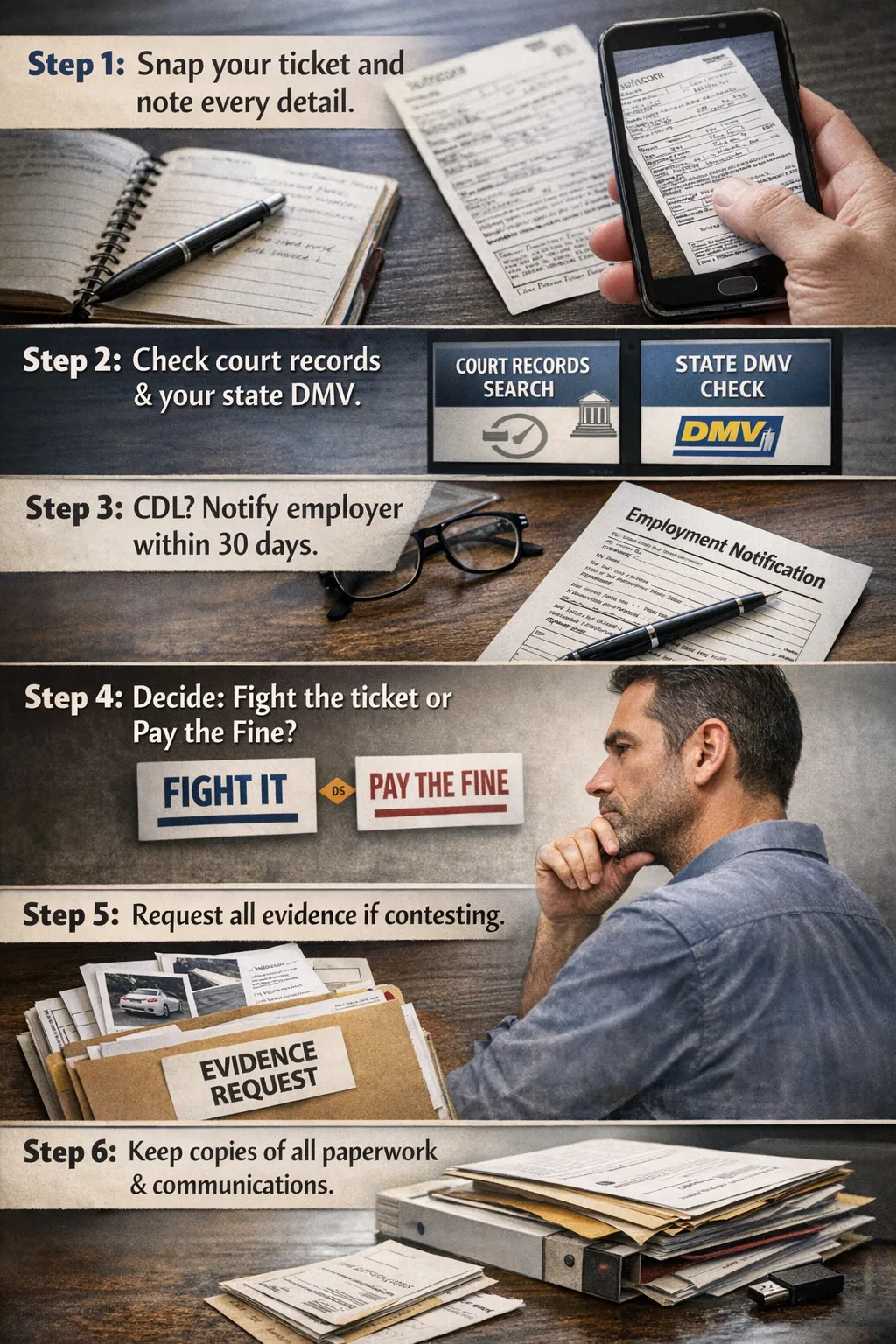
Make sure to use your CDL number for ticket lookup, not just your personal license. Also, keep your mailing address updated with the courts and your employer. Missing a notice can cost you dearly.
When to Fight a Speeding Ticket and When to Pay
A single speeding ticket might seem like a small fine, but if mishandled, it can lead to serious consequences. Knowing how to fight a speeding ticket or when paying is wiser can save your license and wallet.
You should fight the ticket if:
- The radar or lidar device used lacks proper calibration or maintenance logs. These devices require regular testing, and missing records weaken the prosecution’s case.
- The posted speed limit was unclear, incorrect, or different for commercial vehicles, and signage was poor.
- The officer’s report has factual errors, such as wrong vehicle info or inconsistent statements.
- You have a clean driving record, which often improves your chances of winning or reducing the charge.
Pay the ticket if:
- The fine is low, and points won’t risk suspension of your CDL.
- The evidence against you is solid, and fighting would cost more in legal fees than the fine.
- Your state offers driver safety courses or diversion programs that reduce points or fines if you accept responsibility quickly.
What Evidence Do You Need to Contest?
Your best defense depends on the evidence you can gather. Request the officer’s detailed notes and the incident report, which might reveal mistakes or inconsistencies.
Make sure to obtain radar or lidar calibration and maintenance logs to prove the device was properly tested and working when you were stopped. Officers’ training and certification records for using the speed-measuring equipment are also critical since a lack of certification can weaken the prosecution’s case.
If available, dashcam footage, cruiser videos, or photos related to the stop can provide useful context such as weather, traffic conditions, or road signs.
Finally, request the chain of custody documents for any radar printouts or electronic recordings to confirm the evidence was handled properly and remains unaltered. Missing or incomplete evidence often leads to tickets being reduced or dismissed.
Alright, here’s the deal: collecting evidence is crucial, but sometimes it helps to see how things go down in real life. If you’ve ever had a speeding ticket, you’ve probably wondered if it’s worth fighting or how to avoid getting nailed next time. Take a look at this video and see how it all plays out.
You May Also Like: How to Deal With a Traffic Ticket Without Losing Your Nerves
Tickets From Out of State?
Getting a speeding ticket outside your home state can feel like a curveball, but ignoring it is no excuse.
Thanks to interstate agreements like the Driver License Compact (DLC) and the Non-Resident Violator Compact (NRVC)*, most states share traffic violation records. A ticket from another state usually finds its way back to your home state’s DMV and gets added to your driving record.
The Non-Resident Violator Compact (NRVC) is an agreement between participating U.S. states that allows out-of-state drivers to be treated like in-state drivers for most traffic violations, meaning they must resolve the ticket (such as paying or appearing in court) or risk having their driver’s license suspended in their home state.
Here’s how to handle out-of-state tickets like a pro:
1. Understand the Interstate Agreements
The DLC and NRVC ensure violations don’t disappear when crossing state lines. A speeding ticket in another state and any associated fines or points can transfer to your home state. This can affect your CDL just as much as a local ticket. Ignoring it is the fastest way to get a suspended license.
2. Don’t Wait for the Mail
Tickets from other states may arrive late or get lost. Check online court and DMV records in the issuing state as soon as possible. Many states allow speeding ticket look-up by your license number to avoid surprises.
3. Learn the Rules of the Issuing State
Each state handles tickets differently. Some require immediate payment, others allow contesting by mail or court appearance. Knowing these procedures means you won’t miss deadlines or harm your case. Some states offer trials by written declaration, where you don’t have to appear in court.
4. Decide Whether to Pay or Fight
If the ticket seems unfair or the evidence is weak, fighting may be worth it, even if it’s out of state. Court appearances can be tough if the state is far away. Many truckers hire local attorneys familiar with that state’s traffic laws to improve chances of reducing fines or points without traveling.
5. Be Aware of License Suspension Risks
Ignoring an out-of-state ticket can trigger your home state to suspend your license for failure to pay or appear. The compact agreements ensure your home state enforces this suspension. This is especially dangerous for CDL holders since losing your license means no driving, no income.
6. Keep Records and Follow Up
Always keep copies of tickets, payment receipts, correspondence, and court documents. Follow up to confirm resolution and proper recording of points or fines. Check your home state driving record regularly for accuracy and to avoid surprises.
Handling Speeding Tickets in Canada
Canadian traffic laws and enforcement differ significantly from those in the U.S., so truck drivers crossing the border must understand these distinctions to avoid costly mistakes. Each province sets its own rules, penalties, and court procedures, so there is no one-size-fits-all approach.
Speed limits in Canada are posted in kilometers per hour, requiring constant adjustment for drivers used to miles per hour. Commercial vehicles usually face stricter fines and harsher penalties than passenger vehicles.
You May Also Like: Red Light Camera Violations and Tickets: Costs, Laws, and How to Fight Back

Unlike the U.S., Canadian speeding tickets generally do not affect your U.S. commercial driver’s license or driving record directly. However, ignoring these tickets can lead to escalating fines, license suspensions within the issuing province, and complications at the border.
Here’s what to do if you get a speeding ticket in Canada:
- Find the exact province that issued the ticket and go directly to their official government or court website. Avoid third-party sites for accurate info. Check their speeding ticket lookup and payment or dispute process.
- Note the deadline. Most provinces require a response within 30 days by paying the fine or entering a plea. Missing this can lead to extra penalties or driving bans in that province.
- Gather evidence such as GPS logs, dashcam footage, and documentation about the calibration of speed-measuring equipment. This can help if you decide to fight the ticket.
- Decide how to respond. Some provinces allow online or mail-in contesting of speeding tickets. If you can’t appear in court personally, consider hiring a local lawyer to represent you.
- Keep records of everything: tickets, payment receipts, court documents, and correspondence to avoid surprises later.
Though Canadian tickets rarely affect your U.S. CDL directly, unpaid fines or provincial suspensions may complicate border crossings or future operations.
Staying informed and acting promptly protects your license, income, and peace of mind.


