



Red Light Camera Violations and Tickets: Costs, Laws, and How to Fight Back

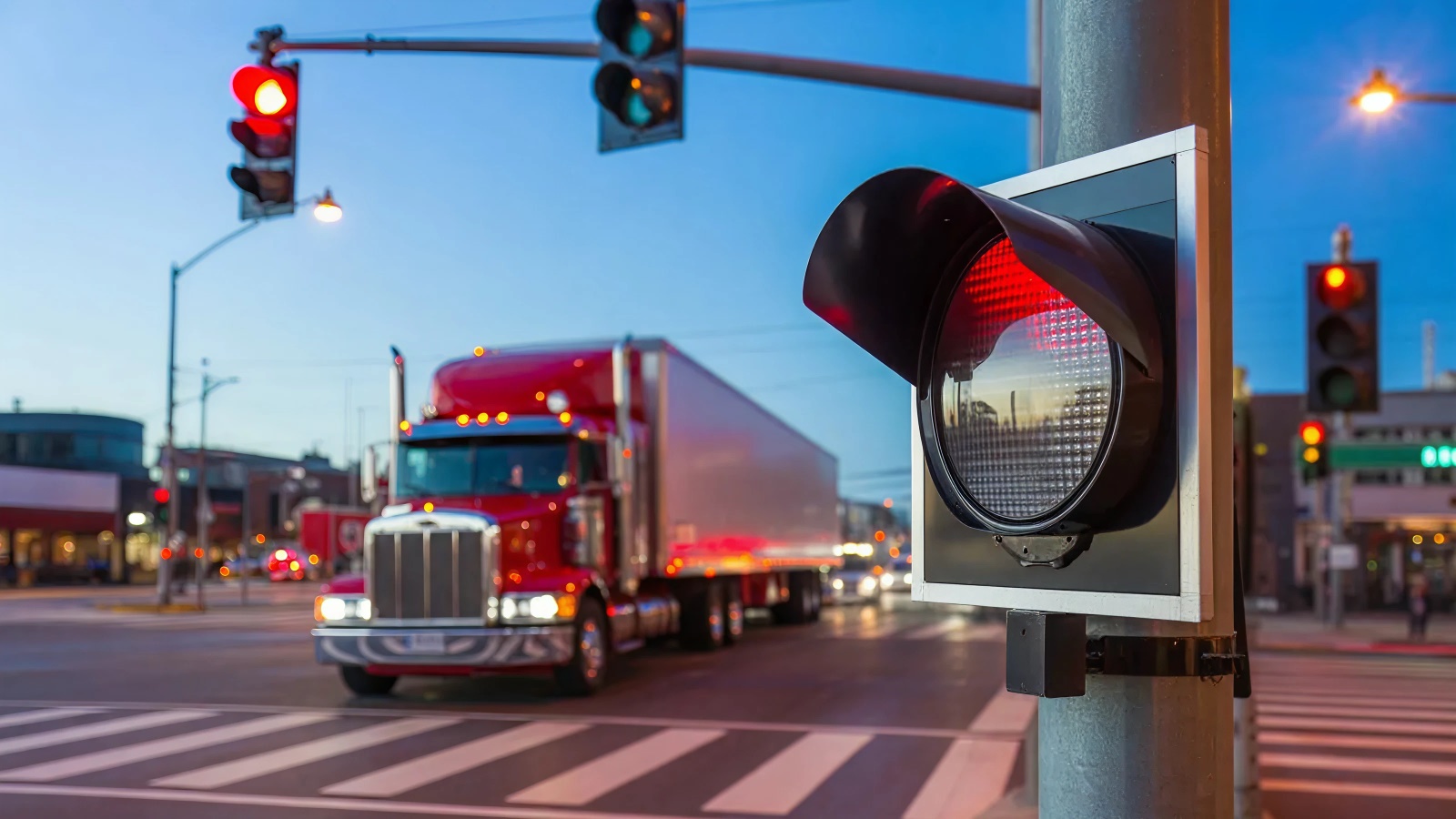
Red light cameras use road sensors to detect vehicles entering an intersection after the light turns red. The violation is reviewed before a citation is issued. Tickets usually arrive within two to four weeks and may result in a $50–$150 fine, depending on the location.
Running a red light is among the most frequent traffic offenses that people commit. Still, red light cameras frequently catch these drivers unprepared.
If you have been curious about how these cameras work or what happens when you receive a ticket, you are at the right point. We will clarify everything simply. 👇🏻
Key Facts:
- Red light cameras use road sensors and automated systems to detect vehicles entering intersections after the light turns red.
- Violations are typically reviewed by a law enforcement officer or authorized reviewer before a citation is issued.
- Red light camera fines generally range from $50 to $150, but total costs can reach up to $500 with added fees in some states.
- Many states treat red light camera tickets as civil violations with no license points or insurance impact.
- Some states apply points or stricter penalties depending on whether the violation is classified as a moving offense.
- Tickets usually arrive within 2 to 4 weeks and can often be contested with evidence such as signal timing, video footage, or plate errors.
How Do Red Light Cameras Actually Work?
Red light cameras are not just the ones that take photos at random. They depend on the sensors that are put under the pavement, which are usually called induction loops, and are located before the stop bar, which is the white line that indicates where the vehicle should stop.
The moment the traffic signal goes red, the device gets ready for operation. The sensors detect if a truck has passed through the stop bar after the red light comes on, and the camera is then activated.
You May Also Like: How Do Different Types of Road Cameras Work?
The images and, in some instances, the video recording of the vehicle along with the intersection, license plate, and traffic signal are the outputs of these devices.
To put it simply: a police officer or a qualified employee first looks at the recording of the event known as an 'incident' and then decides whether the law was violated by the driver.
This method is used to stop the issuing of wrong tickets caused by instances such as turning right on red or making an emergency stop.
Types of Red Light Camera Violations Captured
There are two common types of violations. One is a crosswalk violation, which occurs when the front tires of a vehicle cross the stop bar during a red light.
So, the vehicle is blocking the crosswalk. Most of all, this is a very dangerous situation for pedestrians, as it forces them to go onto the road. The act of going over the line is illegal, even if you have stopped.
The second variation is a through violation. This happens when your whole vehicle goes over the stop bar after the red light turns green. Therefore, you entered the intersection illegally. Once the offense is verified, you get a ticket sent to your home.
How Much Does a Red Light Camera Ticket Cost?
The amount of the fine is dependent on the city or state. Usually, it varies from roughly $50 to $150. This may sound quite reasonable, but be aware that some places may add administrative or processing fees that increase the total amount.
However, courts located in different states have on occasion lowered or completely done away with those additional fees when they look unjust. It is very important to find out about your local jurisdiction, as the sum you have to pay can be very different.
For example, in California, the total fine can climb to about five hundred dollars, after surcharges and fees are added.
Moreover, there are places where these types of tickets are considered minor offenses, similar to parking tickets. They rarely have an impact on your driving record or insurance.
Here are three things to be aware of in terms of costs:
1. Additional administrative fees have the potential to drastically increase your total fine.
2. Several states consider such tickets as civil infractions and thus, do not affect insurance.
3. Always make sure of the exact amount with your local traffic authority before handing over any money.
Will a Red Light Camera Ticket Add Points to a License?
Not necessarily. Some states consider these tickets as non-criminal charges that do not entail points. Hence, there is no effect on your license or insurance.
However, a few states regard red light camera tickets as violations of the traffic laws, which means that you can get points that make your insurance costs higher. After a while, if there is a buildup of points, your license may be suspended.
In case you are a commercial driver, points may bring about more severe effects, for instance, your commercial driver's license might be revoked, or you may lose your job.
Here are the main factors that influence points on your license:
- Recognition by the state of the violation as the red light incident.
- Whether the violation is considered a moving one or a civil offense.
- Your being a commercial or private driver may change the way points are attributed to you.
States That Allow Automated Enforcement
Several states allow the implementation of red light cameras within at least some cities. Some of these states are California, Arizona, Florida, Georgia, Illinois, Maryland, New York, Oregon, Virginia, and Washington.
There are laws in these states that allow local authorities to operate the system under certain conditions. The cameras are placed not only to apprehend the violators but also to lessen the accidents and protect the pedestrians and other drivers.
Let us consider New York City as an example. It is probably the first one to come up with the idea of the red light camera program in the United States. Cameras operate at hundreds of intersections.
The city publishes safety reports showing reductions in severe T-bone crashes at enforced locations. These collisions historically cause the most serious injuries.
Maryland also employs cameras in the downtown areas and the surrounding areas as well. The police departments in different localities are responsible for checking the violations before a citation is mailed. The offenses are of a civil nature, and thus, no points are added to the driver's license.
States That Ban Automated Ticketing
Several states disallow the use of automated red light enforcement. Those are the likes of Idaho, Maine, Mississippi, Montana, New Hampshire, South Carolina, South Dakota, Texas, and West Virginia. In such areas, an officer who witnesses the violation is the only one who can issue a red light citation.
Texas is the most famous example. The state stopped new camera contracts. However, a few cities still have the systems under the old agreements that cannot be ended immediately. When those contracts come to an end, the cameras have to be taken down, or if they are used for non-ticketing purposes, such as traffic studies, then they should be left there.
States With Unclear or Mixed Rules
There are also some states that neither clearly allow nor prohibit the usage of red light cameras. For instance, these are Michigan, Kansas, Kentucky, and Nebraska.
Without having a definite framework at the state level, most local authorities decide not to use automated enforcement. The main worry is how groundless a citation would be if it came to court without a particular enabling statute.
Nevada is one of the more peculiar cases. Cameras are there to monitor the intersections, but cannot issue tickets automatically unless an officer is around. The camera can record what happened, yet only an officer can decide whether a citation is warranted.
This way of doing things is in line with the state's long-standing preference for human judgment.
How Long Does It Take to Receive a Red Light Camera Ticket?
A red light camera ticket normally arrives within two to four weeks after the violation.
The timing of the ticket depends on how fast the local police or other issuing agency processes the violation and how fast the postal service delivers the notice. Some areas may send tickets quickly, while others may take longer because of administrative backlogs or mail delays.
Not receiving a ticket within this period does not mean that the violation has been dismissed or forgotten.
It is only a matter of time before you get the ticket, so it is better to respond to the ticket immediately. In case of ignoring the deadline of the ticket, the result will be more fines plus other penalties. Always be on the lookout for your mail after a possible violation and be ready to take action within the given time frame.
If the ticket comes late, do not get into a frenzy. Keep your composure and take steps to resolve it as instructed.
Can You Fight or Contest a Red Light Camera Ticket?
Yes, one can. It is quite difficult, but doable if you have a legitimate reason.
A typical defense is the incorrect timing of the yellow light. Yellow lights have to last a certain number of seconds so that drivers can stop safely. If your ticket is from a place where the yellow phase is shorter than allowed, then the ticket might be considered invalid.
Mistaken identity can also be a defense. If the plate is wrongly read or the vehicle is rented, stolen, or used by someone else, then you may have a case. There may be times when cameras are not working properly, or there is wrong data. These are technical mistakes. It is wise to get all the evidence, including the video, pictures, and the technical calibration records.
If you were not the driver, then you can say so and provide the evidence. It all depends on the local laws. Extreme situations are a very rare case, but possible, if you passed the red light due to an emergency.
It is very important to follow the right procedures and be on time when contesting. In some areas, you can send an appeal through the mail, while others require you to be present in court.
Here are the essential steps to contest a ticket:
1. Go through every piece of evidence, such as pictures and videos, very carefully.
2. Get any proof that can help with your defense, like statements from witnesses or documents of vehicle rental.
3. Adhere strictly to the instructions for submitting your contest or being present in the court.
In states like California, this whole topic becomes even clearer when you look at how real cases are handled. The video below features attorney McPeak walking through the exact rules that shape these tickets and the defenses that can actually make a difference.
You May Also Like: How to Deal With a Traffic Ticket Without Losing Your Nerves
What If You Don’t Pay a Red Light Camera Ticket?
If you do not take any notice of it, the local authorities can increase your fines, put a hold on your vehicle registration, or even issue warrants for unpaid violations. There is, therefore, more trouble and more money involved, and the best thing to do, as a rule, is to take care of your tickets right away, whether by payment or contesting.
When the ticket is not paid or contested within the time that has been set for it, the fine is usually increased by late fees and penalties. It can be initially a quite small amount of money can turn into a very big one.
Besides the financial side of it, several states and localities have the authority to stop your vehicle registration temporarily, prevent you from renewing it until the ticket is cleared. There is a further escalation of the matter in some instances.
Unsettled tickets may lead to the issuance of warrants, which can result in court appearances, and depending on the local regulations, even arrests. This descending spiral of consequences makes not only dealing with the ticket harder and more expensive, but also the ticket itself.
Therefore, the most prudent thing to do is to take red light camera tickets seriously from the very beginning. Taking your time to pay the fine or to argue the citation helps you stay clear of other fees and legal troubles. Being on top of these tickets also means protection for your driving record and peace of mind.
Can Right Turns on Red Trigger Camera?
Absolutely. While most drivers are quite sure that it is illegal to run a red light when going straight or turning left, they think that right turns on red are always allowed.
Just in case no signs prohibit the turn and the local law allows it, one can make a right turn on red. In case of a ban on right turns on red at a certain intersection, usually, the cameras installed to catch red light violations at that intersection are there to capture you as well.
Since right-turn-on-red limitations could change from block to block, it is very important that you look for signs that tell you whether the turn is permitted or not. As rules about right turns on red differ from place to place and sometimes are badly marked, a lot of drivers get caught unintentionally. It would be wise always to keep an eye on signs and signals.
For truck drivers and fleet managers, red light camera tickets are generally treated like parking tickets. They are quickly paid off without points or an increase in insurance. Good record-keeping and swift problem-solving go a long way toward ensuring compliance and preventing escalation.
Moreover, some fleets install tracking and alert systems to keep an eye on driver conduct and give them a heads-up on tickets so that they are not caught off guard and can take preemptive measures.
If you get a red light camera ticket, don’t wait or ignore it. Check the evidence, understand your local laws, and act quickly!
Frequently Asked Questions
What happens if you accidentally run a red light?
You may receive a red light camera ticket, typically with a $50–$150 fine, although fees can make the total higher.
Does a red light camera ticket affect insurance?
In many states, red light camera tickets are civil violations and do not affect your insurance, but rules vary by state.
How do you prove you didn't run a red light?
Review the camera photos, video footage, signal timing, and license plate information for errors or evidence supporting your case.
What is the best way to fight a red light ticket?
Check the evidence for issues such as incorrect yellow-light timing, mistaken identity, plate errors, or technical problems, then follow your local appeal process.
How can you get a red light camera ticket dismissed?
A ticket may be dismissed if you can show incorrect signal timing, mistaken identity, faulty camera data, or another valid defense under local law.


