



From Student to Skilled Driver: Inside Real Truck Training

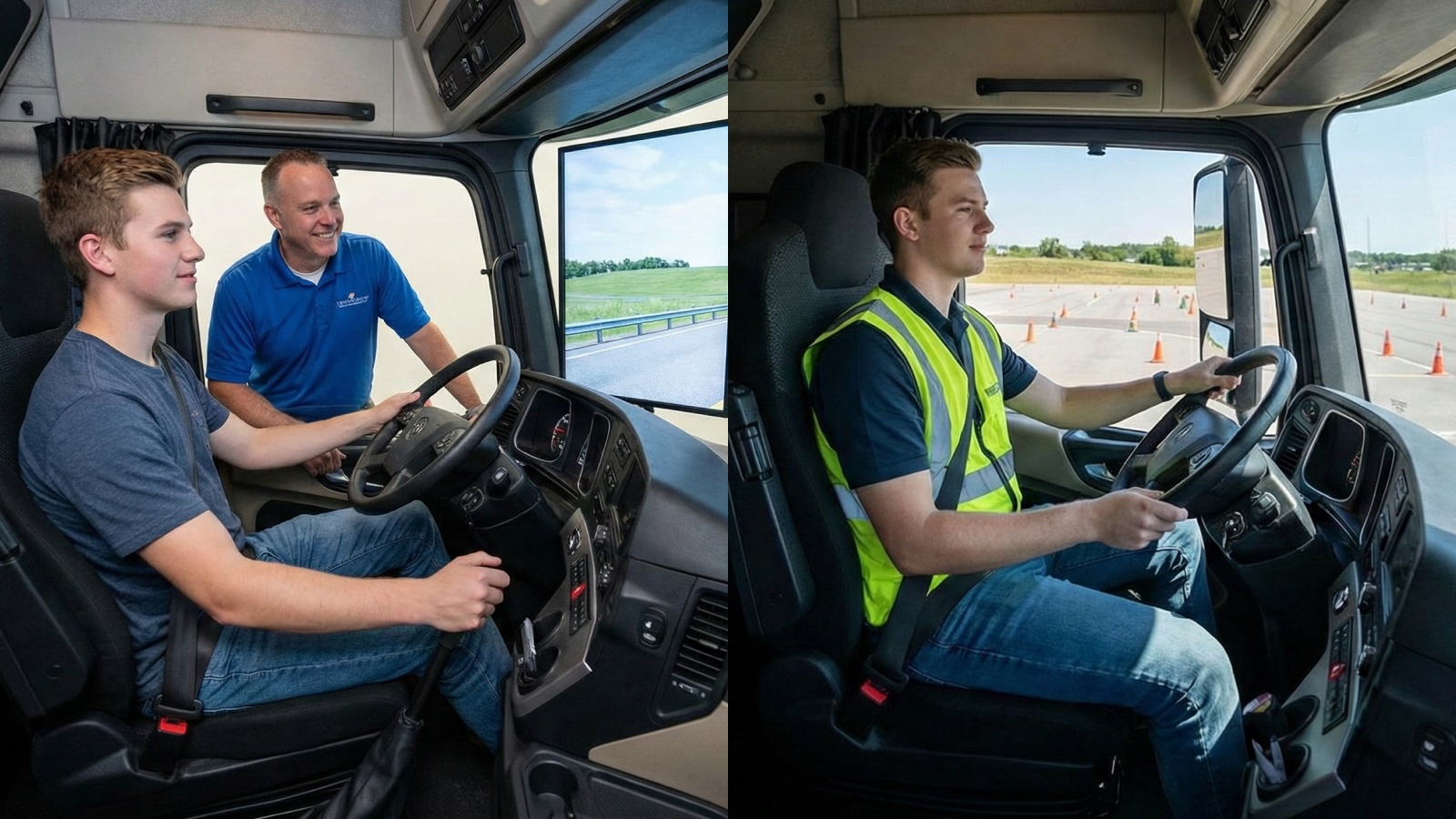
Starting a trucking career is exciting, but earning a CDL is just the first step. Maneuvering an 80,000-pound rig in tight spaces and staying alert on long hauls quickly shows new drivers that experience, skill, and confidence are just as important as the license itself.
👉 According to the American Trucking Associations (ATA), the industry needs tens of thousands of new drivers each year to replace retiring workers and keep freight moving. Still, retention starts with solid training and early job success.
Quality training makes the difference between a first trip and a smooth transition into a rewarding career. The Truck Driver Institute (TDI) has spent decades perfecting a program that builds skills, confidence, and employability.
Key Facts:
- The American Trucking Associations (ATA) reports the industry needs tens of thousands of new drivers annually to replace retiring workers and sustain freight demand.
- The Truck Driver Institute (TDI) has been providing Class A CDL training since 1973, focusing on hands-on, real-truck instruction.
- TDI’s core training program is a full-time, 15-day course combining classroom instruction, controlled range driving, and on-road training.
- Industry data cited shows large truckload carriers often experience turnover rates of approximately 90–95% annually, with average driver tenure around 2.1 years.
- Studies referenced indicate drivers with hands-on training experience have approximately 20–40% fewer accidents in their first year.
- Nearly 40% of CDL training programs reportedly do not provide sufficient behind-the-wheel training time.
A Longstanding Tradition of CDL Training
Since 1973, the Truck Driver Institute has delivered commercial driver training rooted in real‑world skills, offering Class A CDL preparation.
Rather than relying primarily on theory or simulators, TDI emphasizes full‑scale, hands‑on experience. Students train on actual trucks in multi‑acre driving ranges before they ever hit public roads, replicating the real conditions drivers face every day.
This practical model aligns with best practices recommended by industry groups like the Commercial Vehicle Training Association, which highlight hands‑on driving time as a key predictor of new-driver readiness and safety performance.
By starting in a controlled environment, students develop skills safely, which then carry over seamlessly when they hit real roads, setting up a chain of preparedness that continues through their first job.
What to Expect in the Training Program
While some schools stretch training over weeks with only virtual simulators, TDI’s program is designed for speed and effectiveness. The program is a full‑time, 15‑day course, combining classroom instruction with hands-on driving exercises.
Key components include:
1. Classroom Instruction – Covers federal and state regulations, pre-trip inspections, hours-of-service rules, air systems, and logbook compliance. These lessons prepare students for both the CDL exam and daily operations.
2. Range Work – In controlled settings, trainees practice precision driving, backing maneuvers, coupling and uncoupling, and air brake operations. These foundational skills translate directly into safer on-road behavior.
3. On-the-Road Training – Guided by veteran instructors, students navigate real traffic, enhancing hazard perception and situational judgment, as two critical factors linked to early-career crash risk.
4. On-Site CDL Testing – Some campuses offer testing on-site, streamlining the licensure process and reducing delays that can disrupt student momentum.
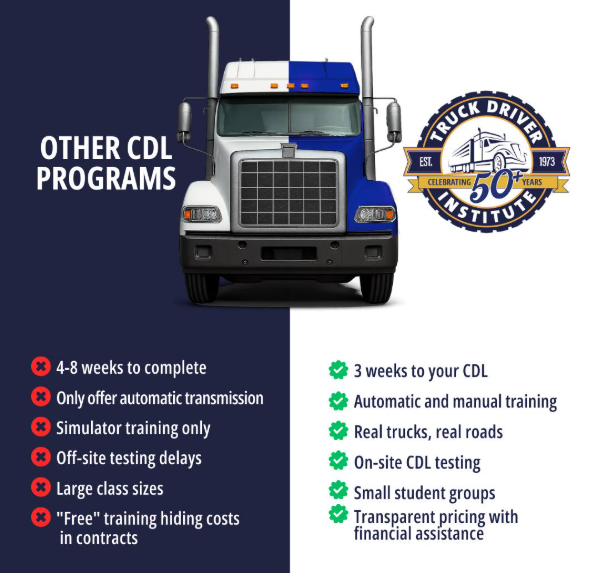
Alongside this practical training, TDI ensures every student is fully prepared: drug screenings and DOT physicals, written CDL test prep, lessons on logbooks, trip planning, mechanical basics, pre-trip inspections, advanced highway skills, and more.
Each exercise builds on the last, gradually turning a nervous beginner into a capable, confident driver ready to tackle the open road.
Career Support That Goes Beyond Training
What sets quality training programs apart is not only what students learn, but how they’re supported before, during, and after training.
The transition from classroom to career makes a huge difference in whether a new driver sticks with trucking or exits the industry early, and in turn, impacts the broader workforce.
TDI’s career services include:
1. Pre‑Hire Job Support
Students receive screening assistance to match their training with carier requirements. This early alignment helps reduce the common disconnect between skills taught in school and what employers expect on day one.
2. Placement Guidance
TDI partners with carriers that hire new CDL holders, helping students find roles that fit their goals, whether that’s regional day-cab work or long‑haul over‑the‑road positions. Structured placement support can give students a direction and purpose as they begin their careers.
3. Post‑Graduation Assistance
Starting a first job in trucking can be overwhelming. TDI provides ongoing support to help graduates navigate job offers, understand contracts, and choose the right career path.
This support is especially important in an industry where retention is a major challenge. Industry reports show:
- Large truckload fleets often experience turnover rates near 90–95% annually, meaning many drivers leave within their first year.
- Average driver tenure at large carriers has dropped to around 2.1 years, and turnover rates can exceed 90% if support structures are weak.
- Beyond tenure, work‑life balance issues are cited by more than two‑thirds of drivers as a key reason for leaving their jobs. Recruiting, training, and lost productivity can add up to over $10,000 for each driver who leaves.
Programs like TDI’s career support help prevent these risks by giving new drivers a clear path from training to their first job while helping carriers retain the talent they have invested in.
Hands-On Training Builds Confidence and Safety
Truck driving is more than a license. Confidence and safety come from real experience behind the wheel. Programs that focus on hands-on training with actual trucks give new drivers a head start.
Studies show drivers who receive this kind of practical practice have 20 to 40 percent fewer accidents in their first year. Learning how a truck behaves before it is loaded with freight builds safer habits and reduces stress.
👉 Nearly 40 percent of CDL programs do not provide enough behind-the-wheel time.
Gaps like this can translate into unsafe habits, higher stress, and early turnover. Knowing there is strong support turns trucking from a gamble into a plan. With the right preparation, long stretches of highway, tight turns, and complex freight routes feel manageable.
That is exactly what programs like TDI provide. Thousands of students have gone from nervous beginners to confident professionals, ready for regional or cross-country routes. Graduates who take advantage of TDI’s job placement assistance often land a role within two weeks of completing training.
Here is one example of feedback highlighting the training at TDI:
Training Locations Across the Country
One of TDI’s strengths is its network of campuses, which makes CDL training accessible in several key regions of the U.S. These include:
These locations are strategically located along major freight corridors like I‑75, I‑65, and I‑20, aligning training access with regions of high industry demand. All of them are GI Bill eligible and have strong connections with local carriers, helping graduates find jobs quickly.
If you’re exploring your options, searching for CDL Schools nearby can help you compare locations, availability, and training programs that fit your schedule. In many regions, including CDL training in Canada, similar programs focus on building foundational driving skills, safety awareness, and regulatory understanding before drivers enter real-world trucking environments.
Good luck!


