



New DOT Freight Rules Make Truck Parking a Federal Priority

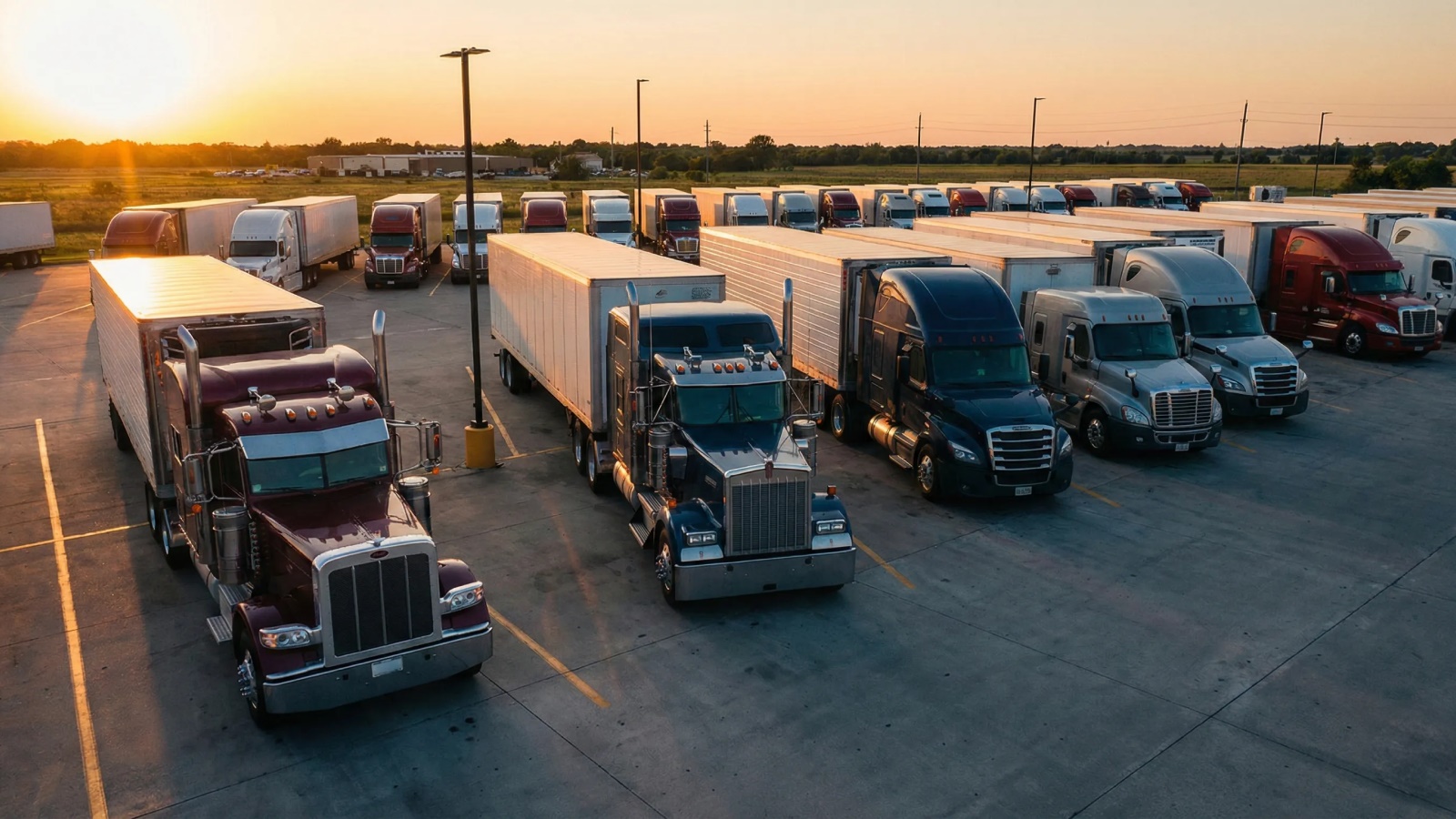
The U.S. Department of Transportation has released new guidance for State Freight Plans, and it’s going to change things for both states and the trucking industry.
Starting February 24, 2026, truck parking must be included. States that don’t comply could lose federal funding from the National Highway Freight Program. It is a federal funding program that supports critical highways, ports, and freight corridors.
Let’s break it down step-by-step.
Quick Summary:
- Starting February 24, 2026, U.S. DOT guidance requires all State Freight Plans receiving National Highway Freight Program (NHFP) funding to include a formal truck parking assessment.
- States that fail to comply with the updated freight planning requirements may lose eligibility to obligate NHFP funds for freight-related infrastructure projects.
- Required truck parking assessments must include an inventory of public and private parking spaces, including location data and total capacity.
- States must identify parking shortages, safety risks, and areas with illegal parking or fatigue-related crash patterns involving commercial vehicles.
- Freight plans must evaluate parking demand versus supply using metrics such as truck traffic volumes, vehicle miles traveled (VMT), and freight corridor activity.
- NHFP-funded freight plans must also project freight system needs up to 20 years into the future, including infrastructure, congestion, ports, and logistics trends.
Why Truck Parking Is Suddenly a Big Deal
Historically, truck parking was often overlooked in freight planning. Drivers had to rely on roadside rest stops, private truck stops, or unsafe parking spots like highway shoulders and ramps.
👉 DOT’s 2026 guidance changes that approach by making truck parking a formal, data‑driven requirement for every State Freight Plan that receives NHFP funds.
The truck parking assessment states must include is not just a count of spaces. It must cover:
- Inventory of all existing truck parking spaces, both public and private, including the number of spaces and where they are located.
- Identification of shortages and safety concerns, such as areas where drivers regularly park illegally or where there is a high incidence of fatigue‑related crashes.
- Evaluation of the state’s ability, together with the private sector, to provide adequate parking and rest facilities for commercial motor vehicles engaged in interstate transportation.
- Assessment of amenities and security features, like lighting, restrooms, showers, and safe access, to make parking usable and safe.
- Analysis of parking demand versus supply, looking at truck traffic volumes, truck vehicle miles traveled (VMT), and major freight origins and destinations.
- Consideration of environmental and community impacts, such as noise, emissions, or traffic disruptions caused by parking areas.
By requiring this level of detail, the DOT is making states show the real picture of truck parking problems and lay out concrete plans to fix them.
The stakes are high: if a freight plan doesn’t include a comprehensive truck parking assessment, the state cannot obligate NHFP funds, which are often used to pay for major freight projects such as highway improvements, bottleneck fixes, and freight corridor upgrades.
What Is the National Highway Freight Program (NHFP)?
The NHFP is a federal program that gives states money to improve freight movement on highways. Its goals include:
- Reducing congestion
- Improving reliability for trucks
- Supporting economic competitiveness
- Ensuring safety on freight corridors
Here’s a snapshot of FY 2026 NHFP funding for some states:
If a state’s freight plan doesn’t comply with DOT guidance, these funds can’t be used.
What Every State Freight Plan Must Include
The DOT 2026 guidance requires states to create comprehensive freight plans that reflect a connected system. Each plan should map the freight network, highlight trouble spots, and identify corridors that require investment.
States must assess:
- Roadways subject to heavy vehicle deterioration, including mining, energy, agricultural, and timber traffic.
- Critical corridors and bottlenecks, where congestion and delays are most likely.
- Cargo flows by transportation mode, including trucks, rail, and intermodal connections.
- Port and freight hub capacity, analyzing where delays or parking shortages may occur.
- E-commerce and military logistics trends, predicting seasonal or long-term surges.
- Technological tools, such as real-time parking apps and traffic management systems, can improve efficiency and reduce congestion.
The plan must forecast freight needs 20 years into the future, accounting for growth, infrastructure wear, and emerging technologies.

These elements are all connected. Missing one can disrupt the entire network. When parking, congestion, cargo flows, ports, and technology are considered together, the plan becomes a living strategy rather than a static checklist. Properly executed, these plans improve safety, reliability, and efficiency for all freight stakeholders.
For truck drivers and carriers, this rule gives states a chance to improve parking safety and accessibility, reduce fatigue-related accidents, and make freight movement more reliable.
Once these rules take effect, proactive states will set the stage for a safer, more efficient trucking system for years to come.


