



How to Build a Truck Cab Setup That Stays Organized on the Road

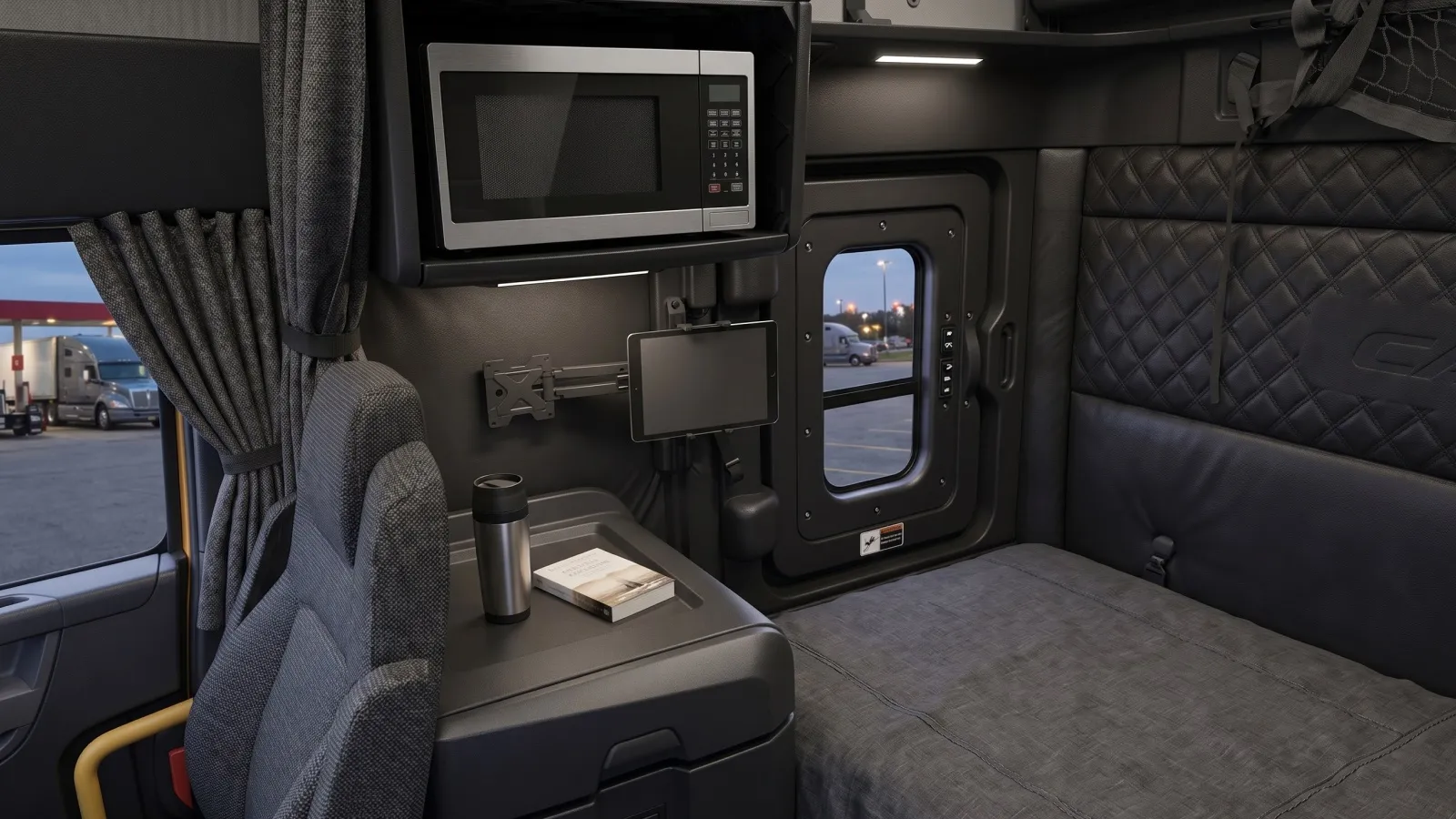
Ever opened your truck cab after a long run and felt like the space somehow “expanded” overnight… just to fit more chaos?
That’s the reality for most drivers. It’s not the size of the inside of a semi truck cab that’s the issue. It’s how fast it turns into a rolling storage pile when there is no system holding it together. And once that happens, the cab stops working with you and starts working against you.
Let’s fix that properly in a way that actually survives real road life.
Key Facts:
- A semi-truck cab is typically divided into three functional zones: driving area, work area, and living/storage area.
- Commercial drivers in the U.S. can operate up to 11 hours of driving time per day under FMCSA Hours of Service Rules.
- The driving zone in a truck cab must remain clear of clutter because it directly affects focus, reaction time, and operational safety.
- Behind-the-seat storage is most effective when organized into three layers: quick-access items, secondary storage bins, and emergency gear.
- Proper cab organization reduces time spent searching for items and helps maintain consistent workflow and efficiency during long-haul operations.
What the “Cab” Really Is
When drivers talk about the truck cab inside, they’re usually referring to more than just the front seats. The 18-wheeler cabin interior is basically a compact living system: driving zone, work zone, and storage zone all stacked into one.
That’s why a semi-truck organization is not just about cleaning. It’s about designing flow inside a space that never stops moving.
Inside semi trucks, especially inside a big rig or inside a long-haul truck cabin, everything competes for the same limited space. One weak zone, like paperwork or storage, and the whole system starts slowing down.
So, before talking about tools and hacks, the first step is understanding the space:
- Driving area (semi-truck cockpit)
- Work area (paperwork, tools, navigation)
- Living area (sleep, storage, downtime)
You May Also Like: DOT Footwear Rules: Are Flip-Flops, Crocs, or Sandals Really Illegal for Truckers?
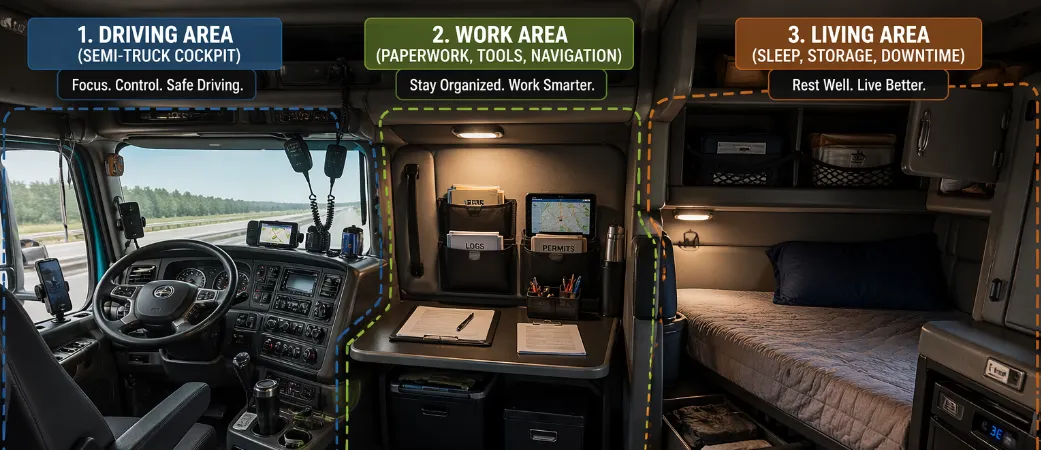
Once those lines are clear, the cab stops being random and starts becoming functional.
Semi-Truck Driving Zone Organization
The front of the cab is your command space. This is the semi truck cockpit, where every distraction costs focus.
The problem starts when the middle console for truck setups turns into a dumping spot. Small items like chargers, receipts, and snacks slowly spread until the whole area feels cluttered.
A simple semi truck console organizer helps control that by giving every item a fixed place instead of letting it float around the cab.
Even smaller tools, like a semi-truck seat armrest organizer, help keep essentials close without spreading mess across the dashboard.
According to the FMCSA Hours of Service rules, drivers can operate up to 11 hours of driving time per day. That means your driving zone is not occasional. It is your most-used workspace every single day. If it is cluttered, that friction repeats hour after hour.
Mobile Truck Cab Paperwork Station
Paperwork is one of those things that never stops showing up in trucking. Logs, receipts, permits, and delivery paperwork. It all piles up fast if there is no system.
That is where a truck driver's paperwork organizer becomes essential. Instead of letting documents spread across seats or dashboards, everything stays in one controlled space.
A truck cab office organizer turns part of the cab into a simple mobile admin area. It does not need to be fancy. It just needs to be consistent.
Once this zone is set, you stop wasting time searching and start simply grabbing what you need. Over a week, that saves more time than most drivers expect.
Behind Seat Semi-Truck Storage System
Behind-the-seat space in a semi-truck cab is one of those areas that quietly decides how organized your whole setup feels. When it’s messy, everything feels cramped and out of control. When it’s structured, even a small cab starts to feel functional, predictable, and easier to live in during long hauls.
The key idea is simple: this space should never be treated like a dumping ground. It works best when it becomes a planned storage zone with a clear purpose instead of random stacking. Think of it as a controlled buffer between your driving space and your living/storage needs.
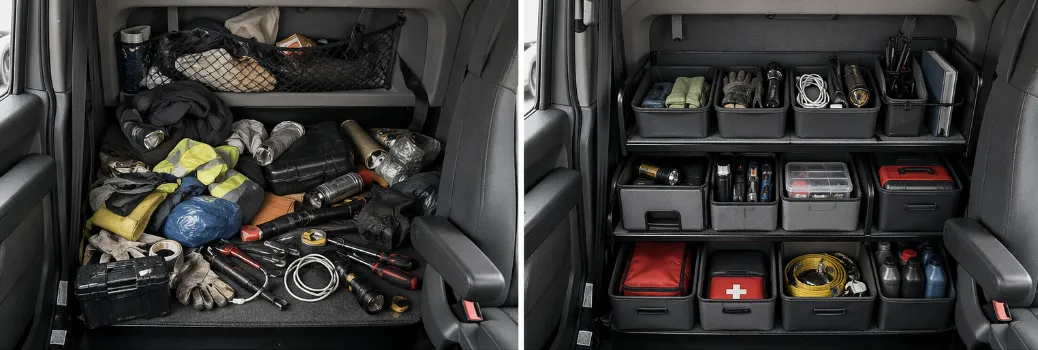
A strong setup starts with separation. Items you reach for often, like gloves, flashlight, charging cables, logbook folders, or small tools, should stay closest to your seat where you can grab them without thinking. These are “quick access” items that support your driving flow and should never require digging or moving other gear.
Behind them, you place your secondary layer. This is where semi-truck cab organizer bins or small shelving units make a huge difference. Instead of loose items sliding around, everything gets a defined container. This layer is ideal for tools you use occasionally, spare parts, cleaning supplies, or documents you don’t need during active driving but still want within the cab.
The deeper or less accessible part of the space should be reserved for emergency and seasonal gear. Items like warning triangles, first aid kits, tire chains, extra fluids, or cold-weather equipment should live here. The important rule is that emergency gear should never be buried. Even if it sits in the back section, it must remain instantly reachable without unpacking other items.
One of the biggest improvements comes from thinking vertically. Most drivers only use the floor space behind the seat, but that leaves a lot of unused potential. Stackable bins, modular crates, or simple divider inserts turn that single flat area into structured layers. This prevents the common problem of everything collapsing into one heavy, unstable pile after a few miles of vibration.
Speaking of vibration, a truck cab is not a stationary room. Constant movement slowly destroys loose organization. That’s why soft-sided storage bins, Velcro straps, rubber mats, or even basic bungee cords are practical solutions that keep things from shifting and breaking down your system over time.
Labeling also plays a bigger role than most people expect. When you’re tired after hours on the road, you don’t want to think. You want to reach and grab. Simple labels like “Tools,” “Emergency,” or “Winter Gear” remove mental friction and keep your routine smooth, especially at night or during stressful stops.
A common mistake is trying to overload this area. The space behind the seat is not meant to replace full truck storage. It’s a support zone, not a warehouse. When too many items get pushed into it, the system collapses and turns into a cluttered block that’s harder to manage than no storage at all.
A simple rule keeps everything in balance: daily-use items stay within arm’s reach, weekly-use items go behind the seat, and rarely used gear moves further back or into external storage areas. This kind of structure keeps the cab predictable and prevents long-term clutter buildup.
You May Also Like: Truck Parts and Accessories Explained: From Everyday Use to Heavy-Duty Work
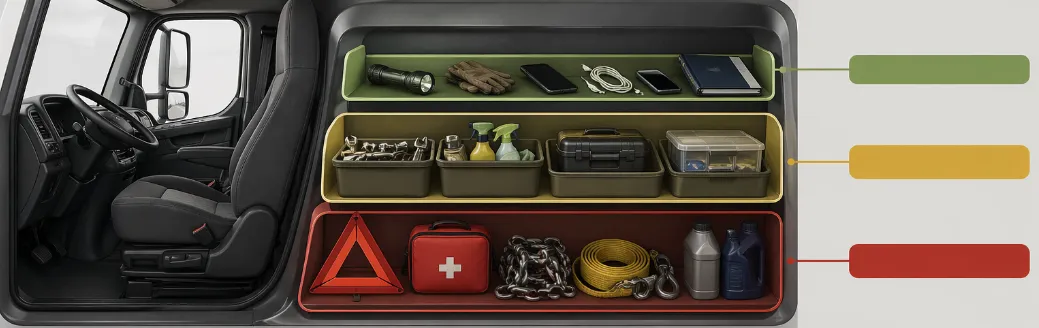
When organized this way, the behind-the-seat area stops being random storage and becomes a reliable part of the truck’s internal system. It saves time, reduces stress, and makes life on the road feel a lot more controlled, even when everything outside the cab is constantly moving.
Long-Haul Truck Cab Organization System
Most drivers do not fail at organizing once. They fail at keeping it consistent.
That is why the simplest truck organization ideas work best long-term.
The system is straightforward:
- Put everything in a fixed place and never move it randomly
- Do a quick reset during fuel stops
- Keep work items separate from living items at all times
That is it. No complicated setup. Just consistency repeated every day.
This setup works no matter what you drive, from a day cab to a sleeper on long hauls. That is exactly why it makes sense to build it step by step instead of trying to fix everything at once.
Start with one zone, get it under control, then move to the next, so the system actually holds up over time.


