



Truck Parts and Accessories Explained: From Everyday Use to Heavy-Duty Work

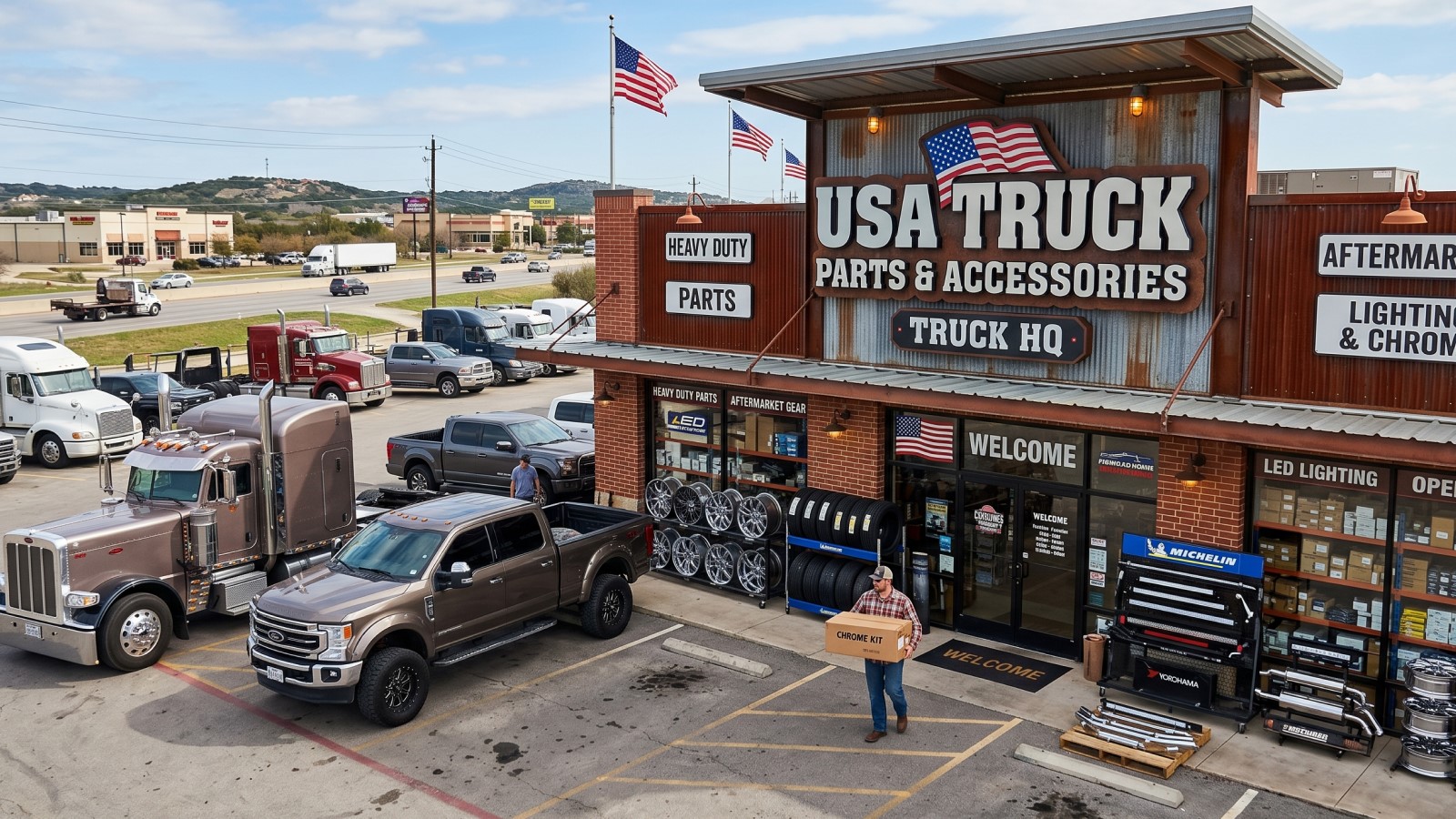
The truck accessories industry is part of the broader automotive aftermarket, which covers all parts, equipment, and systems installed after a vehicle leaves the manufacturer.
In the trucking world, this segment is especially important. Semi-trucks operate under tough conditions, covering long distances, hauling heavy loads, and running for extended hours in both commercial and specialized applications.
Because of these demands, trucks often need more than just factory equipment. They rely on continuous upgrades, replacements, and performance-focused additions to stay safe, efficient, and road-ready over time.
Key Facts:
- The truck accessories industry is part of the automotive aftermarket, which covers all parts and systems installed after a vehicle leaves the manufacturer.
- The U.S. automotive aftermarket is a multi-billion-dollar industry driven by ongoing maintenance needs and long vehicle lifecycles.
- Commercial trucks operate under high stress conditions, including heavy loads, long distances, and extended operating hours, increasing demand for aftermarket truck accessories.
- Truck accessories are commonly grouped into four categories: maintenance components, performance upgrades, utility systems, and customization parts.
- Heavy-duty truck accessories are widely used in industries such as construction, long-haul logistics, and agriculture due to constant wear, load stress, and environmental conditions.
What Are The Most Popular Truck Accessories?
Truck accessories refer to components added to improve function, durability, performance, or appearance. In real-world applications, they are not limited to cosmetic upgrades and often serve a direct operational purpose.
Within the industry, custom truck accessories are typically grouped into four connected areas:
- maintenance components
- performance upgrades
- utility systems
- customization parts
Maintenance components support reliability and long-term operation. Performance upgrades improve efficiency or power delivery. Utility systems support work-related applications. Customization parts adjust comfort or appearance, often influencing what buyers consider the best truck accessories, depending on personal preference and use case.
In many cases, these categories overlap. A protective system can improve durability, extend service life, and reduce maintenance needs at the same time, which is why truck accessories are viewed as functional upgrades rather than simple add-ons.
Market Importance of Truck Accessories
The automotive aftermarket is one of the largest and most stable sectors in the global vehicle industry. In the United States, it represents a multi-billion-dollar market supported by ongoing maintenance needs, long vehicle lifecycles, and the fact that most vehicles remain in service far beyond their initial purchase period.
A key structural factor is that the aftermarket is demand-driven rather than production-driven. Activity does not depend on new vehicle sales but on real-world usage over time. As trucks accumulate mileage and operating hours, demand for replacement parts, upgrades, and truck accessories nearby sourcing options naturally increases.
Trucks account for a significant share of this activity due to heavier mechanical stress. Frequent towing, heavy cargo use, construction work, and long-distance driving all contribute to accelerated wear across suspension, braking, cooling, and drivetrain systems. This difference in usage intensity becomes clear when comparing operational patterns between trucks and passenger vehicles.
You May Also Like: Why Your Truck Parts Business in Canada Needs Trucker Guide
Another important pattern is mixed-use behavior. Many trucks are used for commercial work during the week and personal or recreational purposes on weekends. This creates demand not only for maintenance components but also for must-have truck accessories that improve flexibility, comfort, and adaptability.
Over time, ownership behavior shifts from OEM-only maintenance toward a hybrid model combining OEM* and aftermarket solutions. Early-stage maintenance focuses on factory compliance, while later decisions prioritize cost efficiency, availability, and functional upgrades.
OEM parts are replacement components made either by the same company that produced the original vehicle parts or built to the exact specifications of the original manufacturer.
This is also where truck customization becomes more visible. Many upgrades are installed gradually, such as towing systems added after workload increases or storage systems introduced after repeated cargo inefficiencies. Because of this layered usage pattern, the truck accessories market behaves as a continuous lifecycle ecosystem rather than a seasonal trend.
In practical industry terms, the market is driven by a few consistent forces:
- Vehicle longevity: trucks stay in service longer than most vehicle types, increasing long-term demand for truck parts and accessories.
- Usage intensity: heavy workloads accelerate wear on core systems, driving constant replacement cycles.
- Operational flexibility needs: mixed-use behavior creates demand for adaptable truck gear and modular upgrades.
- Maintenance evolution: shift from OEM-only service to hybrid OEM and aftermarket strategies over time.
- Incremental upgrades: accessories are added progressively rather than all at once, based on real operational needs.
Functional Structure of Truck Accessories
Truck accessories are best understood through real operating use rather than product type alone.
Cargo and utility systems are widely used because trucks often serve as mobile work platforms. These include storage solutions, bed protection systems, and securing equipment that improve efficiency and reduce loss during transport. Towing systems are essential for vehicles that regularly move trailers or heavy loads. These include structural hitches and supporting components that ensure safe load handling under continuous stress.
Interior protection systems help maintain cabin condition in work environments where dirt, moisture, and frequent entry can cause rapid wear. These systems preserve usability over time and reduce long-term maintenance costs.
Exterior systems serve both protective and efficiency roles. Some reduce environmental and road-related damage, while others improve aerodynamics and fuel efficiency, particularly in fleet and long-distance operations. In addition, services like auto body painting and truck body shops are often used to restore surface protection, prevent corrosion, and maintain a professional vehicle appearance over time
What Are The Best Accessories For A Semi-Truck?
Heavy-duty truck accessories are designed for environments such as construction, logistics, agriculture, and long-haul transport, where reliability under constant stress is required. In real-world use, these systems are built to handle repeated loading cycles, rough terrain, and continuous operation without performance loss.
For example, in construction fleets, reinforced suspension components and heavy-duty bed protection systems are commonly used to withstand constant loading and unloading of materials.
In long-haul logistics, upgraded towing hitches and reinforced braking components are often selected to maintain stability under extended highway operation. Agricultural trucks may rely on durable cargo racks and protective exterior systems to handle uneven terrain and variable payload conditions.
Diesel truck accessories focus on maintaining engine stability under load. These systems are designed around sustained torque output and long operating hours rather than short performance bursts. They may include monitoring tools, cooling improvements, and fuel management solutions that help reduce strain during extended operation.
You May Also Like: 6 Easy Steps to Replace a Headlight on Your Semi-Truck
For instance, exhaust gas temperature monitoring systems are often used in diesel trucks working under heavy load to prevent overheating.
Enhanced cooling systems are commonly applied in vehicles operating in hot climates or pulling consistent weight over long distances. Fuel filtration and injection optimization components are also widely used to maintain efficiency and reduce engine stress over time.
In commercial environments, selection is based on durability, uptime performance, and long-term operational stability rather than appearance or comfort. The primary goal is not enhancement for visibility or style, but maintaining consistent performance under demanding and repetitive working conditions.
Quality and Selection of Truck Parts
Selecting truck components requires balancing durability, compatibility, operational demands, and long-term cost efficiency. In practice, this decision is rarely about one “best option,” but about matching the right part to the role it plays in the vehicle’s workload.
OEM parts are typically preferred in safety-critical systems such as braking, steering, and core drivetrain components. The main reason is consistency. These parts are engineered to match factory tolerances exactly, which reduces variability in performance and makes them easier to justify in warranty-backed or regulated maintenance environments.
However, in real-world fleet and owner-operator use, decisions are often more practical than theoretical. Vehicles are evaluated based on uptime, repair speed, and availability rather than brand origin alone. This is where aftermarket options become especially important.
Aftermarket parts are widely used for truck accessories, maintenance items, and performance-related upgrades because they offer flexibility in pricing, sourcing, and specification range. In many operational environments, especially where trucks are working daily under load, the ability to source a part quickly can be more important than whether it is OEM-certified.
An important industry reality is that part selection often shifts as the vehicle ages. Early in a truck’s lifecycle, maintenance tends to follow manufacturer standards closely. As mileage increases and warranty periods end, decision-making becomes more operational. The focus shifts toward reducing downtime, extending service life, and optimizing total cost of ownership rather than maintaining strict OEM consistency.
This is where the so-called hybrid maintenance model becomes standard practice. Most truck owners and fleets do not rely exclusively on OEM or aftermarket components. Instead, they combine both depending on system importance and workload exposure. In real-world applications, this balance is often structured like this:
- OEM parts are used for critical systems such as braking, steering, airbags, and core drivetrain components, where precision and compliance matter most
- Aftermarket parts are commonly used for high-wear or replaceable systems such as filters, suspension components, lighting, interior elements, and general truck gear
- Performance or specialty aftermarket upgrades are selected for customization, efficiency improvements, or workload-specific adaptations where flexibility is more important than standardization
There is also a practical supply-chain factor that strongly influences these decisions. In many regions, aftermarket availability is faster and more flexible, especially for older platforms or specialized configurations. This directly impacts fleet scheduling, since even short delays in parts availability can affect operational uptime and delivery commitments.
From a broader industry perspective, this mix of OEM precision and aftermarket flexibility is what keeps trucks operational across long service lifecycles. It is not just a cost strategy, but a functional approach shaped by real-world usage conditions, where reliability is measured in uptime rather than specification alone.
If you are exploring ways to improve performance, reduce downtime, or extend vehicle lifespan, the right combination of truck parts and accessories can make a measurable difference.
Good luck!
Frequently Asked Questions
What is the difference between truck parts and truck accessories?
Truck parts are components used to maintain, repair, or operate a truck, while truck accessories are additions that improve its functionality, durability, performance, or appearance. Both OEM and aftermarket options are available.
What accessories should you keep in your truck?
Essential truck accessories include cargo-securing equipment, storage systems, interior protection, and safety gear. For heavy-duty and long-haul trucks, towing equipment, durable exterior protection, and engine monitoring tools can also support reliable operation.
What are the best truck accessories to buy in 2026?
The best truck accessories in 2026 depend on your truck's purpose. Cargo organizers, protective bed systems, towing hitches, heavy-duty suspension components, and engine monitoring tools are practical choices for improving utility, durability, and performance.
What are some must-have accessories for a semi-truck?
Essential semi-truck accessories include a truck GPS, phone mount, dash cam, charging cables, first-aid kit, and reflective safety gear. Long-haul drivers may also need a cooler, cab organizer, and comfortable bedding.
What are some cool things to buy for a truck?
Popular truck accessories include LED lighting, custom mud flaps, seat covers, all-weather floor mats, storage organizers, and upgraded sound systems.
What are OEM truck parts?
OEM (Original Equipment Manufacturer) truck parts are made by the original manufacturer or its suppliers to match factory specifications, ensuring proper fit and compatibility.
What are the most important parts of a truck?
Key truck parts include the engine, transmission, brakes, steering system, suspension, tires, and electrical system. Regular maintenance helps keep them safe and reliable.
Which company makes the best truck accessories?
The best brand depends on the accessory, truck model, budget, and intended use. Look for reputable manufacturers offering compatible products, good reviews, and reliable warranties.


