



Stop or Go? 2026 Weigh Station Rules by State

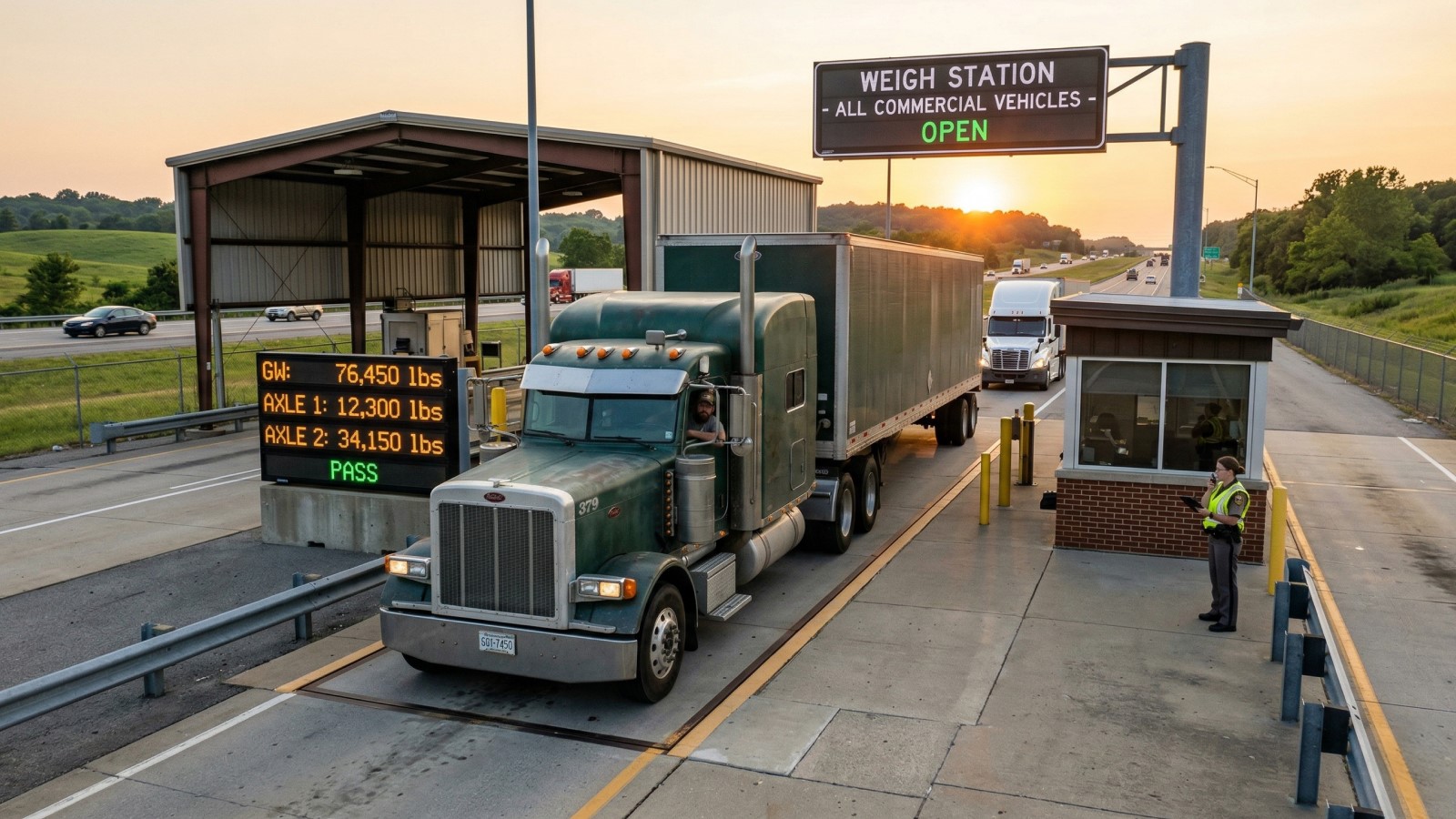
Weigh stations are part of every long haul, but the rules behind them are far from uniform. What gets you waved through in one state might get you pulled over in the next.
For most drivers, the general rule is simple: if your truck is over 10,000 pounds GVWR, expect to stop. The catch is that some states set the bar as low as 2,000 pounds, while others push it all the way up to 26,000.
Knowing where you actually need to pull in can save time, avoid fines, and keep your record clean.
Key Facts:
- The federal baseline under the Surface Transportation Assistance Act (1982) sets a standard maximum of 80,000 lb for a five-axle combination using the Bridge Formula framework.
- Most U.S. states use a 10,000 lb GVWR threshold as the general trigger for weigh station entry requirements for commercial vehicles.
- Low-threshold states set entry requirements as low as 2,000–8,000 lb GVWR, with examples including Nebraska (2,000 lb), Arizona (2,000+ lb), and Virginia (7,500 lb).
- High-threshold states use 16,000–26,000 lb GVWR triggers, including Illinois (16,000 lb), Oregon (26,000 lb), and Montana (26,000 lb with portable scale enforcement around 10,000 lb).
- “All trucks enter” signage overrides weight thresholds and requires mandatory compliance regardless of GVWR or load status.
- Weigh-in-motion systems can screen up to roughly 80% of highway traffic at speed, reducing the number of vehicles directed to static scales for full inspection.
What Are the Federal Standards For Weigh Stations?
Before state rules even come into play, federal law sets the baseline. The key standard comes from the 1982 Surface Transportation Assistance Act*, built around the Bridge Formula.
The Surface Transportation Assistance Act of 1982 (STAA) is a major U.S. federal law that reshaped highway funding and set important standards for commercial trucking, especially truck size and weight rules.
That gives a five-axle semi 80,000 pounds max without permits. Singles stop at 20,000 pounds, tandems 34,000, four feet apart, tridems 42,500, tires 500 pounds per tread inch.
Over that, and FMCSA puts you out of service on the spot, logging it from 4 million inspections a year into Dataqs for your carrier's score. About one in four trucks creeps over 80K somewhere, so states crack down.
They match feds on interstates but change up inside, like Michigan's 164K "trains" on special roads, spring frost laws cutting 20-35% up north to save soft pavement, or farm boosts in Iowa for grain runs.
State-by-State Stop Rules
This is where things really start to vary, and where a lot of drivers get caught off guard. Most states base weigh station requirements on GVWR, not your actual weight at the moment. In simple terms, it does not matter if you are empty or fully loaded. If your truck is rated above the threshold, you are expected to enter.
That detail trips up a lot of newer drivers. An empty box truck or semi still falls under the same rules as a loaded one because enforcement is based on what the vehicle is capable of carrying, not what it happens to be hauling at the time.
One rule overrides everything else. If you see a sign that says “All Trucks Enter,” you pull in. No guessing, no exceptions, unless a sign clearly tells you otherwise. This applies across the board, including situations involving farm vehicles, government units, or specialized equipment. If the sign is posted, enforcement expects full compliance.
Where things get more nuanced is in how states define “truck” and the weight thresholds that trigger inspection requirements. Some states cast a wide net, while others focus more on heavier commercial traffic.
Low Thresholds (2,000-8,000 lb)
These states take a stricter approach. Even lighter commercial vehicles such as small box trucks, cargo vans used for business, and some pickup trucks with commercial plates may be required to enter. This is especially common in areas with dense traffic or a high volume of local deliveries.
Standard 10,000 lb (Most States)
This is the most common benchmark nationwide. If you are operating a typical semi, straight truck, or medium-duty commercial vehicle, you should assume weigh station stops are required unless signage indicates otherwise. Federal safety regulations also commonly align with this threshold, which is why it shows up so often.
High Thresholds (16,000+ lb)
Some states appear more relaxed on paper, focusing primarily on heavier vehicles. However, this does not mean lighter trucks are off the radar. Portable scales, roadside inspections, and random enforcement checks can still target vehicles below the posted threshold, especially if something looks off.
All Commercial (No Minimum)
In these states, weight is not the deciding factor. If your vehicle is being used for commercial purposes, you may be required to enter regardless of size. That includes smaller units that might otherwise bypass stations in other states. Guessing wrong here can lead to unnecessary violations and delays.
Who Has to Stop at Weigh Stations?
In most states, commercial vehicles with a GVWR of 10,000 pounds or more are required to enter open weigh stations. The key factor is usually the vehicle's rated capacity, not its actual weight at the time. An empty truck that exceeds the state's threshold is generally subject to the same requirements as a fully loaded one.
However, the rules vary significantly by state. Some states require vehicles as light as 2,000 pounds GVWR to stop, while others do not require entry until a vehicle reaches 16,000, 26,000, or more pounds GVWR. Certain jurisdictions also require all commercial vehicles to enter regardless of weight.
Special vehicle categories can have different requirements. Agricultural vehicles, tow trucks, hazmat carriers, government vehicles, and RVs may be subject to exemptions or additional rules depending on the state. These exceptions are not consistent nationwide, which is why drivers should always verify local requirements before operating in a new jurisdiction.
One rule is nearly universal: if a sign states "All Trucks Enter" or "Commercial Vehicles Must Stop," compliance is mandatory regardless of weight, cargo status, or potential exemptions. Ignoring posted instructions can result in fines, inspections, and other enforcement actions.
For drivers operating across multiple states, the safest assumption is simple: if your vehicle is used commercially and approaches or exceeds 10,000 pounds GVWR, expect weigh station requirements unless state law or posted signage clearly indicates otherwise.
What Is New at Weigh Stations In 2026?
Technology is reshaping how weigh stations operate, and the difference is noticeable on the road.
Weigh-in-motion systems are now doing most of the heavy lifting. These sensors are built directly into the road and measure axle weights at highway speeds. In leading states, they handle up to 80 percent of passing traffic without requiring a full stop.
Only a small percentage of trucks, usually those flagged as potential violations, are directed to static scales.
That means shorter lines and less waiting. In fact, some reports show delays dropping by nearly half in states that rely heavily on this system.
The technology itself has improved a lot. Modern systems use multiple sensors and adjust for temperature changes, keeping accuracy within a few percentage points under normal conditions. Rough roads or sudden speed changes can still affect readings, but overall reliability is strong enough that more states are expanding these programs.
The basics still matter. Pay attention to signage, know your numbers, and never assume the next state plays by the same rules.
Frequently Asked Questions
Do trucks have to stop at every weigh station?
Not always. Whether a truck must stop depends on the state's rules, the vehicle's GVWR, and the posted signage. Most states require commercial vehicles over 10,000 pounds GVWR to enter weigh stations, but some states use lower or higher thresholds. Regardless of weight, if a sign says "All Trucks Enter," drivers must pull in unless another sign specifically exempts them.
Do pickup trucks with trailers have to stop at weigh stations?
Sometimes. A pickup truck towing a trailer may be required to stop if it is being used for commercial purposes or if its combined GVWR exceeds the state's threshold. In states that require all commercial vehicles to enter, even smaller commercial pickups may need to stop. Recreational vehicles and personal-use pickups are often exempt, but rules vary by state.
Do farmers have to stop at weigh stations?
It depends on the state and the type of operation. Some agricultural vehicles receive exemptions, particularly during harvest seasons or when operating within a limited distance from the farm. However, many states still require farm trucks to enter weigh stations when signs direct all trucks to stop. Drivers should always follow posted instructions and verify state-specific agricultural exemptions.
What happens if you don't stop at a weigh station?
Failing to stop at a required weigh station can result in fines, citations, inspections, and possible out-of-service orders. In some cases, enforcement officers may pursue the vehicle and conduct a roadside inspection. Repeated violations can negatively affect a carrier's safety record and compliance history.
Is it illegal to go around a weigh station?
Yes, if you are required to enter. Using alternate routes, exits, or bypass roads to intentionally avoid an open weigh station can lead to significant penalties if discovered. Enforcement agencies often monitor common bypass routes and may stop vehicles suspected of avoiding inspection.
Do you have to stop at a weigh station if your truck is empty?
Yes, an empty commercial truck may still need to stop at an open weigh station. Requirements vary by state and depend on factors such as the vehicle's weight rating, registration, and posted signs. Always follow weigh station instructions, even when hauling an empty trailer.
How can you check if a weigh station is open or closed?
Trucker Guide helps truck drivers locate open/close weigh stations and check available status updates, making it easier to plan routes and prepare for upcoming stops.


