



FMCSA DataQs 2026 Update: New Rules Reshape Denial Reviews

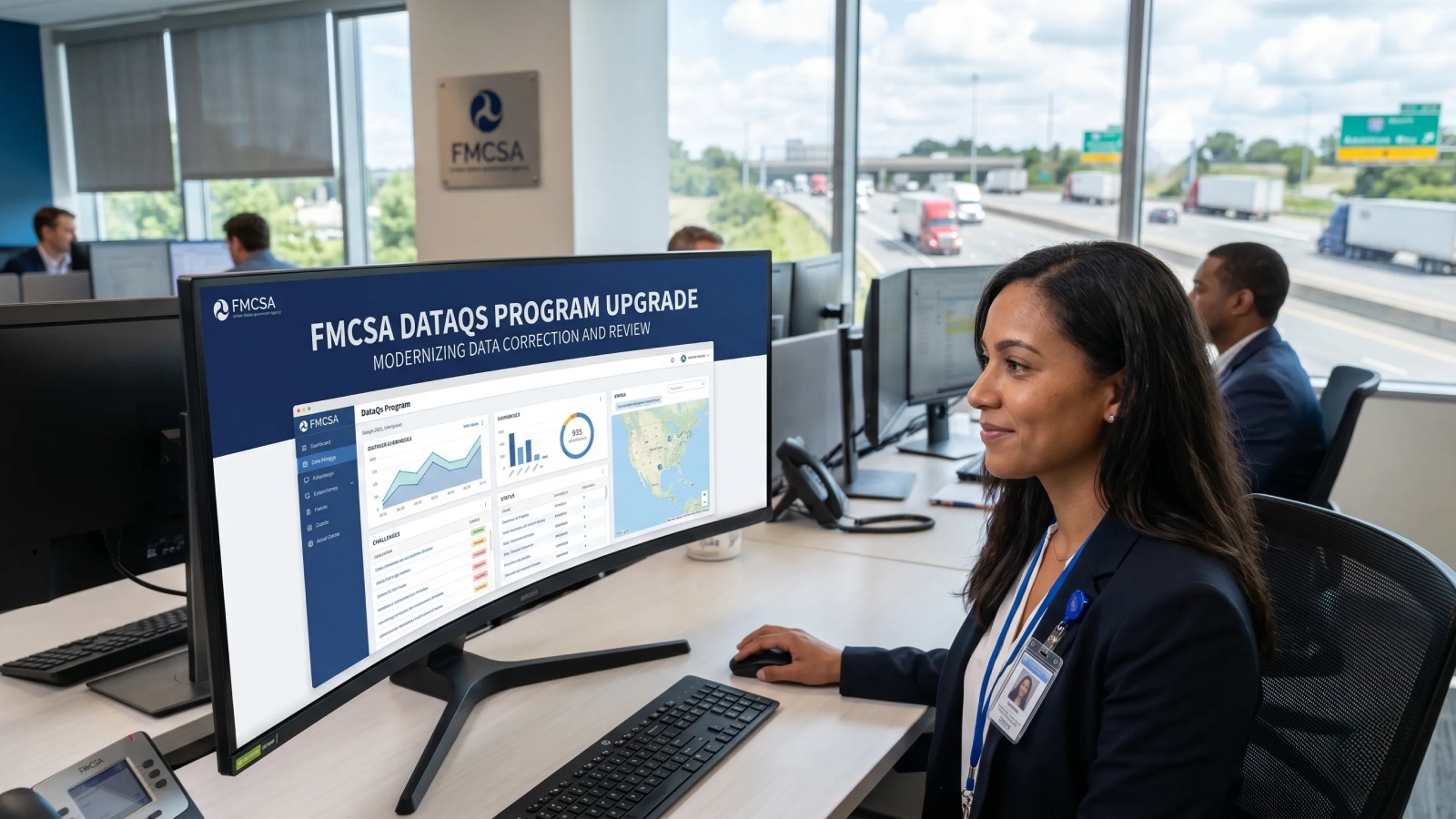
FMCSA issued a 2026 update to the DataQs program under its federal safety oversight framework. The change is documented in the agency’s April 15, 2026, press release and Federal Register notice, and applies to state-level administration of safety data correction procedures within federally funded enforcement systems.
Key Facts:
- On April 15, 2026, the Federal Motor Carrier Safety Administration announced updates to the DataQs program affecting how safety data correction requests are reviewed at the state level.
- The DataQs system processes over 71,000 annual disputes, including approximately 8,300 crash-related cases and more than 63,000 inspection and violation-related requests.
- The 2026 update introduces a mandatory three-stage review process: initial review, reconsideration, and final review by a senior official or independent panel.
- New federal timelines require initial and reconsideration reviews to be completed within 21 days each, with a total maximum resolution time of 45 days.
- Correction requests now require full written explanations tied to specific evidence, including inspection reports, crash records, and enforcement documentation.
Why the DataQs System Matters in Trucking
The DataQs system is the official federal process that allows carriers and drivers to challenge safety data they believe is incorrect. It covers inspection reports, crash records, and violation entries created during enforcement activities.
These records are not just paperwork. They directly feed into CSA scores, which influence how carriers are evaluated by regulators, insurers, and industry partners. A single incorrect entry can affect compliance status and long-term operating costs.
FMCSA data shows the scale of the system is significant. In 2024, DataQs processed more than 71,000 requests, including approximately 8,300 crash-related disputes and over 63,000 inspection and violation-related cases. This volume explains why standardization became necessary.
You May Also Like: FMCSA Medical Certification Changes in 2026: NRII Transition Explained
Key Structural Change – A 3-Step Review Process
One of the biggest updates in 2026 is the introduction of a mandatory three-stage review structure for all states participating in federal safety programs.
Instead of handling disputes in a single-layer process, the system now follows a clear sequence designed to improve fairness, consistency, and accountability.
The process works like this:
- Initial review: Every request starts here. States are no longer allowed to rely solely on the original enforcement officer when denying a correction request. This change reduces the risk of decisions being influenced only by the issuing party and adds a first layer of internal review.
- Reconsideration stage: If a carrier disagrees with the outcome, the case moves to a second level of review. At this point, independent subject-matter experts who were not involved in the original decision must reassess the record. This step introduces a neutral perspective that was not consistently required before.
- Final review: The last stage is handled by a senior official or an independent panel. The purpose is to ensure that no decision is finalized without higher-level oversight, adding a final layer of quality control and impartiality.
Together, these three steps replace the older, more variable state-by-state approach and create a more structured, transparent, and accountable correction system across all participating states.
New National Deadlines for Faster Decisions
FMCSA also introduced strict timelines for how long each stage can take.
👉 Initial reviews must now be completed within 21 days. Reconsideration also has a 21-day limit. Final decisions must be issued within a total of 45 days.
Before this change, review times varied significantly between states. Some cases were resolved quickly, while others could remain open for extended periods depending on workload and internal processes.
With the 2026 update, the goal is to eliminate uncertainty and create predictable processing times nationwide. For carriers, this means fewer long delays when trying to correct inaccurate safety records.
Transparency, Documentation, and Decision Clarity
One of the most meaningful shifts in the 2026 FMCSA DataQs update is the way decisions must now be explained when a correction request is denied.
Instead of short or generic rejection notes, states are required to provide a full written explanation that connects the decision directly to the evidence reviewed. This includes specific references to inspection reports, crash records, officer notes, or any enforcement documentation used to support the outcome.
The idea is simple but important: a carrier should be able to clearly understand not just what was decided, but why it was decided that way.
The expectation goes further than just explanation. Agencies must now show a transparent reasoning chain that links evidence to conclusion, reducing situations where outcomes feel unclear or inconsistent.
On top of that, every denial must include next-step guidance. That means carriers are not left guessing whether they can appeal, request reconsideration, or submit additional documentation. The process becomes more structured and easier to follow, especially for smaller carriers who may not have legal or compliance teams.
How Does FMCSA DataQs Change Transparency and Decision Clarity in 2026?
Time Limits and Case Eligibility Rules
Another major update is the introduction of strict time boundaries for submitting correction requests, which effectively standardizes how far back disputes can reach.
👉 Inspection-related records can now be challenged for up to three years after the event, while crash-related records are eligible for review for up to five years.
These time limits are now applied the same way across all participating states, which removes the old situation where cases could stay open for very different lengths of time depending on local procedures. That alone brings a noticeable shift in how the system feels in practice.
It also changes the rhythm of how DataQs works day to day. Older records can’t linger indefinitely anymore, which used to slow things down and sometimes create confusion when outdated information stayed tied up in review. At the same time, it nudges carriers toward keeping a closer eye on their safety data instead of only checking it when a problem becomes serious.
From an operational point of view, the effect is pretty practical. Enforcement teams are no longer spread thin across long-past cases, so they can focus more on recent incidents that actually reflect current safety performance. That makes the workload more manageable and helps align reviews with real-time compliance needs. In simple terms, the system becomes easier to run and easier to follow.
For drivers and carriers, the experience is a bit of a trade-off. Disputes are expected to move faster and follow clearer timelines, which is a real improvement over inconsistent delays in the past.
At the same time, the process is no longer casual, as it asks for stronger documentation and more precise evidence when challenging a record. So while the system becomes more predictable and transparent, it also becomes less forgiving, requiring a more careful and prepared approach when filing corrections.


