



What Canadian Drivers Need to Know About HOS Rules in 2026?


Hours-of-Service rules are some of the most important regulations drivers must understand. These rules limit how long you can drive and work so that fatigue does not put you or others at risk.
In 2026, Canada’s federal Hours-of-Service requirements will remain the foundation for driver safety and compliance. They have been in place for many years, and carriers continue to be expected to follow them carefully.
What does this mean for you? Let’s break it down.
Key Facts:
- In 2026, Canadian HOS rules limit driving to 13 hours/day and 14 hours on duty.
- Drivers must take 10 hours off duty, including 8 consecutive hours of rest.
- Weekly limits: 70 hours/7 days (Cycle 1) or 120 hours/14 days (Cycle 2).
- ELDs are mandatory for most federal carriers and track all duty time automatically.
- Violations can lead to fines, out-of-service orders, and CSA score damage during inspections.
What Are the HOS Rules in Canada?
Hours-of-Service rules are federal regulations that control how long commercial drivers can be on duty and behind the wheel. They are designed to keep drivers rested and alert, reduce fatigue-related crashes, and ensure consistent standards across provinces and across long-haul, regional, and cross-border trips.
These rules are not optional for drivers who are required to keep records of duty status. Following them is part of your job and part of keeping you safe. They influence your daily schedule, your rest breaks, and your long-range planning.
Even though the rules can seem complicated at first, once you understand the logic behind them, they are not hard to follow. They are about balancing safety with the need to get freight from point A to point B.
Who Has to Follow HOS Rules in Canada in 2026?
In 2026, Hours of Service (HOS) rules apply to most drivers who operate commercial vehicles as part of their job. These rules are designed to control driving time and ensure proper rest to reduce fatigue and improve road safety.
Here is a clear breakdown of who must follow HOS rules:
- Semi-truck and tractor-trailer drivers hauling freight across states or regions
- Long-haul and over-the-road truck drivers operating under carrier contracts
- Regional and local freight drivers using heavy commercial vehicles
- Delivery drivers operating large trucks or commercial box trucks above regulated weight limits
- Owner-operators working under FMCSA-regulated operations or carrier authority
- Bus and passenger transport drivers carrying people for commercial purposes
- Drivers transporting goods for hire under regulated logistics or trucking companies
- Fleet drivers operating company-owned commercial vehicles for business use
In general, if you are driving a commercial vehicle for work and it falls under federal or provincial size and weight regulations, you are required to follow HOS rules.
There are limited exceptions, such as certain short-haul drivers who stay within a defined local radius and return to their reporting location daily. Some agricultural, utility, or specialized operations may also qualify for partial exemptions depending on jurisdiction and conditions.
It is important to know exactly which rules apply to you. For many new drivers, this knowledge starts during CDL training in Canada, where Hours-of-Service requirements are introduced as part of basic compliance education.
What Are Daily Driving and Work Limits?
Daily driving and work limits are the foundation of the Hours of Service rules. They control how much driving and work you can do in a single day and when you must stop to rest.
1. Driving Limit
In Canada in 2026, you may drive for up to 13 hours on any workday. This limit is the total amount of time you may spend driving a commercial vehicle. It includes all the time that you are physically controlling the truck on the highway or while moving.
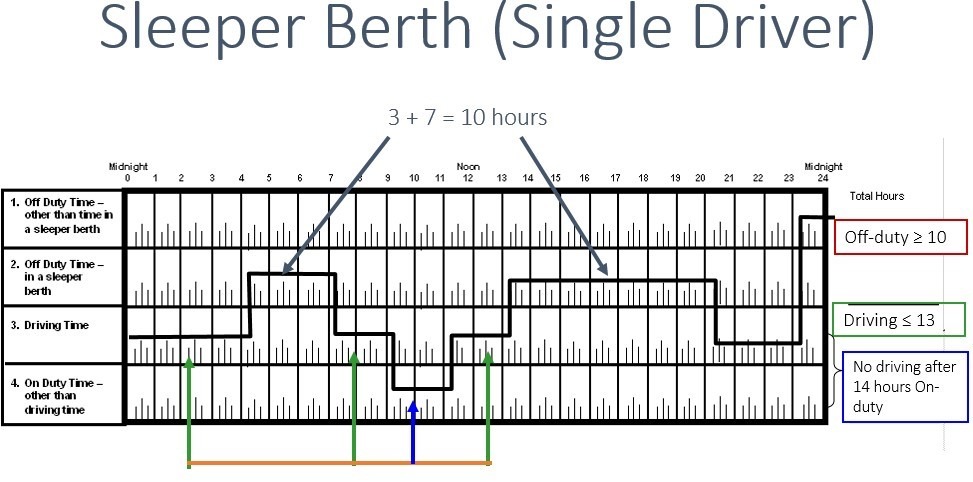
This rule is in place because long stretches of driving without sufficient rest dramatically increase the risk of fatigue and accidents. Drivers who push past their limits are more likely to miss hazards and react slowly to traffic changes.
Staying within the 13-hour limit means planning your driving day, factoring in traffic delays, road construction, and expected weather conditions so that you do not exceed your legal driving time.
2. On-Duty Limit
Your total on-duty time in a day is limited to 14 hours. On-duty time includes everything you do that is work-related. It counts your driving time, but it also includes loading, unloading, inspections, paperwork, fueling, safety checks, scales and customer communication.
Even if you are not driving the truck, your time is still part of your on-duty total. This rule prevents drivers from stacking too much activity into one day, even if some of it is not behind the wheel. Both driving and other work count toward this total.
Once you have reached either the driving limit or the on-duty limit, you must stop driving and begin your rest period. This ensures that every driver gets time to rest before they can resume work.
How Much Rest Time is Required Under Canadian HOS Rules?
Rest time is as important as the work itself. You cannot just stop driving and start again whenever you feel like it. Canada’s rules require specific rest periods before you can begin a new working day.
Once you have reached your daily limits, you must take at least 10 hours off duty before you can drive again. This 10-hour period gives your body time to recover and reset. Time off duty includes sleeping, eating, relaxing and any time you spend off work tasks.
Out of these 10 hours off duty, at least 8 hours must be consecutive. This means that you must have 8 hours straight where you are not working before you resume any driving or work. The additional 2 hours can be broken up or used in different ways, depending on your schedule.
Getting adequate rest is a safety issue, not just a legal requirement. Drivers who do not rest properly are more likely to make mistakes, feel tired behind the wheel, and fall asleep while driving.
Rest can be hard to fit into a busy schedule, but it is an investment in your safety and the safety of others on the road.
Weekly Duty Limits
Canada’s Hours of Service rules do not only control daily driving. They also limit how many total hours a driver can accumulate over a longer period. In 2026, drivers must follow one of two duty cycles depending on how their carrier operates.
Cycle 1
Cycle 1 limits your total on-duty time to 70 hours in any 7 days. Once you reach this limit, you must have adequate off-duty time before continuing to work. This cycle is often used by regional and short-haul drivers.
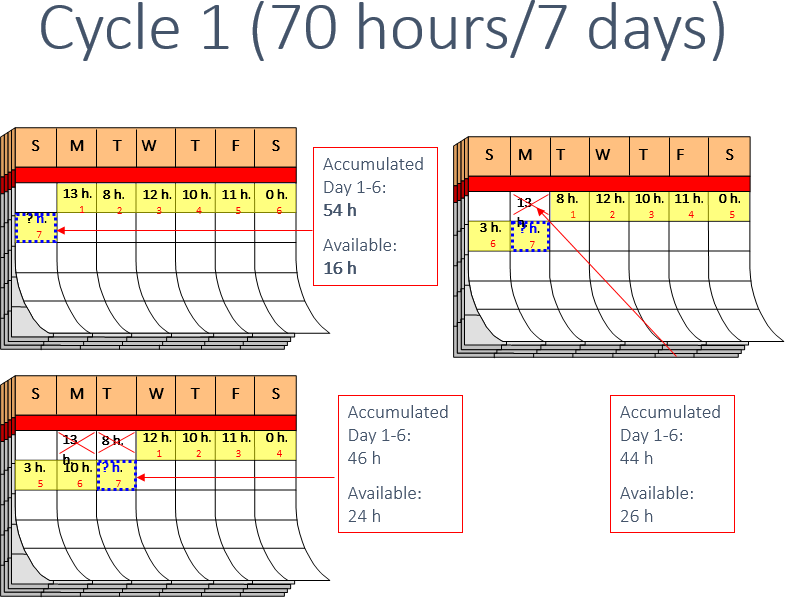
The purpose of this limit is to prevent drivers from stacking too many hours at once without adequate rest over several days.
Cycle 2
Cycle 2 allows more flexibility for drivers who operate on extended schedules. Under Cycle 2, your total on-duty hours may not exceed 120 hours in any 14 days. However, you must have at least 24 hours off-duty before you can exceed 70 hours in this cycle.
This means you must take a full day off before you can continue beyond 70 hours total in any 14 days. This reset requirement creates a safety checkpoint in longer schedules.
Choosing the right cycle depends on your type of work, your typical routes, and carrier policies. Both cycles are designed to balance workload and rest.
What Breaks are Required During the Day Under Canadian HOS?
Break rules are often misunderstood because in some countries, specific short breaks are required. In Canada, the federal HOS rules do not require that you take a 15-minute break every X hours of driving.
Instead, the focus is on your daily driving and work limits and your off-duty time. Whether you take regular short breaks during the day will not affect your legal compliance, but good practice suggests that taking short breaks helps reduce fatigue and keeps you alert.
Many carriers schedule breaks voluntarily because short rests help drivers stay focused and may prevent mistakes later in the day.
The lack of a fixed break requirement does not mean breaks are unimportant. It means that the official compliance rules focus on overall limits and required rest periods before the next duty cycle.
How Do Adverse Driving Conditions Work Under Canada HOS Rules in 2026?
In 2026, Canada’s Hours of Service rules do allow a bit of flexibility when the road situation turns bad unexpectedly. This is called the adverse driving conditions rule, and it is meant purely for safety, not for squeezing extra driving time out of your day.
It comes into play when something you could not reasonably plan for happens on the road. Think sudden snowstorms, whiteout conditions, black ice, major crashes that shut down highways, or unexpected detours that seriously slow everything down. If it applies, drivers can extend driving or on-duty time just enough to reach a safe place to stop. That is the key limit. It is not permission to continue normal operations or push through a full shift.
In 2026, verification is much more data-driven. Inspectors can check live highway traffic cameras along with official road condition updates and weather tracking systems, to confirm what was happening at the time and location of the trip. Because of this, the situation must match real-world conditions on that route.
Drivers are expected to document everything clearly in their logs or ELD notes. A simple explanation of the event, location, and delay is usually enough, as long as it aligns with what road cameras and traffic systems show.
Even with this rule, safety always comes first. If conditions are dangerous, the driver is expected to stop, not continue just because extra time may be available.
What are the ELD Requirements for Canadian Truck Drivers?
In 2026, Canadian commercial drivers under federal Hours of Service rules must use Transport Canada–certified Electronic Logging Devices (ELDs). These devices automatically track driving time, duty status changes, and rest periods, replacing paper logbooks in most regulated operations.
Below is a clear, data-based breakdown of the main ELD requirements.
In 2026, enforcement is highly data-driven. Inspectors often cross-check ELD records with GPS movement, shipment paperwork, border crossings, and roadside observations. This makes inconsistencies easier to detect than ever before.
Drivers are still responsible for the accuracy of their logs, even though the system is automated. Any missing data, incorrect duty status, or delayed correction can still lead to violations.
What are the Penalties for HOS Violations in Canada?
When a driver is found in violation, the consequences can vary depending on the severity, but they usually fall into a few main categories.
Typical outcomes include on-the-spot fines, which can range from a few hundred dollars for minor logbook or form errors to much higher amounts for major violations like exceeding driving limits or falsifying records. In many provinces, serious HOS violations can reach $1,000–$2,000+ per offence, and in severe cases involving falsification or repeated non-compliance, penalties can climb significantly higher depending on enforcement action and court decisions.
Another immediate consequence is an out-of-service order. This means the driver is legally not allowed to continue driving until required rest time is completed or the violation is corrected. This can stop a load instantly, leading to missed deliveries and operational disruption.
HOS violations also affect the carrier’s safety rating and compliance record. In Canada’s safety system, repeated violations can trigger audits, increased inspections, and long-term damage to a company’s safety profile, which can impact contracts and insurance costs.
In more serious cases, especially where logs are falsified or deliberately manipulated, enforcement can escalate beyond roadside penalties. This may include formal investigations, higher administrative penalties, and in extreme situations, legal consequences for both drivers and carriers.
Following the rules carefully and using certified ELDs helps reduce the risk of violations during inspections.
Frequently Asked Questions
What are the new HOS rules in Canada in 2026?
In 2026, Canada’s federal Hours-of-Service (HOS) rules continue to limit drivers to 13 hours of driving and 14 hours on duty per day, followed by at least 10 hours off duty, including 8 consecutive hours of rest. Certified Electronic Logging Devices (ELDs) also remain mandatory for most federally regulated carriers.
What is the 70-hour/7-day rule in Canada?
The 70-hour/7-day rule, known as Cycle 1, limits commercial drivers to a maximum of 70 on-duty hours within 7 consecutive days. Once a driver reaches that limit, they must take sufficient off-duty time before they can legally continue driving.
What happens if a driver exceeds the 14-hour clock in Canada?
If a driver exceeds the 14-hour on-duty limit in Canada, they may face fines, roadside violations, or be placed out of service until they complete the required rest period. Violations can also negatively affect the carrier’s safety rating and compliance record during inspections.
How do Canadian HOS rules differ from US HOS rules?
Canadian HOS rules allow drivers to drive up to 13 hours per day, compared to the U.S. limit of 11 driving hours under FMCSA Federal Motor Carrier Safety Administration rules. Canada also uses different cycle structures, including the 70-hour/7-day and 120-hour/14-day cycles, while the U.S. follows separate 60/70-hour weekly limits and mandatory 30-minute break requirements.


