


 Blog
BlogWhere Do Reefer Drivers Actually Need to Stop? Plan Truck Routes with Trucker Guide

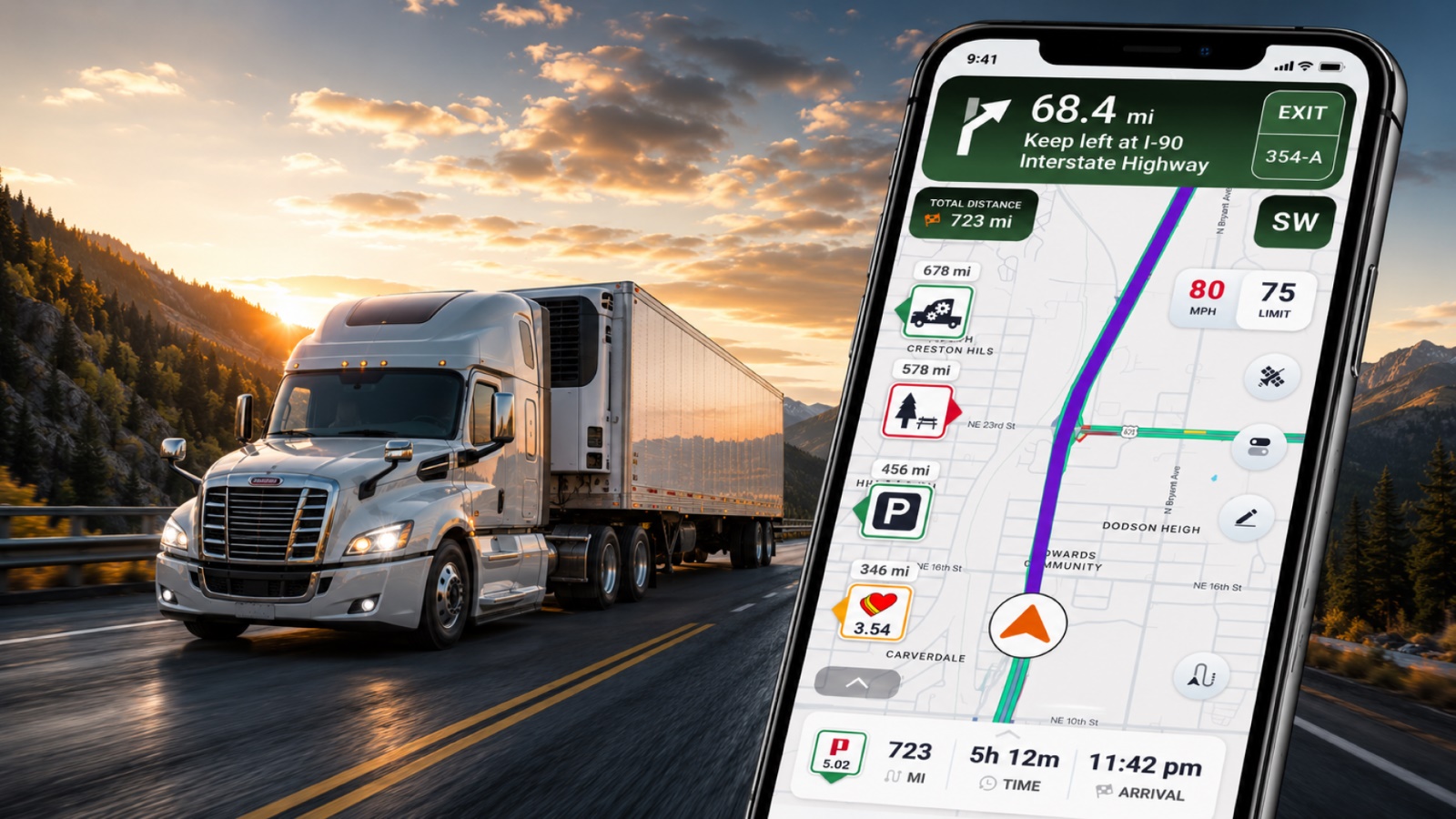
Reefer drivers can plan smarter truck routes by considering fuel, parking, DEF, HOS requirements, and truck services alongside the main route. Trucker Guide helps drivers find truck-focused locations along the way, making it easier to plan necessary stops before they become urgent.
A refrigerated load may have only two addresses, but the trip between them can change quickly. Traffic, loading delays, limited parking, or an unexpected mechanical problem can all affect when and where a driver needs to stop.
These challenges become more important on longer reefer trips, where drivers have to balance the freight, the truck, available driving hours, and commercial-vehicle access.
The result is that a reefer route is more than a line between pickup and delivery. It is a trip that has to work in real-world conditions.
Key Facts:
- 500 to 2,500+ miles: USDA categorizes refrigerated truck movements as local (≤500 miles), short-distance (501–1,500), medium-distance (1,501–2,500), and long-distance (>2,500).
- 7.71 million tons: U.S. truck shipments of fresh produce totaled 7.71 million tons in Q4 2025, according to USDA data.
- 90% of drivers: FHWA found that 90% of surveyed drivers had difficulty finding safe parking at night, while more than 75% regularly faced parking problems when rest was needed.
- 308,920 parking spaces: FHWA documented 308,920 truck parking spaces, including 36,222 at public rest areas and 272,698 at private truck stops.
- 11 hours of driving: FMCSA HOS rules allow property-carrying drivers up to 11 hours of driving within a 14-hour window, with a required 30-minute break after 8 cumulative hours of driving.
.png)
How Much Can a Reefer Route Change From One Load to Another?
The USDA Agricultural Marketing Service provides a useful picture of how variable refrigerated trucking can be. Its refrigerated-truck data covers shipment volumes by origin and commodity and separates truck movements into four distance categories, from local trips of 500 miles or less to long-distance movements of more than 2,500 miles.
That variation matters because a driver moving a regional produce load may have very different stopping requirements from someone taking a refrigerated load across several states. The pickup and delivery addresses change, the distance changes, and the practical places to stop change with them.
The USDA distance categories show just how broad the operating range can be:
For a reefer carrier, this means there is no single route or fixed group of stops that will work for every load. Once the pickup and delivery locations are known, Trucker Guide can be used to build a truck-focused route and then find the truck-related locations available along the way.
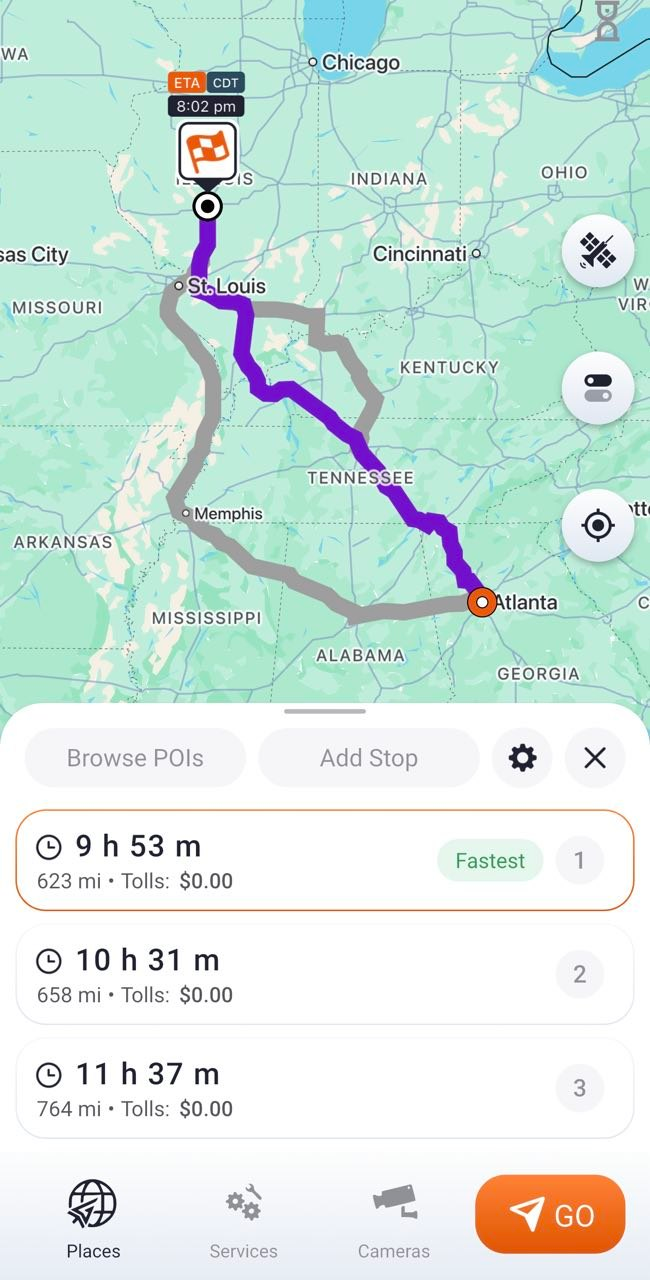
The route is therefore more than a line connecting the shipper and receiver. It becomes the starting point for considering where the truck may need fuel, where the driver may need to park, and what services could become important as the trip develops.
Where Does Fuel Fit Into the Route?
Fuel is usually one of the easier stops to anticipate, but on a long refrigerated run it becomes a decision that may have to be made several times. A trip of more than 2,500 miles, for example, cannot realistically be planned around one fuel stop at the beginning and another at the end.
USDA's refrigerated freight data specifically recognizes long-distance movements above that threshold.
The closest fuel station is not necessarily the most useful option for a commercial truck. The driver may need a location that fits the planned route, provides truck-accessible fuel, and does not require an unnecessary detour.
Trucker Guide provides truck-focused fuel locations and diesel and DEF price information, allowing the driver to consider fuel as part of the route rather than searching for a station only when the tank is already getting low.
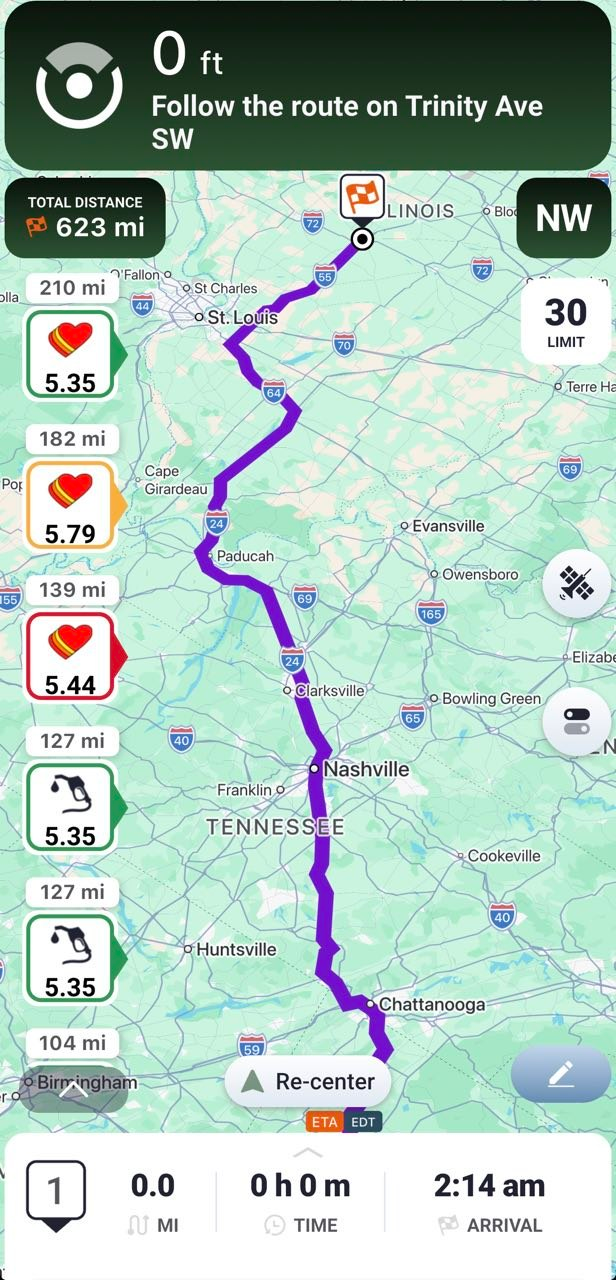
For example, if the driver has enough fuel to reach several locations, looking ahead makes it possible to choose a stop that fits the rest of the trip rather than simply taking the first station that appears nearby. If DEF will also be needed, the driver can consider that requirement at the same time, potentially handling both needs during one planned stop instead of creating another detour later.
That makes fuel planning part of the overall route rather than a separate task that has to be solved every time the fuel level drops.
Why Is Truck Parking a Bigger Planning Problem?
Fuel can generally be estimated from the truck's fuel level and the distance ahead, but parking is much less predictable because finding a truck stop on a map does not mean a parking space will be available when the driver arrives.
The Federal Highway Administration's truck parking research found that more than 75% of surveyed truck drivers regularly experienced problems finding safe parking when rest was needed, while 90% reported difficulty finding safe parking at night.
The study documented 308,920 truck parking spaces, including 36,222 at public rest areas and 272,698 at private truck stops.
The numbers also show why simply saying that the United States has hundreds of thousands of truck parking spaces does not tell the whole story. FHWA found that parking capacity is a problem in all states, with particularly significant challenges along major freight corridors and in large metropolitan areas.
For a driver, the important question is therefore not just whether parking exists somewhere along the route. It is whether a practical location will be available when the driver actually needs to stop.
How Do Hours of Service Change Where a Driver Can Stop?
Parking becomes even more important when it is considered alongside FMCSA hours-of-service requirements. Under the standard rules for property-carrying drivers, the basic limits are:
These limits directly affect route planning because the driver cannot simply continue looking for a better parking location indefinitely. A loading delay, traffic congestion, or another interruption can change the timing of the trip enough to make an originally planned stop less practical.
Imagine a driver who expects to reach a truck stop with plenty of time remaining but loses an hour to congestion near a major city. The original location may still be possible, but the driver now has less flexibility if it is full. Knowing where other truck parking options are located farther along the route can become important before the situation becomes critical.
Trucker Guide does not replace the driver's logs or determine HOS compliance, and the driver remains responsible for following FMCSA requirements. Its role is more practical: while planning and driving the route, the driver can look for truck parking and truck stops that may fit the point in the trip where a rest period will be needed.
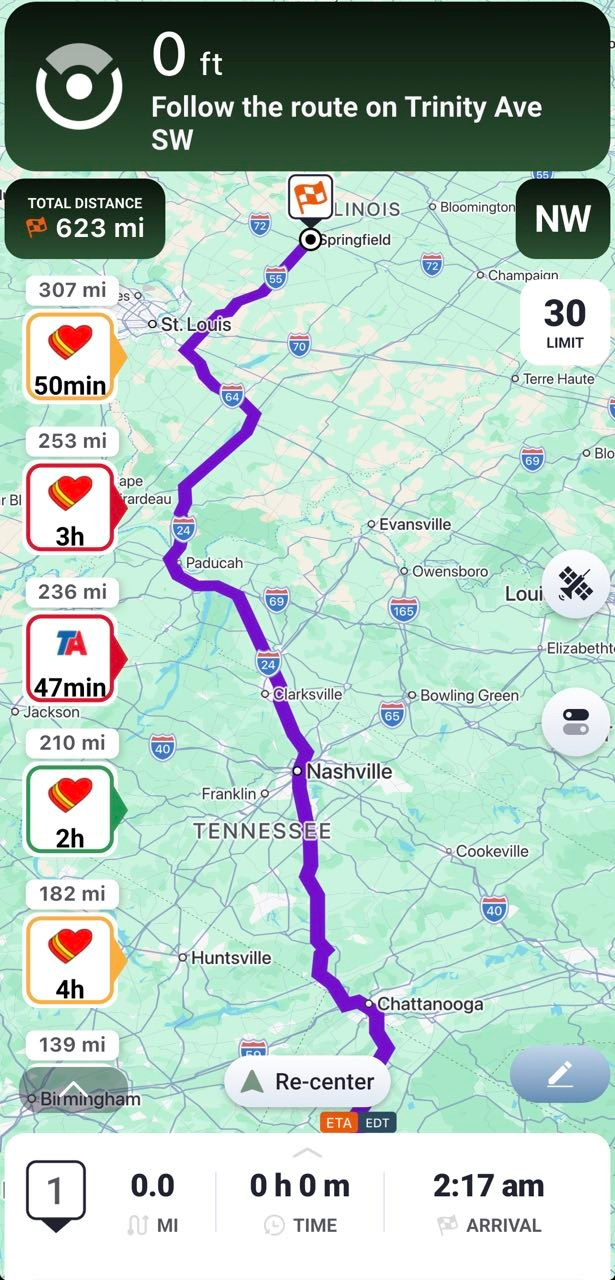
The navigation tool does not decide when the driver should stop. It helps search for a suitable location more easily once the driver knows when a stop will be required.
What Happens When the First Parking Plan Does Not Work?
Even a carefully planned stop can become unusable. Traffic may delay the truck, loading may take longer than expected, weather can affect the route, or the preferred parking location may simply be full when the driver arrives.
FHWA's research is relevant here because it found that truck parking problems are particularly significant on major freight corridors and in large metropolitan areas.
For that reason, it is useful to think about parking as a set of possible options rather than one guaranteed destination. A driver approaching a planned stopping area can use Trucker Guide to see other truck parking and truck-stop locations around the route.
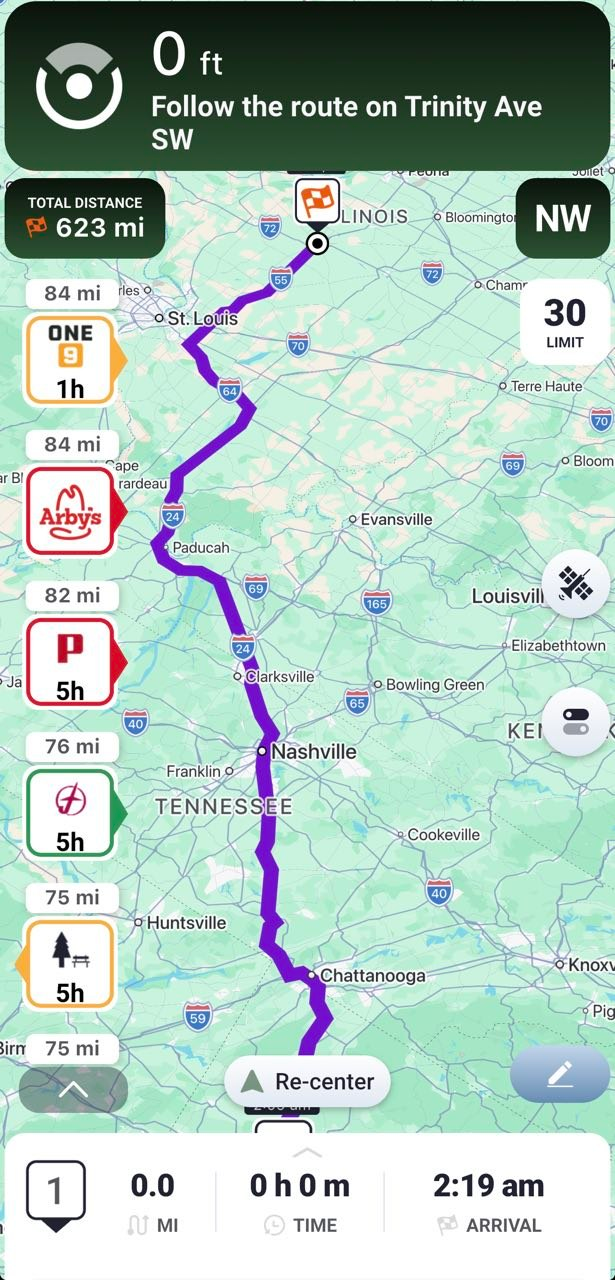
The purpose is not to assume that every location will be suitable or available. Each stop still needs to be checked by the driver based on the truck, timing, and actual conditions. The advantage is that alternatives are easier to identify when the original plan changes, rather than requiring the driver to start a completely new search.
Where Does a Breakdown Fit Into the Route?
Not every stop can be planned before departure. A tire problem, mechanical fault, or another breakdown can turn a normal trip into an unexpected service stop, and the situation can become more complicated when the truck is carrying refrigerated freight and the driver is trying to avoid unnecessary delays.
At that point, finding any nearby business is not enough. The driver needs a location that is relevant to commercial trucking and capable of handling the particular problem.
Trucker Guide includes truck reefer repair and breakdown-related locations, allowing the driver to search for truck-focused services within the same navigation environment when the original route has to change.
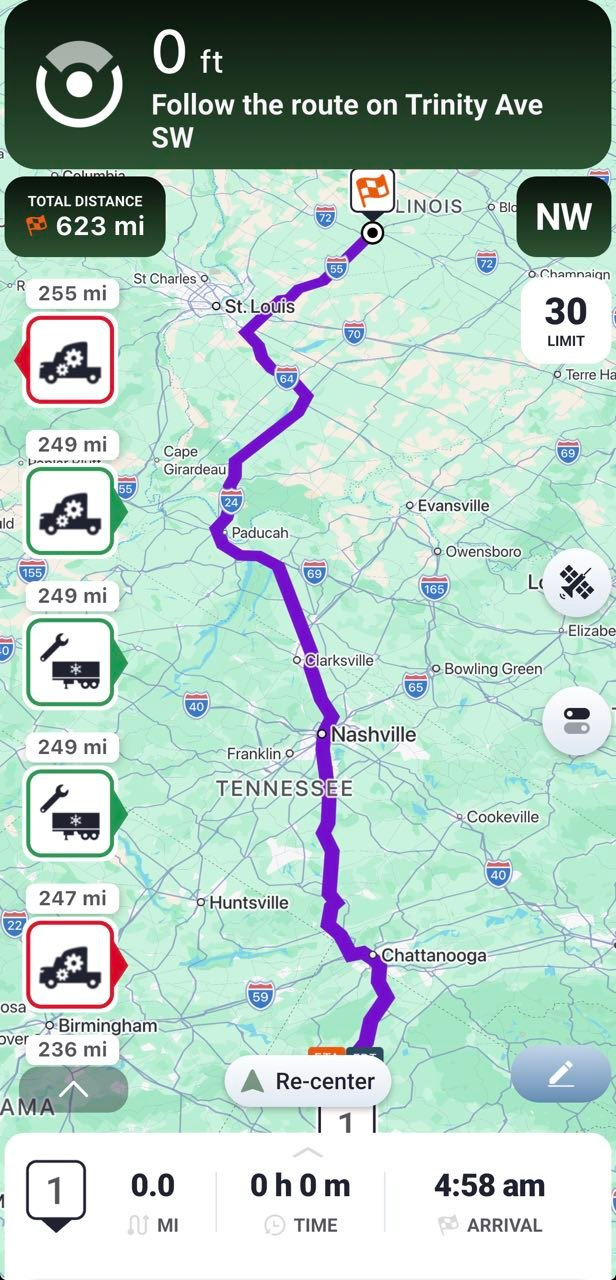
The driver still needs to confirm that a particular provider can handle the truck and the type of repair required, but starting with truck-specific locations can make the search more relevant than relying on a general consumer map.
Are Fuel, Parking, DEF and Repair Really Separate Decisions?
For the driver, they are not. They are different parts of the same trip.
USDA data shows that refrigerated freight can move across very different distances and markets. FMCSA rules determine how long the driver can operate before stopping, while FHWA research demonstrates why finding suitable parking can become difficult when the driver needs it.
That is why the value of truck-focused navigation is not limited to finding a route from one address to another. The driver starts with the route, then uses the same trip to consider fuel, parking, DEF, truck services, and alternative locations as circumstances change.
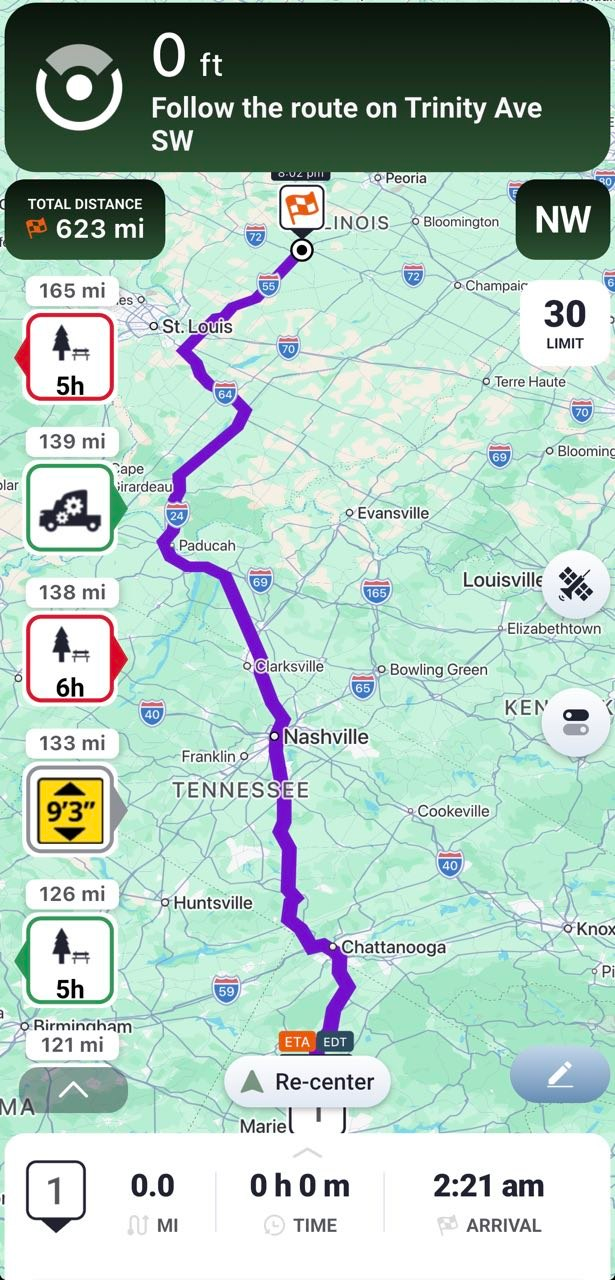
The individual decisions are different, but they all happen within the same journey, which is why keeping them connected to the route can make the planning process easier.
Why Does This Matter for Reefer Fleets?
The same approach can be useful for fleets without requiring Trucker Guide to become a fleet-management or dispatch platform. Dispatch and fleet-management systems can continue handling company-level operations, while drivers use truck-focused navigation for the decisions they make while operating the vehicle.
This distinction matters because the U.S. carrier market is extremely diverse. FMCSA maintains a large carrier information system covering registered motor carriers, while the practical needs of a small regional reefer carrier can be very different from those of a large national fleet.
The common factor is what happens once the truck is on the road. Drivers still need to follow an appropriate truck route, find fuel, manage parking around their available driving time, and locate truck services when something unexpected happens.
For Trucker Guide, that creates a clear role without requiring the product to become something it is not. Its value is in supporting the driver at the point where the company's freight actually meets the road.
How Should a Reefer Driver Think About the Whole Trip?
The most useful way to plan a refrigerated route is to look beyond the two addresses on the load. The pickup and delivery determine where the truck needs to go, but everything between them determines how the driver will actually complete the trip.
The goal is not to predict every event on the road. It is to make the next decision easier when the trip does not go exactly as planned.
Trucker Guide can fit into each stage of that journey by helping the driver plan a truck-specific route, identify fuel and DEF options, look for parking before the end of the driving window, and find truck services if the original plan changes.
For a reefer driver, planning the route means planning the stops that make the route possible.


