



Truck Parking Apps vs ELDs for Rest Break Compliance

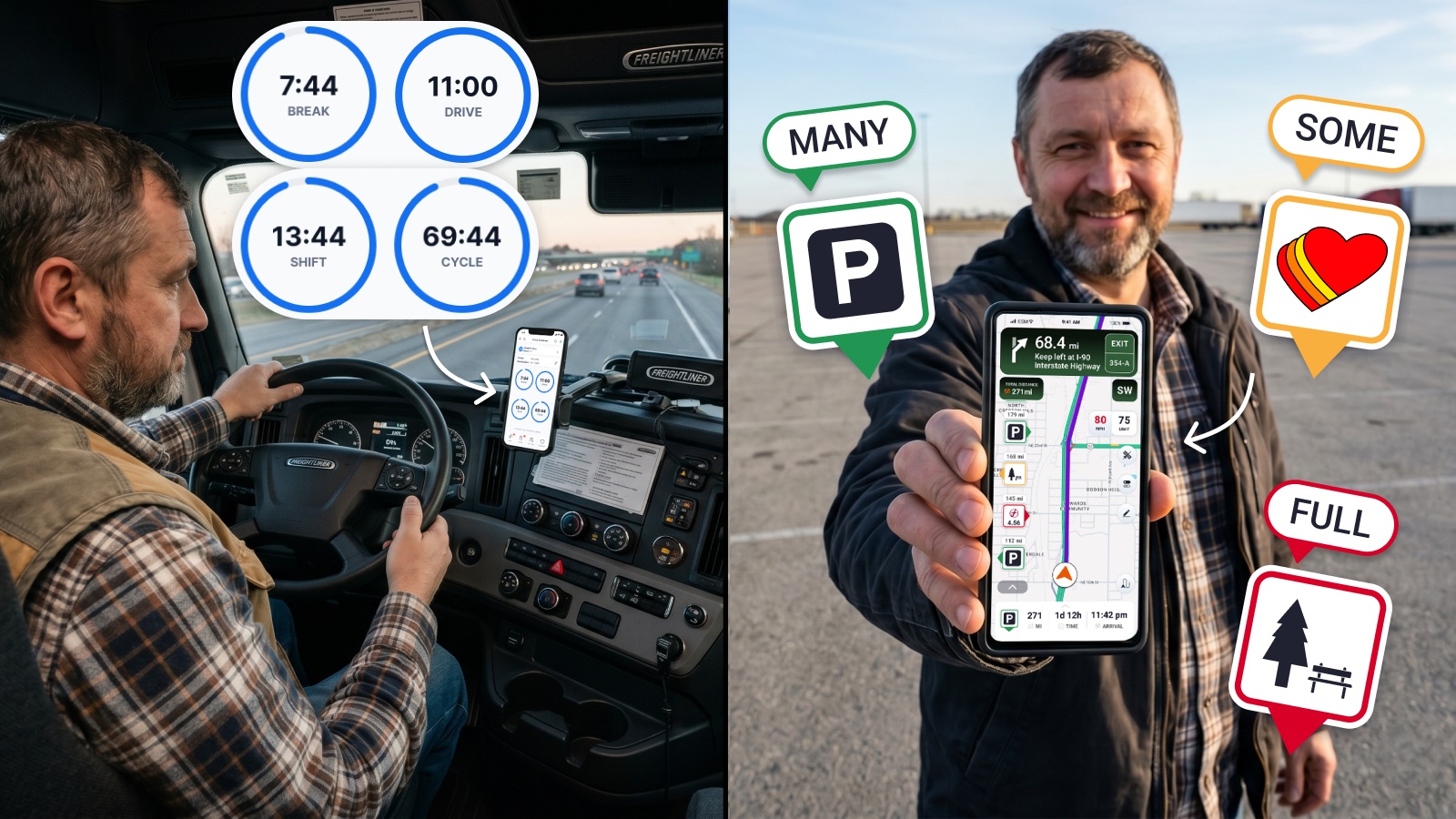
Both solve different problems that work together for full transportation compliance. Truck parking apps like Trucker Guide find legal, safe parking spots before your 8-hour HOS window expires, while ELDs like Motive or Samsara record driving time, duty status, and log the break for enforcement.
While these driver safety tools serve different purposes, understanding how they work together is key to staying compliant on the road. Let's break down how truck parking apps help dispatchers and drivers plan compliant rest breaks, secure parking earlier, and adapt to live route conditions. 👇
Key Facts:
- 30-minute break required after 8 hours of driving (HOS 2026).
- Limited truck parking increases risk of violations and unsafe stops in high-demand areas.
- Trucker Guide provides 10,000 + truck parking locations with real-time availability.
- ELDs automatically log driving time, duty status, location, and vehicle activity for compliance.
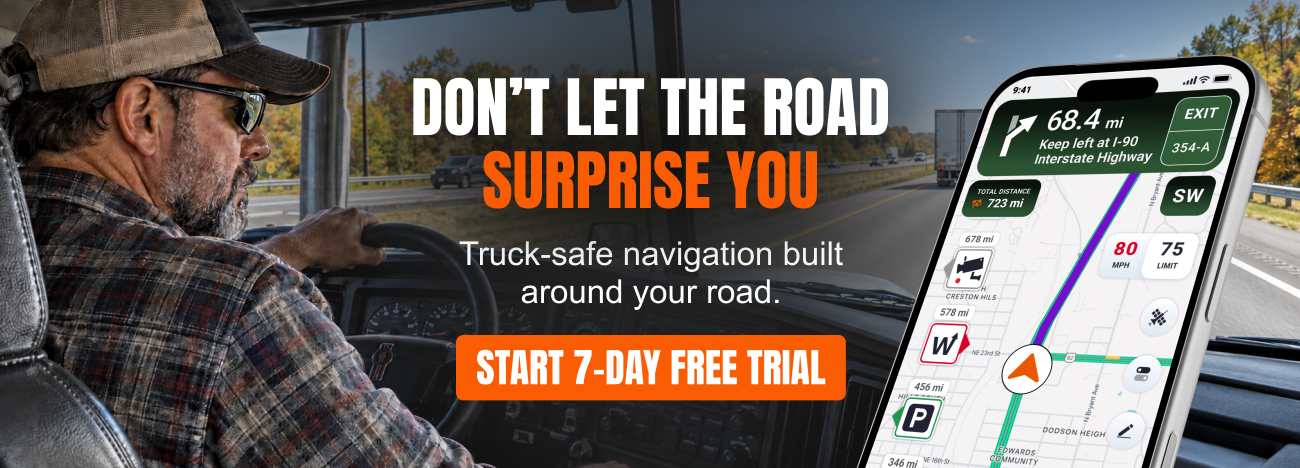
How Do Truck Parking Apps Help with Rest Break Compliance?
Logistics software apps support rest break compliance by helping drivers locate a legal place to stop before they run out of drive time. That matters because parking remains a top industry concern in 2026, and the shortage of available spaces makes it harder for drivers to take mandated breaks on schedule.
When drivers can see nearby truck stops, rest areas, and other parking options in advance, they are less likely to miss a break or make an unsafe stop.
This is the practical value of a commercial vehicle parking app: it reduces the chance that a rest break turns into a violation. For fleets, that can mean fewer delays, less stress for drivers, and better trip planning around HOS rules.
What Is the HOS Rest Break Rule?
Under current FMCSA Hours-of-Service (HOS) rules in 2026, most property-carrying commercial motor vehicle (CMV) drivers must take a 30-minute break after 8 cumulative hours of driving. The break must be at least 30 consecutive minutes in any non-driving status: off-duty, sleeper berth, or on-duty not driving.
For example, a driver may spend 10 minutes off-duty and then 20 minutes on-duty not driving. Because no driving occurs during those 30 consecutive minutes, the break requirement is met.
The break itself counts against the 14-hour driving window, and once the 8-hour mark is reached, the driver must stop driving until the break is completed. If the driver continues driving beyond 8 hours without a break, that is a violation that can be flagged at inspections or during audits.
That rule is exactly why parking matters. A driver may legally need a break, but still needs a legal, safe place to take it. If the driver waits too long to find a safe stop, the required break may come due before legal parking is available.
On busy routes or where parking is tight, this can force drivers to:
Truck parking apps reduce that risk by helping drivers search early, rather than react late.
What Features Should Drivers Look for in a Truck Parking App?
Finding a parking space is not just about locating the nearest truck stop. Professional drivers need tools that help them plan safe and legal stops before their available driving time runs out.
A reliable truck parking app should include:
1. Truck Parking Finder and Availability Information
Drivers should be able to quickly find truck-friendly parking locations, including truck stops, rest areas, and private parking areas. Real-time parking availability helps prevent wasted miles and reduces the risk of reaching a full lot when a break is due.
2. Truck Stop Amenities
A good parking app should show important location details beyond parking availability. Drivers may need access to fuel, showers, restaurants, laundry, repair services, and other amenities when planning longer rest breaks.
3. Overnight Parking Options
Long-haul drivers often need overnight parking options that fit their route and HOS schedule. A parking app should help identify available locations, including truck stops, designated parking areas, and other overnight options such as Walmart truck parking where permitted.
4. Alternatives for Finding Truck Parking
Because parking shortages remain a major challenge, drivers should evaluate multiple ways to find safe parking, including dedicated truck parking apps, navigation tools with truck POIs, and community-driven updates from other drivers.
Why Trucker Guide Is the Priority Parking App
Trucker Guide is designed to help drivers solve one of the biggest challenges in rest break planning: finding a legal, safe parking spot before their 8-hour HOS window expires.
Built specifically for commercial drivers, fleets, and owner-operators, Trucker Guide has over 450,000 truck-friendly locations across the U.S. and Canada. This includes major truck stops like Pilot Flying J, Love's Travel Center, and Petro TA, plus rest areas, weigh stations, restaurants with truck parking, and other truck-safe spots where parking is actually allowed.
The real-time parking availability feature is what makes Trucker Guide different. You can see live availability at truck stops, rest areas, and public parking locations before you head there, so you don't waste miles driving to a full lot.
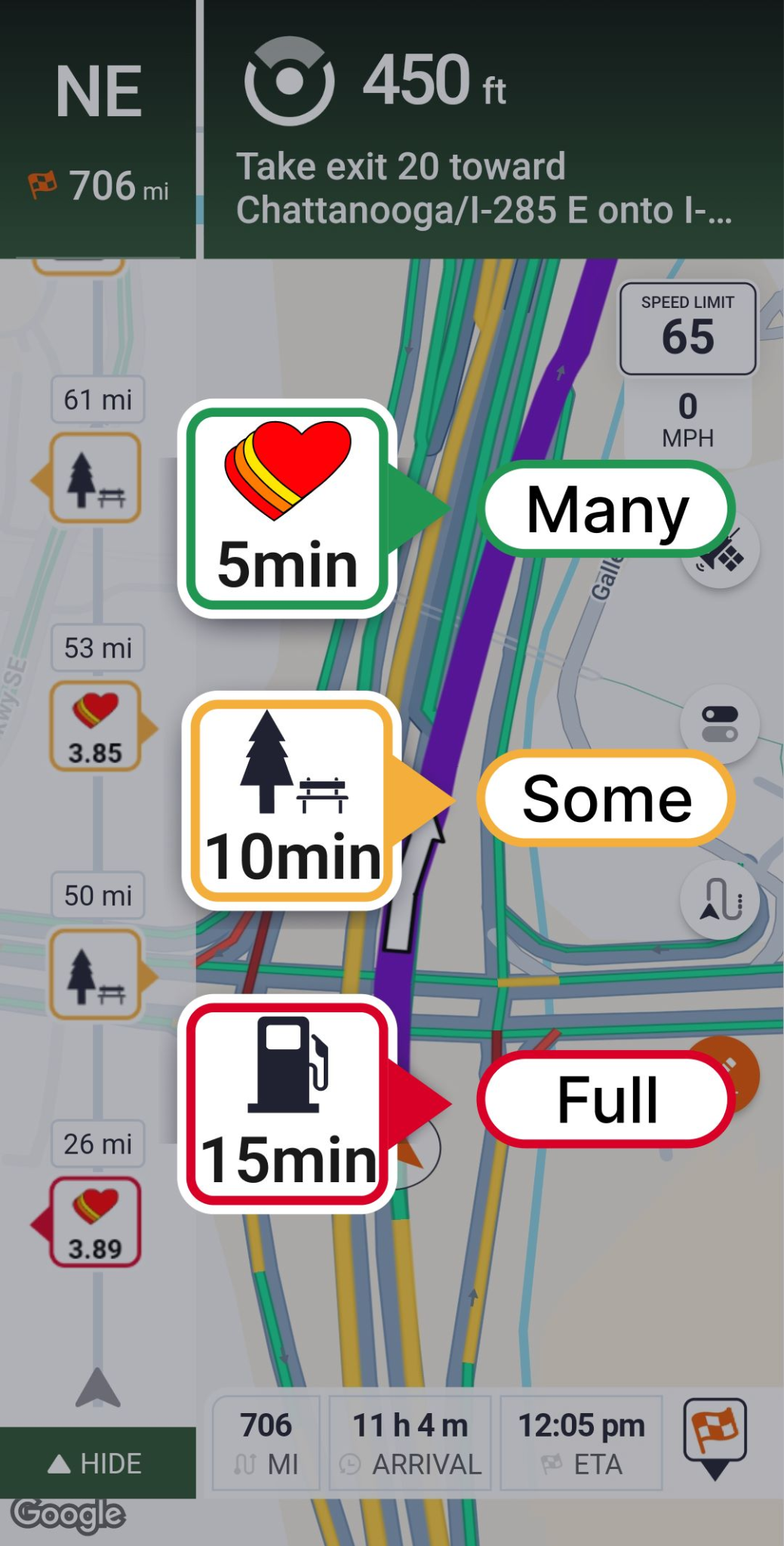
Together with truck-specific GPS, Trucker Guide helps drivers avoid costly delays and stay efficient on the road:
- Avoids low bridges that your semi-truck can't fit under
- Blocks weight-restricted roads and "No Truck" zones
- Provides real-time weigh station status
- Displays diesel fuel prices so you can combine fuel and break stops efficiently
- Lets drivers add service locations directly to their route
- Includes live road cameras for traffic and weather updates
This is exactly what you need for your 30-minute break after 8 hours of driving. Trucker Guide is a planning tool, not a compliance record system. It helps drivers find where to stop, but it does not replace the ELD or official logbook.
How ELDs Support Compliance
ELDs handle the documentation and enforcement side of rest break compliance. Under FMCSA regulations, an ELD must synchronize with the vehicle engine to automatically record driving time, duty status, location, engine hours, and vehicle miles, making hours-of-service tracking easier and more accurate.
The device captures:
1. Driving time: Automatically recorded when the vehicle is in motion,
2. Duty status changes: On-duty driving, on-duty not driving, sleeper berth, and off-duty.
3. Location stamps: At least once every 60 minutes of motion, and at each duty status change,
4. Time and date: For every log entry and status change,
5. Vehicle and driver IDs: For audit and inspection purposes.
In 2026, ELDs remain the official system for recording driving time and HOS data, and FMCSA continues to rely on registered devices for compliance and enforcement. This is especially important as enforcement has become stricter in recent years, with increased action against non-compliant devices.
During a roadside inspection, drivers must be able to transfer ELD data to officers via USB, Bluetooth, or web telematics. The officer sees exactly when and where the driver stopped, and for how long.
However, ELDs do not solve parking availability. They can warn a driver that a break is due, but they do not show which truck stop has space, which rest area is reachable in time, or which private lot allows courtesy parking. That gap is where truck parking apps become essential.
Truck Parking Apps vs ELDs
Which Tool Should You Choose for Rest Break Compliance?
Choosing the right fleet management tool depends on what problem you’re solving at the moment.
If the problem is finding a place to stop, choose a truck parking app. If the problem is proving compliance, choose an ELD. For most commercial drivers and fleet managers, the right answer is using both.
In practice, parking apps solve the real-world availability problem, while ELDs handle the regulatory documentation. Together, they keep drivers both on schedule and compliant.
How Should Drivers Use Both Tools Together?
The best workflow in 2026 is a four-step process that combines ELD alerts with Trucker Guide parking search:
1. Check remaining drive time in the ELD.
2. Use Trucker Guide to find a legal parking option that fits your route and time window.
3. Stop and take a 30-minute break.
4. Let the ELD record the proper status change (off-duty, sleeper berth, or on-duty not driving).
This workflow is especially useful for long-haul drivers, dense freight logistics corridors, and operations where parking shortages are common.
By starting the parking search early and locking in a stop before the 8-hour mark, drivers reduce stress and avoid situations where they must choose between compliance and convenience. The app helps with finding the stop, and the ELD helps with recording the stop.
Stay compliant and safe out there!
Frequently Asked Questions
Is there an alternative to Trucker Path for finding truck stops and parking?
Yes. Truck drivers can use alternatives like Trucker Guide to find truck stops, parking locations, amenities, and truck-friendly stops while planning routes around HOS requirements.
How do truck parking apps help with rest break compliance?
Truck parking apps help drivers locate commercial vehicle parking before their 8-hour HOS window expires. This gives drivers more time to stop safely, complete a 30-minute break, and avoid violations.
What is the 30-minute HOS break rule?
The 30-minute HOS break rule means most property-carrying CMV drivers must take a 30-minute break after 8 cumulative hours of driving. The break must happen in off-duty, sleeper berth, or on-duty not driving status.
Do truck parking apps replace ELDs?
No, truck parking apps do not replace ELDs. Parking apps help drivers find a safe place to stop, while ELDs record driving time, duty status, and log the break for compliance.
Why is truck parking important for compliance?
Truck parking is important because limited parking increases the risk of missed breaks, unsafe stops, and HOS violations. In 2026, drivers need both parking search tools and ELDs to stay compliant and on schedule.


