



New Trucking Rules That Already Took Effect in 2026


The clearest federal changes so far center on three areas: tighter limits on non-domiciled CDLs, the ongoing rollout of electronic medical certification through NRII, and FMCSA’s early testing of potential Hours-of-Service flexibility through pilot programs.
The big story in 2026 is a gradual shift toward a more digital, more connected, and more closely monitored compliance system. In other words, the rules of the road are mostly still familiar. What is changing is how closely everything is tracked and verified.
Key Facts:
- FMCSA’s 2026 non-domiciled CDL rule tightens eligibility, requires “non-domiciled” on credentials, and enforces SAVE immigration verification.
- NRII rollout replaces paper medical cards with electronic submissions, with a temporary 60-day paper acceptance window in 2026.
- Hours-of-Service pilot programs test flexible sleeper berth splits and a 3-hour split duty pause for fatigue management research.
- Heavy-vehicle AEB remains in rulemaking and is not yet a final federal mandate.
- ELD enforcement is stricter, with non-compliant devices being removed and requiring immediate replacement.
- Clearinghouse now requires stronger identity verification for all users handling drug and alcohol compliance data.
- URS upgrades increase identity checks and tighten integration between DOT, MC, and safety systems.
- DataQs reviews now require stronger documentation and follow more standardized dispute evaluation rules.
1. Non-Domiciled CDL Rules
One of the most important active changes is FMCSA’s final rule on non-domiciled CLPs and CDLs, which took effect in March 2026.
FMCSA says the rule limits eligibility for foreign-domiciled applicants to those with specific, verifiable employment-based nonimmigrant status, and the agency’s FAQs make clear that States unable to comply had to pause issuance until they could follow the revised standards.
The rule also requires the word “non-domiciled” to appear clearly on the credential, and the agency has said States must verify lawful immigration status during licensing actions covered by the rule.
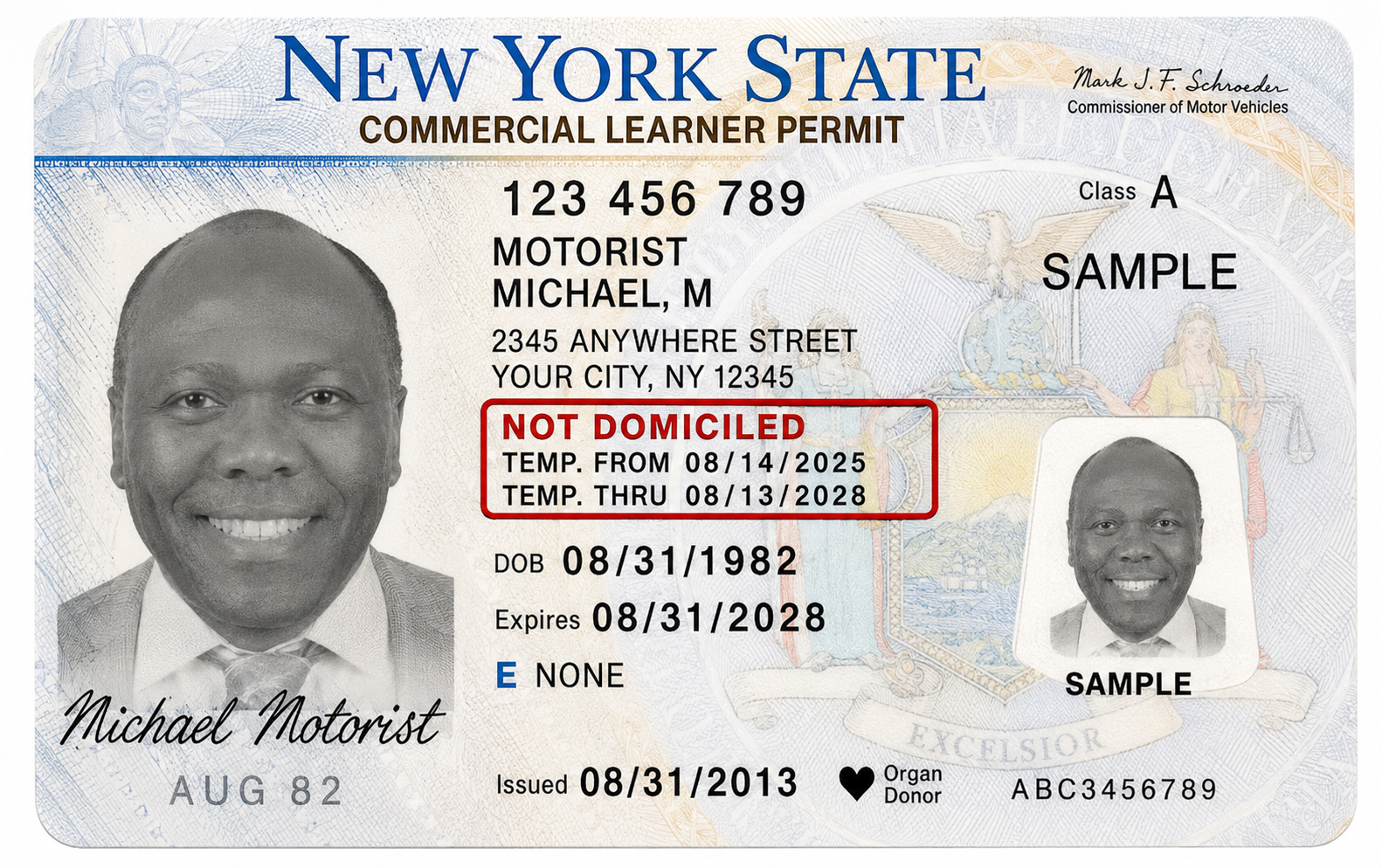
There is a practical takeaway here: transfers, renewals, upgrades, and reissues for non-domiciled credentials now sit under a much tighter federal gate.
FMCSA also says States must use SAVE verification*, and it explicitly warns that outdated labels like “limited term” or “temporary” are not substitutes for “non-domiciled.”
SAVE verification is a U.S. government system used by agencies to confirm a person’s immigration or citizenship status before issuing benefits, licenses, or other official credentials. It checks federal records through the U.S. Citizenship and Immigration Services database to verify whether someone is legally present and eligible for what they’re applying for.
2. Medical Certification Is Now Moving
Another real change already in motion is the National Registry II (NRII) transition for medical certification. FMCSA’s NRII materials say the old paper-based process is being replaced with secure electronic transmission of medical exam results and variance information to the States.
During the rollout, FMCSA granted a temporary exemption that lets interstate CDL and CLP holders, and motor carriers, continue to rely on a paper Medical Examiner’s Certificate for up to 60 days after it is issued.
That exemption is temporary, though. FMCSA says the exemption runs from April 11, 2026, through October 11, 2026, and it was created to avoid disruption while States and medical examiners finish the transition to NRII. The agency also makes clear that the exemption does not change the actual physical qualification requirements for drivers.
3. Testing of New Hours-of-Service Programs
The core Hours-of-Service rules remain in place, but the FMCSA is actively testing potential future flexibility. The agency is recruiting drivers for two pilot programs: the Flexible Sleeper Berth (FSB) and the Split Duty Period (SDP).
In the FSB pilot, FMCSA is testing new sleeper-berth split options, including 6/4 and 5/5 combinations, which would give drivers more flexibility than the current federally approved split-sleeper arrangements. Researchers want to determine whether additional rest-scheduling options can help drivers manage fatigue while still maintaining safety performance.
In the SDP pilot, participating drivers may be able to pause the 14-hour driving window for up to 3 hours by using qualifying off-duty, non-driving time. The idea is to see whether drivers benefit from being able to step away from the clock during periods such as traffic congestion, weather delays, loading and unloading operations, or extended rest breaks.
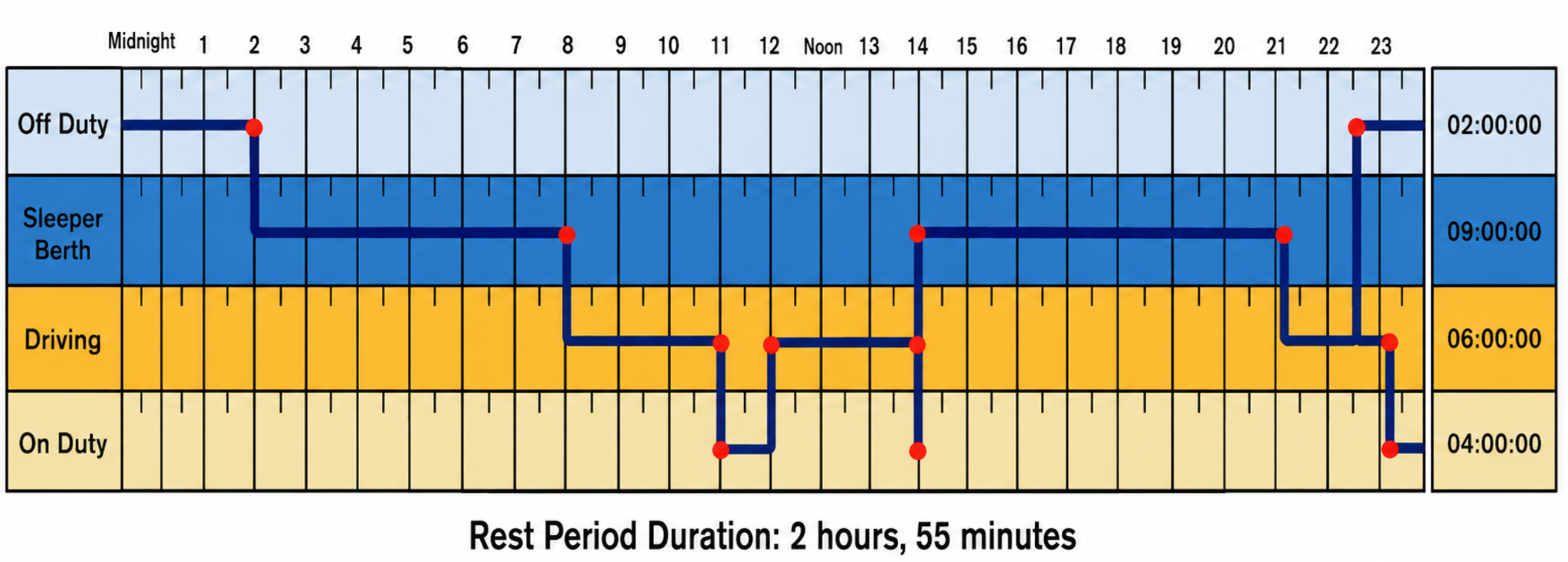
These programs are expected to collect data from hundreds of commercial drivers operating in real-world conditions. FMCSA will analyze information related to fatigue, crash risk, driver alertness, operational efficiency, and overall safety performance before considering any future regulatory changes.
4. Heavy-Vehicle AEB Is Still in Rulemaking
FMCSA and DOT are still moving toward heavy-vehicle Automatic Emergency Braking (AEB) requirements, but this is still in the rulemaking stage, not a finished nationwide mandate.
According to DOT's March 2026 Statutory Rulemakings Report to Congress, heavy-vehicle automatic emergency braking (AEB) remains an active federal rulemaking project. FMCSA's rulemaking documents also continue to list AEB requirements for heavy vehicles as a proposed rule rather than a finalized nationwide mandate.
AEB systems use radar, cameras, or other sensors to detect vehicles and obstacles ahead. If a potential collision is detected and the driver does not respond in time, the system can automatically apply the brakes to help reduce crash severity or avoid an impact altogether.
Supporters of the proposal point to the potential safety benefits, while industry groups have raised questions about implementation costs, system performance in certain operating conditions, and timelines for compliance. As a result, federal agencies are continuing to review comments and evaluate the proposal before issuing a final rule.
So the smart way to read the AEB story is simple: the direction is real, but the rule itself is not something fleets can treat as a finished compliance obligation yet. It is part of the future truck safety tech stack, not a completed 2026 change.
For now, carriers are not required to install AEB systems solely because of a new federal mandate, but many newer trucks already include collision mitigation and automatic braking technologies as standard or optional safety features.
5. ELD Enforcement is Getting Stricter
One of the most important active shifts is not a new ELD mandate, but a stronger enforcement cycle around existing rules. FMCSA continues removing non-compliant ELD devices from its registered list under 49 CFR Part 395*, and once a device is revoked, carriers are required to replace it within a short compliance window or risk operating violations.
Recent enforcement activity shows that dozens of ELD devices have been removed from FMCSA’s approved registry due to technical and compliance failures. When this happens, fleets can move from compliant operation to roadside violation exposure almost immediately if they do not switch devices in time.
ELD compliance is no longer just about installing a certified system. It now depends on continuously verifying that the device remains FMCSA-approved, because revocations are happening more frequently across the 2025–2026 enforcement cycle, with faster consequences once a device is pulled.
49 CFR Part 395 is a section of the U.S. federal regulations that sets the Hours of Service (HOS) rules for commercial drivers. It defines how long truck and bus drivers can operate, when they must take breaks, and the limits on daily and weekly driving time to reduce fatigue and improve road safety.
6. Clearinghouse Identity Rules 2026
Another real change already in motion is the tightening of identity verification inside the FMCSA Drug and Alcohol Clearinghouse system.
On April 27, 2026, FMCSA strengthened authentication requirements for all users accessing or managing Clearinghouse data, including employers, third-party administrators, medical review officers, and SAP professionals. The focus is shifting toward ensuring every action inside the system is tied to a verified identity, not just an account role.
This means access is no longer purely role-based. Additional identity verification steps are now required before full system permissions are granted, especially for high-sensitivity functions tied to compliance records.
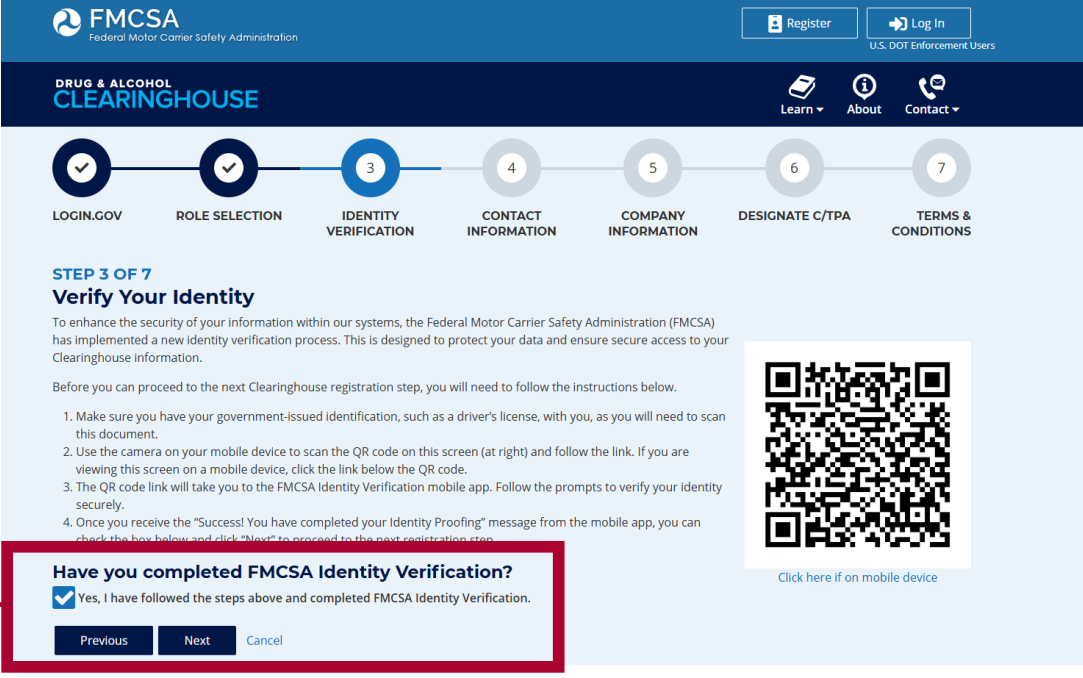
As a fact, hiring decisions, return-to-duty processes, and compliance checks in 2026 now require more identity validation layers, and access to Clearinghouse data is becoming significantly more restricted across all user categories.
7. Registration System Upgrades
Another important structural update is the modernization of FMCSA’s carrier registration system, including ongoing upgrades to the Unified Registration System (URS) during 2025–2026.
FMCSA is shifting toward a more integrated verification model designed to reduce fraudulent carrier registrations and inconsistent data across federal databases. This includes stronger validation of business identity, contact information, and operational details during the registration process.
The system is also becoming more interconnected, with tighter linking between DOT numbers, MC authority, and carrier safety and compliance records across FMCSA systems.
Getting operating authority is becoming less about completing a form and more about passing layered identity and data verification checks that now span multiple federal systems before approval is granted in the 2026 registration environment.
8. DataQs Review Changes
Another important but less visible update is the shift in FMCSA’s DataQs system*, which is used to challenge inspection results, violations, and carrier safety data.
During the 2026 procedural updates, the system is becoming more standardized in how disputes are categorized, reviewed, and resolved. Review processes now follow more structured criteria for denial, correction, or acceptance, and documentation requirements for successful challenges are becoming stricter.
This change reduces flexibility in informal corrections and makes unsupported disputes less likely to succeed, especially when evidence does not clearly justify a correction.
Carriers submitting DataQs challenges in 2026 now need more precise documentation and stronger supporting evidence, because review outcomes are becoming more consistent and less discretionary across state and federal reviewers.
FMCSA’s DataQs system is an online platform that lets motor carriers, drivers, and the public request a review or correction of federal safety data recorded by the Federal Motor Carrier Safety Administration.
What Has Not Changed in Trucking Regulations in 2026?
Even with all the regulatory movement, the foundation of federal trucking compliance has stayed remarkably consistent. The changes happening in 2026 are refinements in enforcement and verification of core operating rules.
That means 2026 is not a full regulatory reset. It is more of a tightening cycle: better verification, stricter credential controls, more electronic compliance, and a few pilot programs that could shape the next round of trucking rules.
What Drivers and Fleets Should Watch Closely?
For drivers, the big thing is paperwork discipline. CDL status, medical certification, and eligibility documents need to be clean and current, especially if you are dealing with a non-domiciled credential or a medical certification update.
For fleets, the pressure point is onboarding and recordkeeping. Licensing, medical status, and compliance documentation must be verified early and continuously, as federal systems increasingly rely on electronic cross-checks rather than manual review or correction windows.
For owner-operators, the practical shift is in mindset. Compliance is becoming an ongoing operational habit rather than an occasional task, as enforcement systems become faster, more automated, and more closely integrated across federal databases.
The rules are still the same, but the way they are enforced is changing fast, and that is what drivers and fleets need to stay ahead of. Good luck!
Frequently Asked Questions
What happens if a truck driver is not compliant with the new 2026 rules?
They can be taken out of service, fined, or lose their CDL until they fix the issue (like ELD, medical card, or eligibility problems).
Which of the 2026 rules affect owner-operators the most?
ELD enforcement, medical certification (NRII), CDL eligibility checks, Clearinghouse identity rules, and DOT/MC registration updates.
Where can truck drivers follow updates on FMCSA regulations?
Through official FMCSA updates, state DMV sites, and trusted trucking compliance news sources.


