


How Truck Repair Shops Can Reach More Commercial Truck Drivers

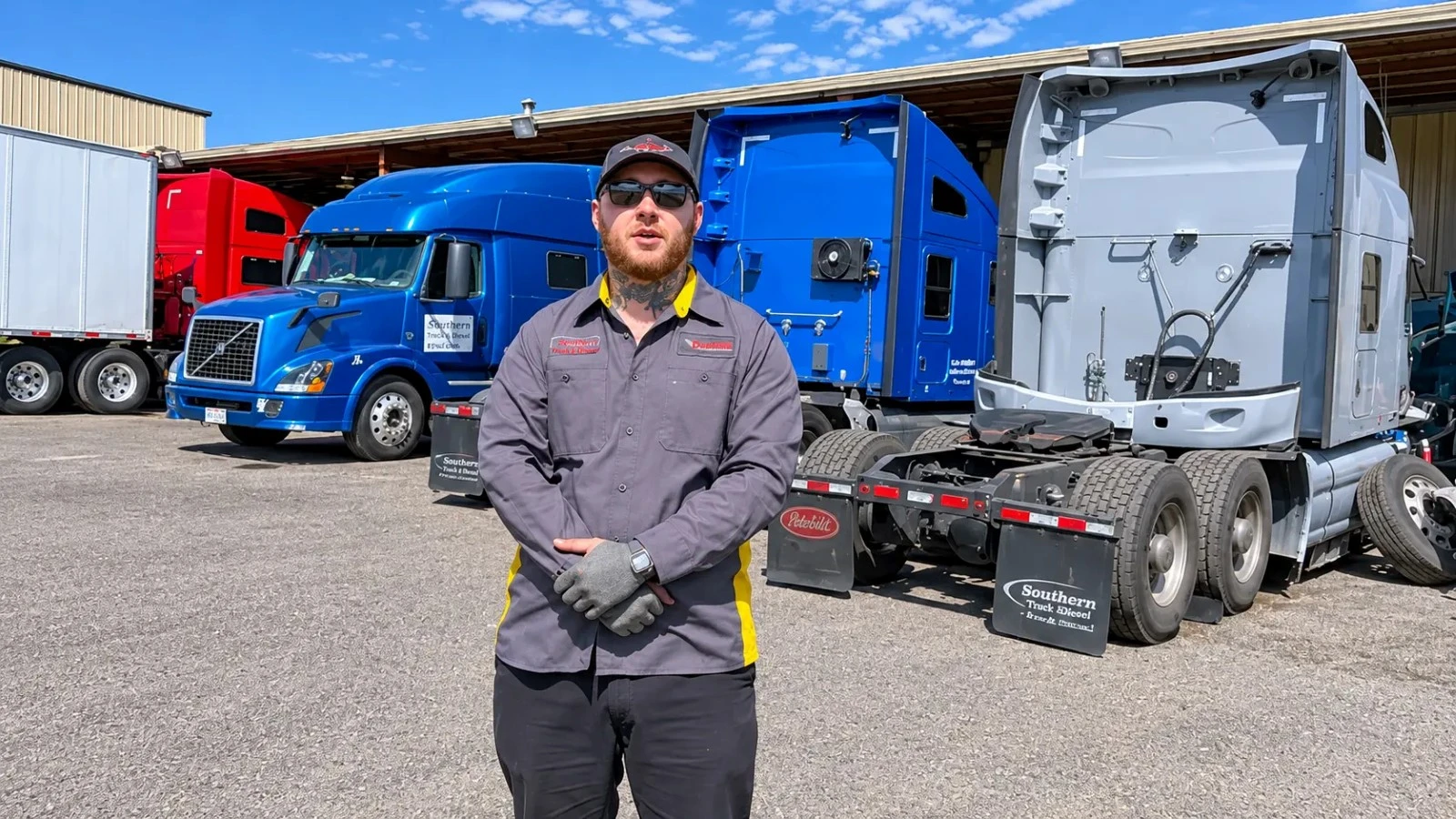
Truck repair customers rarely look for the same thing. A driver dealing with a breakdown needs to find someone who can help at their location. An owner-operator may be comparing shops before scheduling a repair. A dispatcher needs to know whether a provider can handle a particular vehicle and service area. A fleet manager may be looking for a repair partner for ongoing maintenance.
For a repair business, reaching these customers starts with making its capabilities easy to understand. That means clearly presenting the vehicles it services, the repairs it performs, its operating hours, and the areas it covers.
In editorial partnership with Element DMA, we explore how truck repair businesses can improve their online visibility, reach relevant trucking customers, and measure whether their marketing efforts are generating qualified leads.
Key Facts:
- Truck repair marketing should focus on the services a shop provides, the vehicles it supports, and the areas it serves.
- A complete Google Business Profile and service-specific website pages help potential customers find relevant information when searching for truck repair.
- Google Ads, local SEO, and industry platforms offer different ways to reach truck drivers, owner-operators, and fleet managers.
- Developed in editorial partnership with Element DMA, the article covers digital marketing strategies and Trucker Guide tools for repair shops.
- Measuring qualified inquiries, estimates, appointments, and completed repairs helps shops evaluate which marketing activities are bringing in customers.
Match the Message to the Customer
Before choosing marketing channels, a repair shop needs to understand who it wants to reach. Different customers have different priorities, and the information that matters to a driver dealing with an emergency is not necessarily what a fleet manager needs when evaluating a long-term service provider.
These groups may use the same search engines and directories, but they do not necessarily use the same search terms. Someone with a breakdown might search for “mobile truck repair near me,” while a fleet manager may look for a shop specializing in diesel engine repair or preventive maintenance.
That difference should influence how a business presents its services online. A general description such as “full-service truck repair” may not provide enough information for someone deciding whether to call.
Make Your Shop Easy to Evaluate on Google
For many customers, Google is the first place they look when they need a repair shop. Local search visibility is especially important for businesses that serve drivers in a defined geographic area.
A complete, accurate Google Business Profile helps potential customers understand where a shop is located, when it is open, and what services it offers. Google's local search results are primarily influenced by three factors: relevance, distance, and prominence. Relevance reflects how well a business matches what someone is searching for.
Distance considers how far the business is from the searcher, while prominence relates to how well-known the business is.
Important details include:
- Business name and contact information
- Business hours
- Service categories
- Photos
- Reviews
- Service descriptions
Google recommends keeping business information complete and accurate. Reviews can also influence whether someone contacts a shop. A potential customer may compare several businesses before making a decision, particularly when the repair is not an immediate emergency. Responding to reviews and addressing recurring customer concerns can help establish confidence before the first call.
Build Service Pages That Answer Real Questions
Someone searching for mobile truck repair needs different information from a fleet manager researching maintenance support.
Give your main services dedicated pages when you have enough useful information to explain them. Depending on your business, these might cover diesel diagnostics, trailer repair, mobile roadside assistance, or fleet maintenance.
Each page should answer four questions:
1. What work do you perform?
2. Which vehicles do you support?
3. Where and when can you provide service?
4. How should the customer contact you?
For example, a mobile repair page can explain your coverage area, supported repairs, and what information to have ready when calling. A fleet page can describe your maintenance capabilities and the process for discussing service needs.
Use real photos of your shop, equipment, and repair work to give potential customers a better understanding of your business. Make sure your contact information is easy to find, especially on mobile devices. Customers looking for roadside assistance or mobile repairs should be able to quickly determine whether you serve their location, what services you offer, and how to reach you.
Give Each Marketing Channel a Clear Job
Different marketing channels serve different purposes. Digital marketing services such as SEO, Google Ads, and call tracking can help repair shops attract and evaluate customer inquiries. Trucking-specific platforms provide another way to reach commercial drivers and connect with people who need repair services.
Element DMA specializes in digital marketing for truck repair businesses, while Trucker Guide offers Company Profiles for business discovery and Road Assistance for responding to active roadside requests.
The following channels address different parts of the customer journey.
Google Ads
Google Ads can help a repair shop appear when potential customers search for specific services. Campaigns can target searches such as “truck repair shop,” “diesel mechanic,” or “mobile truck repair,” depending on the business's location and capabilities.
To make campaigns more relevant, businesses should:
- Focus on services they actually provide
- Target locations they can realistically serve
- Use separate ad groups for different repair services where appropriate
- Send visitors to relevant service pages instead of a generic homepage
- Include clear contact options
- Review search terms regularly and exclude irrelevant queries
For example, a shop that only works on heavy-duty diesel trucks may not want to spend its budget on searches related to passenger vehicle repairs. Element DMA applies these principles in its Google Ads campaigns for truck repair businesses, targeting relevant services and geographic areas while using call tracking to evaluate which campaigns generate customer inquiries.
Paid advertising can generate visibility quickly, but clicks alone do not show whether a campaign is producing business. Calls, quote requests, and completed repair jobs provide a more useful picture of performance.
Trucker Guide Company Profile
Google Ads targets people actively searching for services, while a business profile gives drivers another way to discover repair providers when looking for trucking-related services.
A Trucker Guide company card allows businesses to present information to truck drivers using the platform. Depending on the available profile fields and plan, businesses can provide details such as:
- Business location
- Phone number, email, and website
- Services and amenities
- Supported languages
- Accepted payment methods
- Additional information about the company
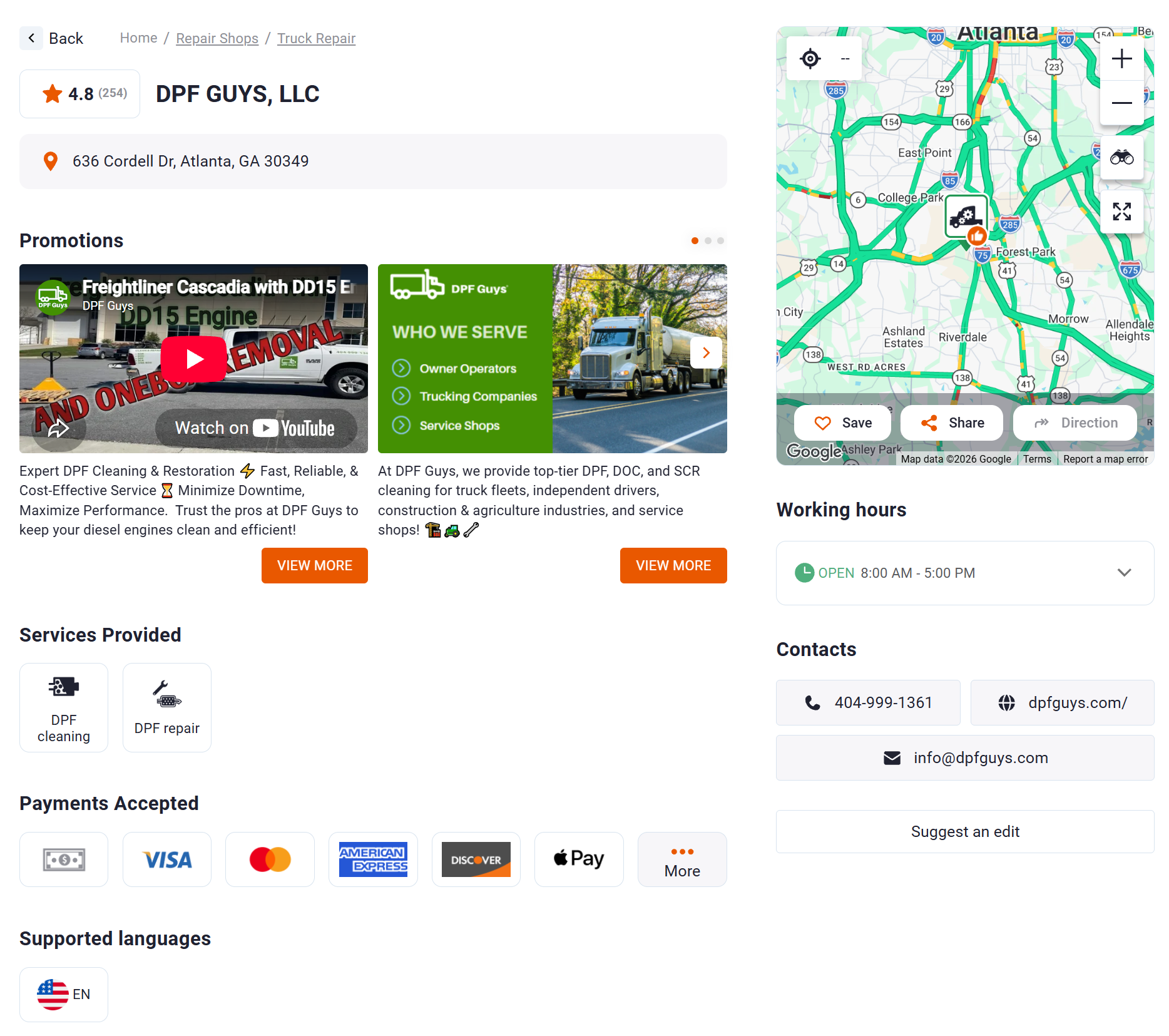
For example, a shop offering mobile truck repair can highlight its coverage area, while a business specializing in trailer repair can make that service clear in its profile. This helps drivers understand what a provider offers before deciding whether to contact it. Keeping the profile accurate and up to date is important. Incorrect contact details, outdated hours, or services the business no longer provides can lead to confusion and unsuitable inquiries.
Trucker Guide Road Assistance
A company profile helps drivers discover and evaluate a repair business. Road Assistance serves a different purpose. It allows participating providers to respond to drivers who already need roadside assistance.
Through Trucker Guide Road Assistance, providers can create a business profile, add their location, set a coverage radius, and select the vehicle types and services they support. When requests become available, providers can review them on the Live Job Board and submit offers with details such as:
- Pricing information
- Additional charges
- Notes about the proposed service
- Estimated arrival time
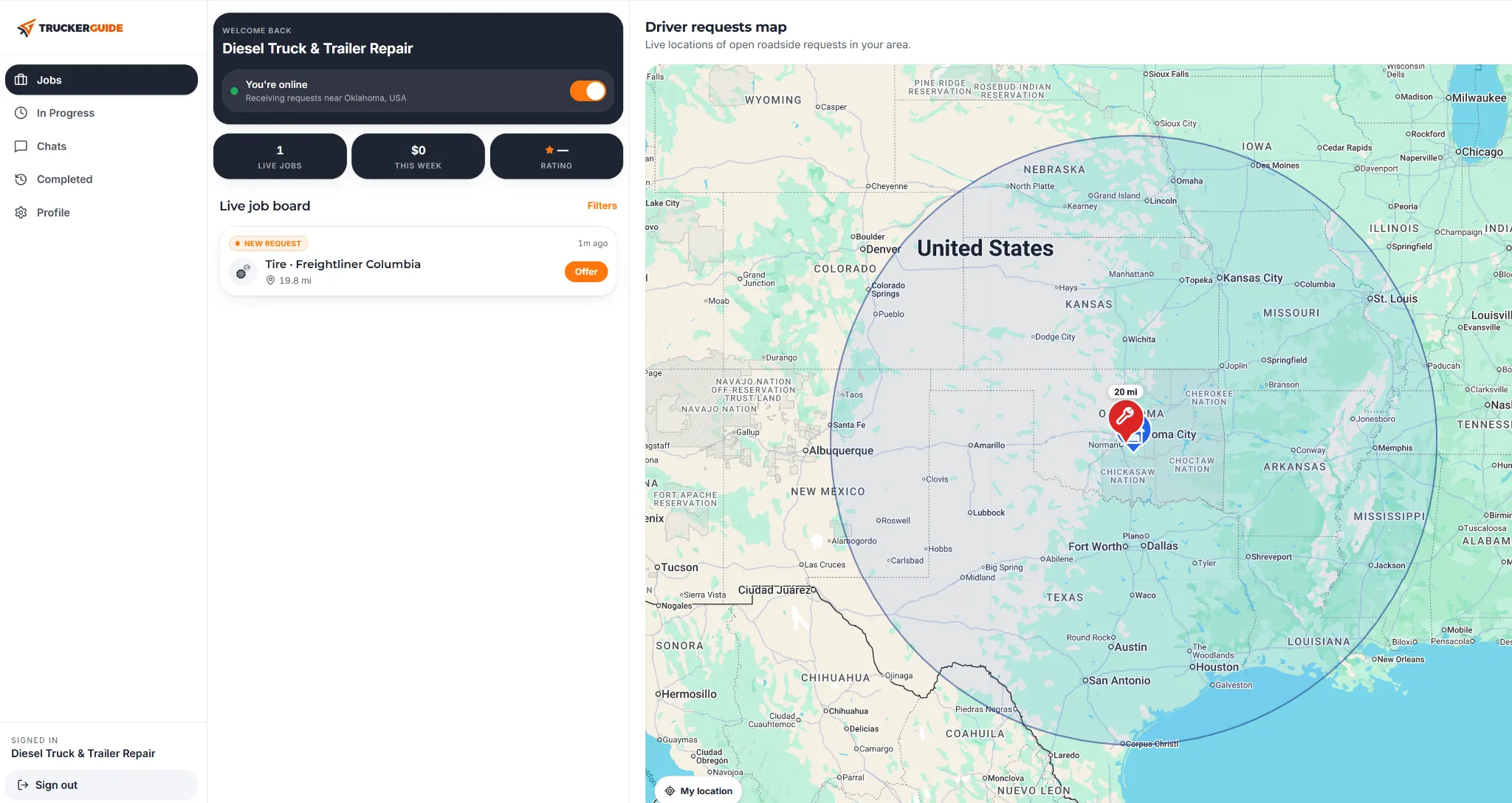
Drivers can see offers from available providers, review pricing and estimated arrival times, and choose the option that best fits their situation. This makes Road Assistance particularly useful for businesses offering mobile truck repairs, towing, tire services, battery assistance, fuel delivery, and other roadside services. To receive relevant requests, providers should select only the services and vehicle types they can actually support.
Measure Qualified Calls and Completed Jobs Separately
Getting your business in front of more drivers is only part of the marketing process. You also need to understand which channels generate relevant inquiries and which ones actually bring in paying customers.
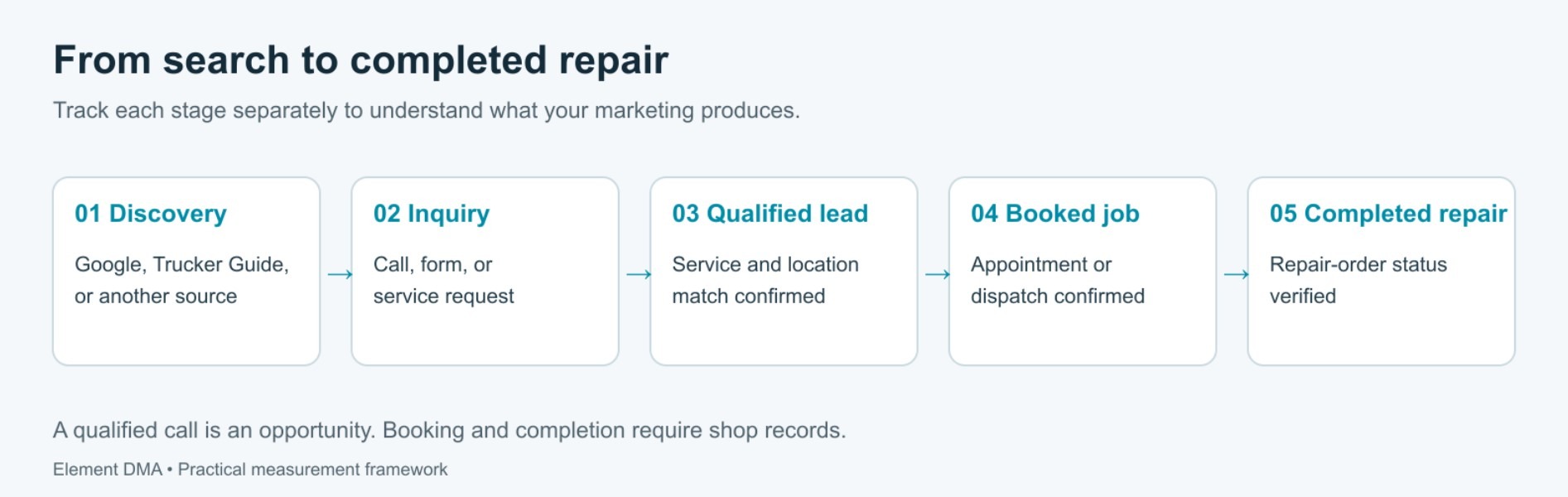
A call count tells you how often the phone rang. It does not tell you how much suitable work your marketing created. Establish a simple definition of a qualified inquiry. For example: the customer needs a service you provide, has a vehicle you support, and is within an area you can serve. Then distinguish between that opportunity, a confirmed booking, and a completed repair.
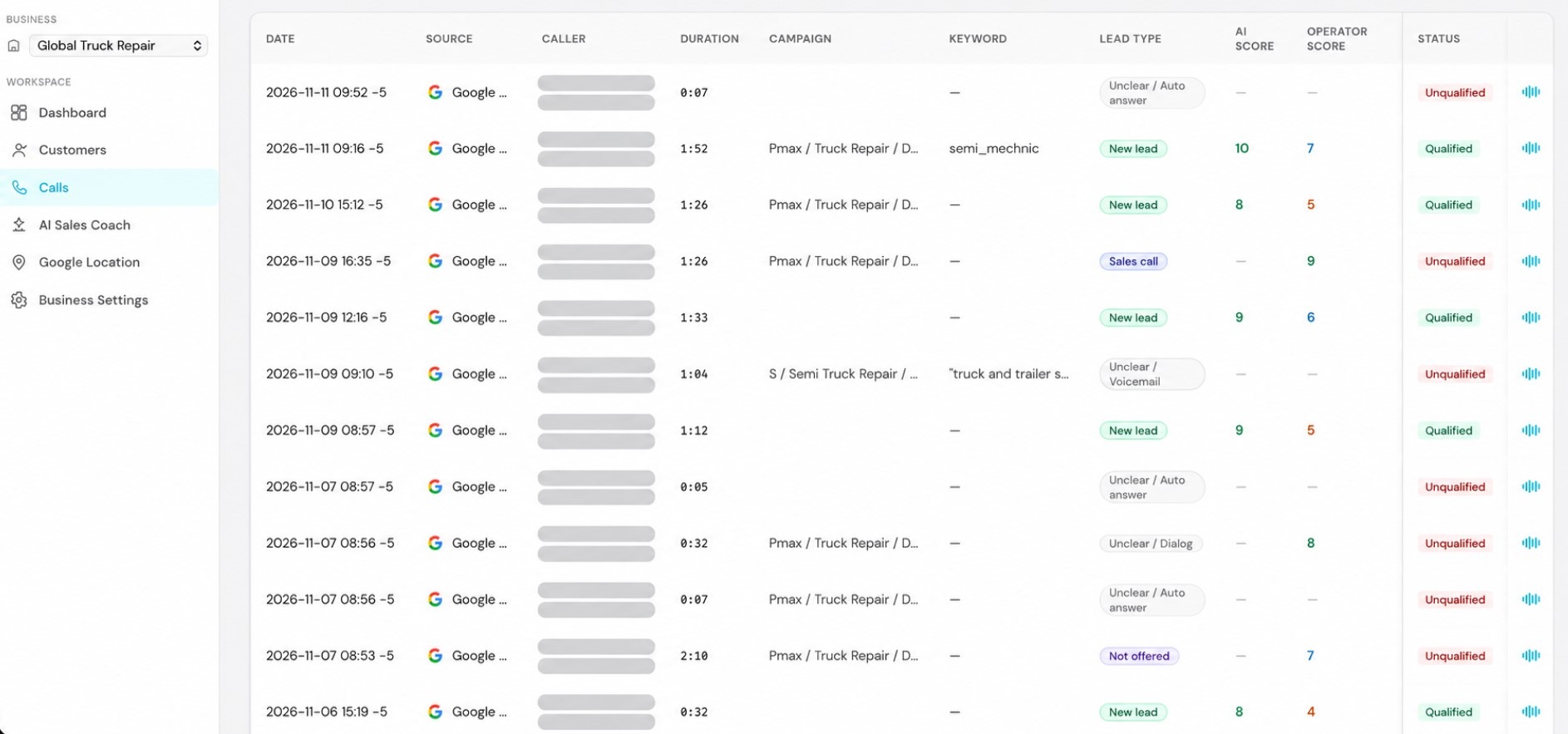
The example shows why reviewing individual calls matters. New leads, sales calls, unclear conversations, and requests for services not offered appear in the same list. Counting them as equivalent opportunities would hide useful differences. Element DMA’s call-tracking services help shops examine lead sources and call quality. Treat automated classifications as review aids, especially when a conversation is short or unclear.
To measure business outcomes, connect inquiry records with appointment, dispatch, and repair-order information. Keep repeat calls about the same job from becoming multiple “new customers” in your report.
Use Metrics That Support Decisions
Marketing performance should be evaluated in relation to the business opportunities it creates. A campaign may generate many website visits but few relevant inquiries. Another channel may bring fewer visitors but more customers who need the exact services the shop provides.
Here are useful metrics to review.
For example, a campaign that generates 40 calls may initially appear more successful than one that generates 15. But if only five of the first campaign's calls are relevant, while 12 calls from the second campaign lead to estimates or appointments, the second campaign may be producing better opportunities.
Businesses should also consider the value of the work generated. A campaign that brings in customers for larger repairs or recurring fleet maintenance may contribute more to revenue than one that generates a higher volume of small, one-time jobs.
Your First 30-Days Practical Checklist
A structured review can help a repair shop identify gaps in its online presence and decide what to improve first. The following 30-day plan provides a practical starting point.
At the end of the month, the business should have a clearer picture of where customers find it, which services generate the most interest, and which marketing activities produce relevant inquiries.
Ready to Improve Your Truck Repair Marketing?
You don't need to change every part of your marketing at once. Start with the gaps that matter most, set clear goals, and review your results regularly. Small, measurable improvements can help you build a more effective marketing strategy over time.
Frequently Asked Questions
How can a truck repair shop attract more customers?
Start by identifying the services and vehicle types your business supports. Improve your website and Google Business Profile, use targeted advertising, and create a presence on relevant trucking platforms. Review incoming inquiries to understand whether your marketing reaches customers you can serve.
Is SEO important for truck repair shops?
Yes. Truck repair SEO helps potential customers discover your business when searching for diesel repair, trailer repair, mobile truck repair, or fleet maintenance. Dedicated service pages, accurate business information, and relevant local content can help improve your online visibility.
How can a truck repair shop reach fleet managers?
Make your commercial repair and maintenance capabilities clear on your website. Explain which vehicles you support, what work you perform, and how fleet managers can discuss their service requirements. Targeted search campaigns and relevant business listings can provide additional ways to reach fleet customers.
How can truck repair businesses use Google and Trucker Guide together?
Google helps customers discover businesses through search, while Trucker Guide provides a trucking-focused platform where drivers and dispatchers can find service providers. Participating providers can also use Road Assistance to review and respond to roadside requests.
How can mobile truck repair businesses attract roadside customers?
Clearly communicate your service area, operating hours, supported vehicle types, and available repairs. Make contact information easy to find, and consider Trucker Guide Road Assistance, where participating providers can review relevant requests and submit service offers.


