


BLOG

Best Truck Stop Amenities in 2026: What Truck Drivers Value Most

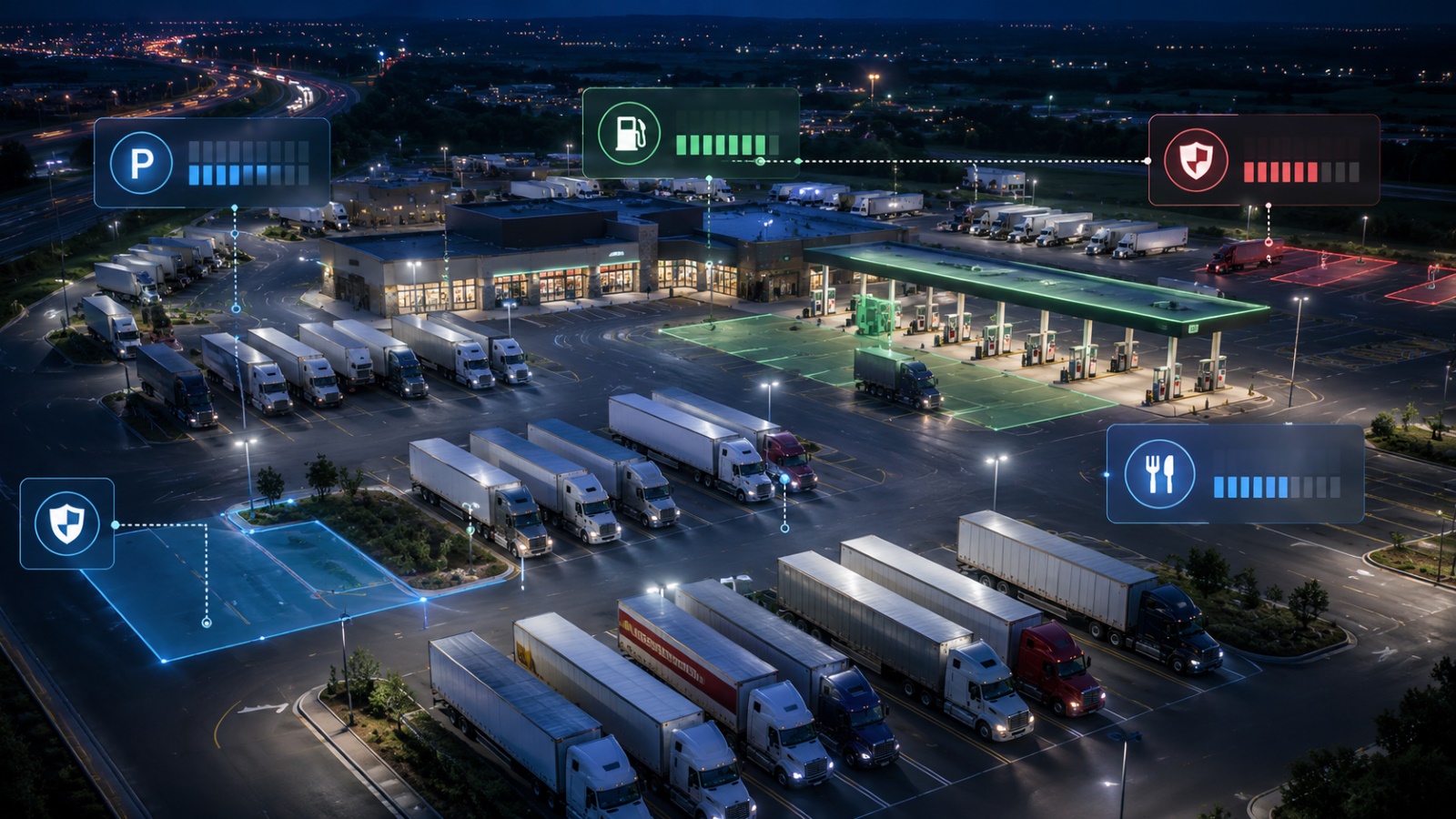
Truck stop amenities in 2026 come down to three essentials: parking availability, fuel access, and basic driver recovery. Together, these factors directly influence safety on the road, regulatory compliance, and the overall efficiency of long-haul routes.
More than 3.5 million commercial truck drivers keep freight moving across the United States every day. In this system, truck stops are not optional roadside services. They are critical infrastructure that determines whether drivers can continue their routes safely or are forced to stop under time and fatigue pressure.
This becomes especially clear when comparing truck stops with rest areas, which serve very different roles under real driving and regulatory conditions.
Key Facts:
- More than 3.5 million commercial truck drivers operate across the U.S., relying on truck stops as critical infrastructure.
- Truck parking is the top priority, accounting for 38% of driver responses in our survey.
- Diesel fuel follows at 22%, making fuel access the second most important decision factor.
- Safety concerns, including lighting and visibility, influence 16% of driver stop selection decisions.
- Food and showers combined account for 20% of priorities (12% food, 8% showers), showing their role in driver recovery.
- In many freight corridors, parking demand exceeds supply, with shortages affecting a significant share of long-haul routes daily.
What Is the Difference Between Truck Stops and Rest Areas?
Rest areas are designed for short breaks and typically offer limited services. They provide parking and basic facilities, but they usually do not offer fuel, full food options, showers, or reliable overnight parking.
Truck stops, on the other hand, are built to support long-haul operations. Drivers can refuel, eat, shower, park overnight, and rest in one place. For most drivers, the difference comes down to reliability. When Hours of Service limits are approaching, drivers need a stop they can count on.
Even when a rest area is closer, many drivers choose truck stops because they offer more certainty under time pressure.
What Truck Drivers Prioritize Most
To better understand what matters most on the road, we surveyed truck drivers in our network about the amenities they rely on when choosing a truck stop during long hauls.
The results showed a clear hierarchy of priorities:
The results were clear. While routes and schedules vary, most drivers consistently prioritized the same core essentials: truck parking, diesel fuel, safety, food, and showers. Let’s take a closer look at each of them.
1. Truck Parking
Truck parking ranked as the most important amenity in our survey.
This is not surprising. Parking directly affects safety, compliance, and trip planning. With parking demand exceeding supply in many freight corridors, drivers often begin looking for parking well before reaching their HOS limit.
Parking shortages can lead to:
- Increased driving time while fatigued
- Unsafe or non-compliant parking decisions
- Route delays and reduced efficiency
Safe overnight parking is no longer just a convenience. For long-haul drivers, where truck drivers sleep is directly connected to where safe parking is available. In most cases, truck sleep decisions are dictated by parking availability rather than preference.
2. Diesel Fuel
Fuel planning is a major part of every route. Drivers are not just looking for fuel availability. They are also thinking about diesel prices, wait times at fuel lanes, and whether they can secure parking after fueling.
The busiest fueling periods typically occur between 5 PM and 10 PM, when many drivers are finishing their day on the road and preparing for mandatory rest.
Key factors drivers value include:
- Competitive diesel pricing
- Fast fuel lane access
- Multiple diesel pumps
- Easy access for large vehicles
Fuel cost also plays a major role in route planning. Even small changes in diesel prices can influence where drivers choose to stop. That is why the decision between a truck stop vs rest stop often starts with fuel availability and cost, especially when comparing regional pricing differences across the U.S.
As of mid-2026, U.S. diesel prices vary by region, but the national average helps anchor route planning and fuel decisions.
3. Safety and Lighting
Drivers often judge whether a truck stop feels safe within minutes of arriving. Lighting, visibility, layout, and overall activity all shape that first impression.
When lighting is poor, it changes how drivers behave right away. Many avoid walking far from their truck, skip certain parking rows, or even decide to leave and find another stop. It raises stress levels and makes it harder to fully relax during mandatory rest periods.
In practical terms, bad lighting does not only affect comfort. It affects rest quality, attention, and decision-making. Drivers stay more alert and less relaxed, which works against the purpose of stopping.
The most important safety features include:
- Bright lighting across parking and fueling areas
- Clear visibility between parked trucks
- Organized traffic flow
- Visible staff presence
- Security cameras or monitoring
In practice, drivers trust truck stops that feel visible, organized, and active.
4. Food Access
For long-haul drivers, food is about more than convenience. Reliable food options help drivers stay energized and manage long days on the road.
Because driving schedules vary, many drivers no longer follow standard meal times. Instead, they need food that matches their route and available stopping windows.
The most important factors include:
- Long operating hours
- Fast service
- Reliable food quality
- Healthy meal options
Drivers increasingly value whether food is available when they arrive, not just what is on the menu.
How Do Drivers Actually Use Food Stops?
Food choices on the road are shaped by time pressure, route structure, and limited access to cooking or dining options. In practice, most drivers fall into a few consistent usage patterns.
These patterns show that food decisions are driven less by preference and more by timing, availability, and operational constraints.
5. Truck Stop Showers
Showers remain one of the most important services for driver comfort and recovery, especially during multi-day routes.
Major travel centers such as Love's Travel Stops, Pilot Flying J, and TravelCenters of America have improved shower access and consistency across locations.
According to our survey, drivers care most about:
- Cleanliness
- Short wait times
- Reliable availability
- Consistency between locations
For drivers, the biggest factors are cleanliness, wait time, and convenience.
What Additional Amenities Are Truckers Looking For?
Many drivers also look for truck stop amenities that make long trips easier and more comfortable. These needs often come up when planning where to stop and rest, especially on multi-day routes.
Common examples include:
- places that have Wi-Fi
- laundry to wash clothes
- places to fix a truck on the road
- driver lounges for rest and downtime
- truck stop gyms or walking spaces
- nearby weigh stations for route planning
These types of services are especially helpful for drivers searching for extended stay comfort, including situations where they rely on a truck stop rest area environment for recovery between trips.
Overall, the survey confirms a simple reality: the best truck stops are not defined by how many services they offer, but by how consistently they deliver the essentials drivers depend on every day.
Frequently Asked Questions
Do truck stops have gyms?
Most truck stops do not have full gyms, but some larger travel centers include small fitness rooms or basic workout areas. These may offer treadmills, simple weights, or stretching space. It is still an exception rather than a standard feature.
Can you sleep at a truck stop?
Yes, in most cases you can sleep at a truck stop if you are in a commercial vehicle. Many drivers rest in their cab during required breaks or overnight stays. Some locations also offer sleeper rooms or nearby hotels, depending on the site.
Are rest stops safe?
Rest stops are generally considered safe, especially those that are busy and well lit. Safety depends on location, time of day, and how active the area is. Most drivers prefer well trafficked stops and follow basic precautions like locking doors and staying alert.
Do truck stops have Wi-Fi?
Yes, many truck stops offer Wi-Fi. Some provide it for free at a basic level, while others charge for faster access. Speed and reliability can vary depending on how crowded the location is.
Are truck stop showers free?
Showers are usually not free. Most truck stops charge a fee, although drivers can often earn free showers through fuel purchases or loyalty programs. The exact rules vary by chain and location.
Do all truck stops have showers?
No, not all truck stops have showers. Large branded travel centers usually do, while smaller or independent stops may not offer them. It is best to check ahead if you rely on them during your route.


