



Volvo Trucks: Where Ambition Meets Efficiency

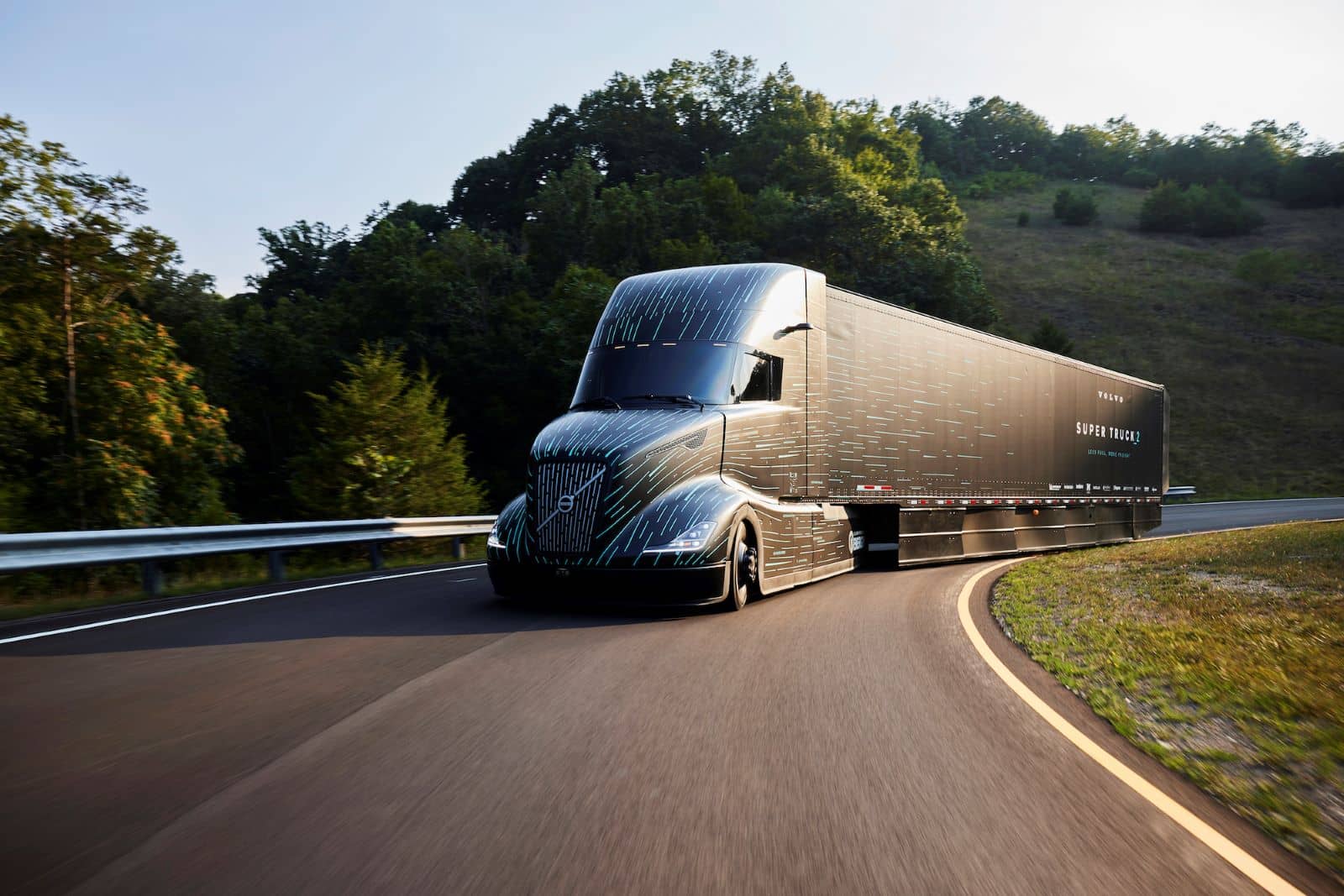
How much can heavy-duty trucks improve through engineering and new technology? SuperTruck II provides one answer. Led by Volvo Trucks North America with support from the U.S. Department of Energy (DOE), the project demonstrated how aerodynamics, lightweight design, powertrain technology, and advanced vehicle systems can significantly improve freight efficiency.
The project is no longer simply a future-looking experiment. SuperTruck II has completed its development and testing, giving the trucking industry measurable results to examine. Volvo reported a 134% improvement in ton-miles-per-gallon freight efficiency, exceeding the program's original target of more than 100% improvement over the applicable 2009 baseline.
Key Facts:
- Volvo's SuperTruck II achieved a 134% improvement in freight efficiency compared with its 2009 baseline.
- The SuperTruck II demonstrator had a combined tractor and trailer curb weight of approximately 26,400 pounds.
- Its aerodynamic performance improved by 20% compared with Volvo's first SuperTruck.
- Its aerodynamic performance improved by 50% compared with the baseline VNL.
- The demonstrator used a 4x2 configuration as part of its lightweight efficiency-focused design.
- SuperTruck II incorporated a 48V micro-hybrid system alongside other advanced efficiency technologies.
- The project helped advance technologies that continue to influence heavy-duty truck development in 2026.
What Did SuperTruck II Actually Achieve?
The DOE SuperTruck program was created to accelerate technologies that could make heavy-duty freight transportation more efficient. For SuperTruck II, the target was ambitious: more than a 100% improvement in freight efficiency compared with a 2009 baseline. Volvo set its own 120% stretch goal and ultimately reported a 134% improvement in ton-miles per gallon. The result came from combining improvements across the entire tractor-trailer rather than relying on a single technology.
That makes SuperTruck II particularly relevant in 2026. The project provides a practical example of how several efficiency improvements can work together to produce a much larger result.
How Did Aerodynamics Improve the Truck?
Aerodynamics was one of the main areas of development. Volvo redesigned the tractor and trailer as a more integrated combination, reducing the amount of air resistance generated as the truck moves down the highway.
The demonstrator incorporated features including a curved windshield, optimized roof fairing, reduced cab width, adjustable ride height, and camera-based exterior visibility systems. Volvo reported a 20% improvement in aerodynamics compared with SuperTruck I and a 50% improvement compared with its baseline VNL. The trailer was also developed specifically for the project. Volvo worked with Wabash National on a lightweight, aerodynamically optimized trailer designed to work with the tractor.

For today's trucking industry, the lesson is straightforward: aerodynamic efficiency is not limited to the shape of the cab. The tractor, trailer, cooling system, wheels, tires, and other components can all influence how efficiently a truck moves through the air.
Why Was Weight Reduction Important?
Weight reduction was another major part of the SuperTruck II design. The demonstrator used a 4x2 configuration*, lightweight materials, and redesigned components to reduce vehicle weight while maintaining the functionality required for testing. Volvo reported a combined tractor and trailer curb weight of approximately 26,400 pounds. The project used an aluminum chassis and other lightweight components, while the trailer incorporated lightweight materials and aerodynamic features.
Lower vehicle weight can provide more flexibility for payload while also reducing the energy required to move the vehicle. However, the SuperTruck II configuration was a technology demonstrator, so its specifications should not be treated as a direct blueprint for every production fleet.
A 4x2 configuration refers to a vehicle drivetrain setup where there are four total wheels or wheel positions, with two driven wheels, meaning the engine powers only one axle (typically the rear), while the other axle is not powered.
What Technology Did SuperTruck II Use?
SuperTruck II combined several technologies into one vehicle. Volvo incorporated a 48V micro-hybrid system, an optimized powertrain, lightweight components, advanced aerodynamics, and other efficiency-focused systems. The important point is that the project approached efficiency as a complete vehicle system. Improving one component alone would not have been enough to reach the project's target.
This systems approach remains relevant in 2026 as truck manufacturers continue developing diesel, hybrid, battery-electric, and other powertrain technologies. Efficiency increasingly depends on how different vehicle systems work together.
How Does SuperTruck II Connect to Trucking in 2026?
SuperTruck II is particularly interesting today because the heavy-duty industry has moved beyond the original project. The DOE's SuperTruck III program builds on previous SuperTruck research and focuses on reducing greenhouse-gas and air-pollution emissions while also addressing total cost of ownership. The technology direction is also broader. Current research includes battery-electric and fuel-cell vehicles alongside improvements to conventional powertrains.
This means SuperTruck II can be viewed as part of a larger development path rather than an isolated experiment. Its work on aerodynamics, weight, powertrain efficiency, and vehicle integration provides useful engineering experience for the technologies being developed today.
What Does This Mean for Truck Drivers and Fleets?
Not every feature developed for SuperTruck II is available on production trucks, and the demonstrator was built specifically for research. However, its results show where manufacturers can look for efficiency improvements.
For fleets, efficiency is closely connected to operating costs. Fuel consumption, maintenance, tires, vehicle weight, aerodynamics, and route efficiency can all influence the cost of moving freight. For drivers, the technologies that eventually reach production vehicles may change the way trucks are operated, maintained, and monitored. Navigation and fleet-management technology are also becoming increasingly important as fleets look for ways to reduce unnecessary miles and improve vehicle utilization.
SuperTruck II turned an ambitious efficiency target into a measurable result. Its 134% freight-efficiency improvement now forms part of a broader technology path that continues through SuperTruck III and the next generation of heavy-duty vehicles.


