


Overweight Truck Fines by State: Tickets, Weight Limits & Penalties

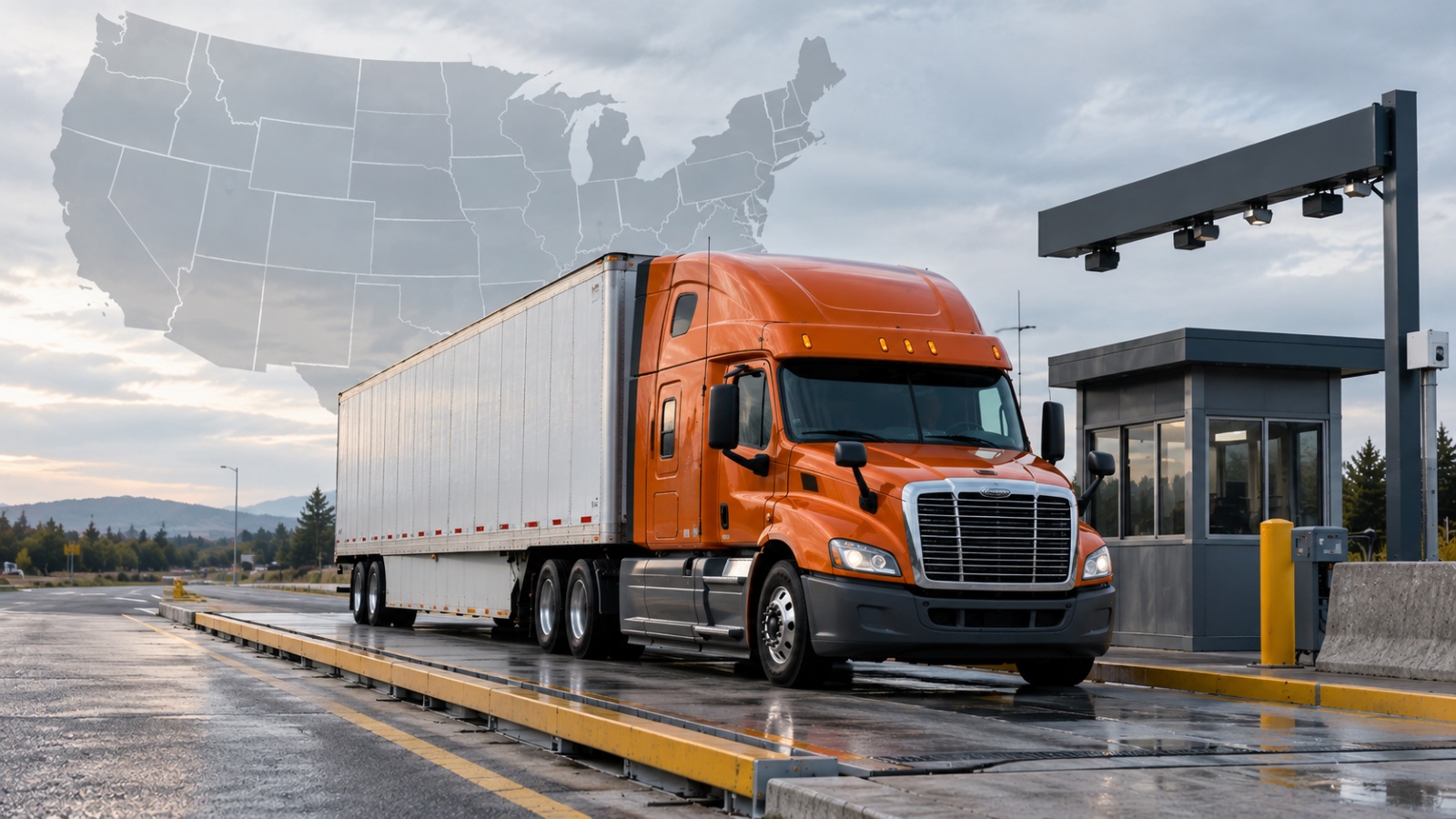
Overweight truck fines vary by state, the amount of excess weight, and the type of violation. Some states charge a fixed fine, while others calculate the penalty based on how many pounds a truck is overweight.
Below, we'll look at general federal weight limits, compare overweight fines by state, and explain what happens if your truck is overweight at a weigh station.
Key Facts:
- The federal Interstate weight limit for most standard commercial vehicles is 80,000 pounds.
- Federal truck weight limits generally allow 20,000 pounds per single axle and 34,000 pounds per tandem axle.
- A semi-truck can get an overweight ticket even if it weighs less than 80,000 pounds if it exceeds legal axle weight limits.
- Overweight truck fines vary by state and may depend on excess weight.
- An overweight permit covers only the approved vehicle, load, route, and conditions.
- Permit violations and other infractions can increase overweight truck fines.
- Checking truck weight limits, axle weights, and permit requirements helps drivers avoid tickets and delays.
What Are the Legal Weight Limits for Semi-Trucks?
For most standard commercial vehicles traveling on Interstate highways, federal law sets a general gross vehicle weight limit of 80,000 pounds, a single-axle limit of 20,000 pounds, and a tandem-axle limit of 34,000 pounds, subject to applicable exceptions.
However, the maximum legal weight can also depend on axle spacing, vehicle configuration, state regulations, and road restrictions. Drivers should review the relevant state DOT weight limits and axle restrictions before departure. A truck might be below 80,000 pounds but still carry too much weight on its drive axles or trailer tandems.
The load needs to be distributed correctly across the vehicle, and the Federal Bridge Formula can affect how much weight is allowed based on the spacing between axles. The table below shows the general federal Interstate weight limits for semi-trucks.
These are general federal limits, not a guarantee that the same weights are legal on every road. Some states have additional restrictions, and bridges or posted roads may have lower limits.
How Much Is an Overweight Truck Ticket in Each State?
Overweight truck fines vary by state, the amount of excess weight, and the type of violation. Some states impose fixed penalties, while others calculate fines based on how much a truck exceeds the legal weight limit.
Use the chart below to search for a specific state or view penalties across all 50 states and Washington, D.C. Always verify current requirements with the relevant state authorities, as regulations and fine amounts may change.
Can You Get an Overweight Ticket Below 80,000 Pounds?
Even if a truck weighs less than the federal Interstate limit of 80,000 pounds, it can still receive an overweight ticket if too much weight is placed on a single axle or axle group.
For example, a semi-truck weighs 79,000 pounds, with the weight distributed as follows:
- Steer axle: 12,000 lb
- Drive tandem: 35,500 lb
- Trailer tandem: 31,500 lb
Although the total weight is within the legal limit, the drive tandem exceeds the 34,000-pound limit by 1,500 pounds. This means the truck is still overweight because one axle group carries too much weight.
In this situation, adjusting the load distribution may solve the problem. However, if the truck exceeds the gross weight limit, shifting weight between axles won't help. The load may need to be reduced, or an appropriate overweight permit may be required where permitted by law.
That's why it's important to check axle weights before hitting the road. It gives drivers time to correct weight distribution issues and helps dispatchers avoid overweight fines and unexpected roadside delays.
How Can Permit and Load Violations Increase the Cost?
An overweight ticket isn't always the only expense that comes with a heavy-haul violation. A truck may also have issues with its height, width, permit, lighting, or approved route. When one incident involves several violations, the total amount cited can be much higher than the penalty for excess weight alone.
A reported crash on Route 318 in Barkhamsted, Connecticut, on September 11 involved an oversize truck that crossed the center line and sideswiped another semi. Both vehicles required towing, but no serious injuries were reported. The investigation identified violations involving excess weight and height, a forged permit, and faulty lighting. The driver received citations totaling $43,989, according to the report. This amount covered multiple violations, not just excess weight.
To avoid costly violations, heavy-haul fleets should verify that permits are valid, check the load's weight and dimensions, and confirm the route is approved before departure. Drivers must also follow all permit conditions and applicable safety requirements throughout the trip.
What Happens If Your Truck Is Overweight at a Weigh Station?
If a truck is suspected of being overweight at a weigh station, officers may check its gross weight and axle weights, inspect permits, and review other documents. The outcome depends on the state and the type of violation.
If an officer identifies a weight violation, follow their instructions and resolve the issue before continuing. Redistributing the load may correct an axle-weight problem, but it won't solve a gross-weight violation. Keep shipping documents, scale tickets, and permits readily available for inspection.
What Happens If You Skip a Weigh Station?
Drivers must follow the signs and instructions that apply to their vehicle. Failing to stop at a weigh station when required can lead to a separate violation, even if the truck isn't overweight.
Don't assume that an electronic bypass system or an open bypass lane automatically means you can skip the station. Follow the applicable signs, instructions, and requirements for your vehicle and credentials. If you're unsure whether you need to stop, check the rules rather than risk an additional citation.
Who Is Responsible for an Overweight Truck Ticket?
The driver or motor carrier may receive an overweight ticket, but who pays depends on state law and the circumstances. Shippers and loading facilities may also contribute by providing incorrect cargo information or improperly distributing the load. To prevent violations, drivers should check axle and gross weights, dispatchers should verify permits and route restrictions, and loading teams should distribute cargo correctly.
Responsibility can vary depending on who caused the violation and the circumstances. Here are four common examples:
1. The driver receives the ticket, but the shipper causes the problem. A shipper loads more cargo than the truck can legally carry. If the driver is cited for operating an overweight vehicle, the driver may still be responsible for the citation, even if the shipper caused the excess weight. Whether the shipper can be held liable depends on applicable law and the circumstances.
2. The carrier pays, even though the driver was cited. A driver receives an overweight ticket while hauling a load for a trucking company. Depending on the company's policies, employment agreement, and applicable law, the carrier may reimburse the driver or cover the fine.
3. The loading facility contributes to the violation. A loading team distributes the cargo incorrectly, causing an axle-weight limit to be exceeded even though the truck's total weight is within the legal limit. The driver or carrier may receive the citation, while responsibility for the loading error may be addressed separately.
4. The driver is responsible for checking the weight. A driver ignores available scale readings or continues driving after discovering that the truck exceeds legal weight limits. In this case, the driver may bear responsibility for the violation, depending on state law and the specific circumstances.
How to Avoid Overweight Truck Fines
Overweight truck fines can add up quickly, especially when axle-weight violations, permit issues, or other infractions are involved. Before departure, check your truck's gross weight and axle distribution, verify permit requirements, and confirm that your planned route allows the load you're carrying.
Using best truck-friendly navigations and planning tools can also help drivers prepare for route restrictions and avoid unnecessary delays. A few checks before hitting the road can save time, reduce the risk of costly tickets, and help keep your trip compliant.
Stay safe out there, and happy trucking!

Frequently Asked Questions
How much is an overweight truck ticket?
Overweight truck fines range from around $50 to several thousand dollars, depending on the state, excess weight, and violation type. Some states charge per excess pound, while others impose fixed fines or additional penalties for axle-weight and permit violations.
What is the maximum legal weight for a semi-truck?
The general federal Interstate limit is 80,000 pounds gross vehicle weight, with limits of 20,000 pounds for a single axle and 34,000 pounds for a tandem axle group, subject to applicable exceptions and restrictions.
Can a semi-truck get a ticket below 80,000 pounds?
Yes. A truck can be below 80,000 pounds overall and still receive a ticket if a single axle or axle group exceeds its applicable legal limit.
How much is an overweight ticket in Georgia?
Georgia calculates overweight truck fines based on the amount of excess weight. Rates start at $0.008 per pound for the first 1,000 pounds overweight and increase in tiers, reaching $0.05 per pound for excess weight above 8,000 pounds.
How much is an overweight ticket in California?
California overweight truck fines can range from $20 to $175, depending on the violation and applicable penalty schedule. Additional penalties may apply based on excess weight and axle violations.
How much is an overweight ticket in Texas?
Texas overweight truck fines range from $100 to $10,000, depending on excess weight. Fines can be $100–$500 for up to 2,500 pounds overweight and $7,000–$10,000 for more than 40,000 pounds overweight.
Who pays an overweight truck ticket?
The driver, trucking company, or carrier may be responsible, depending on state law, the violation, and company policies. Fines can range from hundreds to thousands of dollars.


