


Meta Ads for Trucking Companies: How to Recruit CDL Drivers for an Average of $350

Finding qualified CDL drivers is an ongoing challenge for trucking companies. Open positions can leave trucks without drivers, make dispatch planning more difficult, and affect a carrier's ability to cover scheduled loads. Recruiting the right people requires more than posting a job opening. Companies need to reach candidates who meet their requirements and are interested in the positions they offer.
Job boards and recruiting agencies remain common ways to find drivers, but Facebook and Instagram ads give carriers another channel for promoting open positions. These platforms allow trucking companies to reach potential applicants in their hiring areas, explain job requirements, and collect applications.
The challenge does not end when someone submits a form. Recruiters still need to check qualifications, contact candidates, arrange screenings, and track how many applicants become employees.
Together with Pixelco, we'll look at how trucking companies can use Facebook and Instagram advertising to recruit CDL drivers, manage applications, and measure the cost of hiring.
Quick Summary:
- BLS projects 214,500 annual truck driver openings through 2035.
- Include pay, home time, freight, routes, equipment, and requirements in ads.
- Create separate campaigns for company drivers and owner-operators.
- Screen applicants by location, CDL class, experience, endorsements, and position.
- Contact applicants within 5 minutes and track their status.
- PixelCo reports 5 hires from a $2,000 campaign, equal to $400 per hire.
Why Do Trucking Companies Use Facebook and Instagram to Recruit Drivers?
The U.S. Bureau of Labor Statistics projects approximately 214,500 annual openings for heavy and tractor-trailer truck drivers between 2025 and 2035. Many are expected to come from replacing drivers who retire or move into other occupations.
Job boards are useful for reaching people who are actively looking for work. Social media advertising can also reach drivers who may consider a new position even if they are not currently searching job listings. A carrier can use an ad to present its pay, routes, and home-time schedule to people in the areas where it recruits.
For example, a regional carrier in Ohio could advertise a company-driver position offering weekly home time, dry van freight, and a clearly stated pay range. The campaign can reach people in the company's hiring area, while the ad gives drivers enough information to decide whether they want to apply.
Facebook and Instagram campaigns generally use one of two application paths. An instant form collects contact details within the platform, while a link to the carrier's website sends candidates to an external application page. Both can work, as long as the recruiting team has a process for reviewing and responding to applications.
What Should a Truck Driver Recruitment Ad Include?
Drivers need enough information to decide whether a job is worth considering. An ad that says only "Now Hiring CDL Drivers" does not explain what the company offers or who qualifies. A recruitment ad should clearly outline the key job details.
Pay and home time deserve particular attention. If weekly home time applies only to certain routes, explain that. If advertised earnings depend on miles, bonuses, or experience, make the conditions clear. Drivers should not have to submit an application just to find out whether the basic terms suit them.
The ad image or video should display the most important details. Drivers scrolling through Facebook may never open the caption, so pay, route type, home time, and a clear application prompt should be easy to see.
What Ad Formats and Creatives Should Carriers Test?
The ad creative should show drivers what the company and the job look like. Use real images and details that help candidates understand the position.
Carriers can test several formats:
- Truck photos: Show the equipment drivers will operate. Use actual company trucks where possible.
- Short videos: Film the terminal, trucks, yard, or working environment. A recruiter or current driver can explain the position.
- Graphic ads: Put pay, home time, route type, and key requirements directly on the image.
- Driver testimonials: Let current employees describe their experience in their own words.
For example, a carrier could run two versions of an ad for the same regional position. One uses a truck photo with the pay and home-time schedule. The other uses a short video in which a recruiter explains the route and requirements. Keeping the job offer consistent makes it easier to compare which creative attracts more suitable applicants.
The company's social media profile also matters. Drivers may visit the Facebook or Instagram page before applying to check the carrier's equipment, team, and working environment. Recent posts, photos of actual trucks, information about the company, and current contact details give candidates more to evaluate.
An ad that initially attracts applications may lose effectiveness after the same audience sees it repeatedly. Prepare several versions and refresh them when results start to slow. Compare not only how many applications each creative generates, but also how many applicants meet the job requirements.
How Do Meta Employment Ads Work?
Carriers create Facebook and Instagram campaigns through Meta Ads Manager. The platform lets them set a budget, select placements, choose an application destination, and review campaign results.
Driver recruitment is employment advertising, so campaigns fall under Meta's Special Ad Category. This limits some audience-targeting options, including certain demographic filters. Carriers should review Meta's employment advertising requirements before setting up a campaign and check the current restrictions that apply to their ads.
Because detailed targeting is restricted, the job offer and creative carry much of the work. The ad should clearly state the position, CDL class, experience requirements, and hiring location. The application form can collect the details recruiters need to check whether someone qualifies.
Carriers can choose between two common application paths:
- Meta instant form: The form opens within Facebook or Instagram. Applicants can submit their contact details without visiting another website. This reduces the number of steps, but recruiters still need to verify the information and screen each lead.
- Company application page: The ad sends applicants to the carrier's website or recruiting platform. This gives the company more control over the application and allows it to ask additional questions. Candidates, however, have to leave the social platform to complete the form.
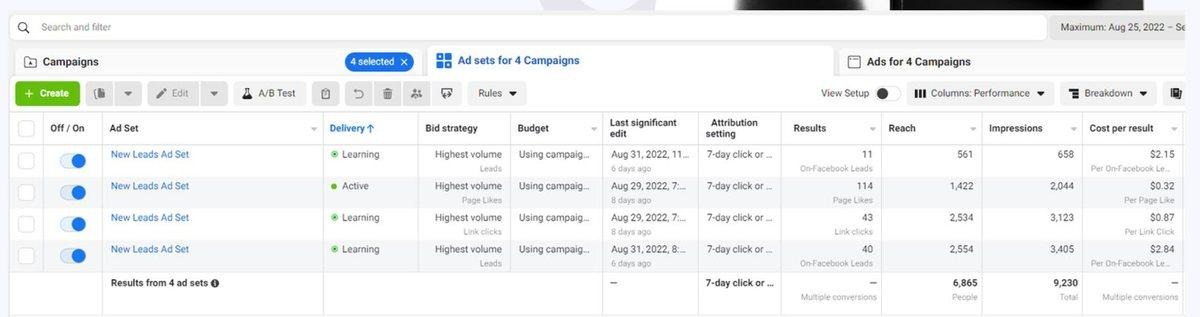
Choose the format based on how much information recruiters need before making the first call. A short instant form may work well when recruiters handle initial screening by phone. A longer application page may be more suitable when the company needs detailed information before contacting candidates.
What Should a Driver Application Form Ask?
The first application should collect enough information to identify potentially suitable candidates. It does not need to replace the full hiring process.
Owner-operator campaigns need a different set of questions. Depending on the position, carriers may ask whether the applicant owns a truck, has operating authority, carries the required insurance, or is interested in leasing on. Keep the initial form focused. Questions about detailed employment history and driving records can be handled during formal screening.
Carriers should also explain how they use applicant information and follow applicable privacy requirements.
How Should Carriers Handle Incoming Applications?
An application is only the beginning of the recruiting process. If a carrier receives 30 applications in a week but does not review them for several days, interested drivers may already have accepted other offers by the time a recruiter calls.
Set up notifications so new applications reach the person responsible for recruitment. Make the first call as soon as possible. A response within five minutes is a useful target for the recruiting team, particularly when applicants may be contacting several carriers. If a driver does not answer, send a text message and record the next follow-up attempt.
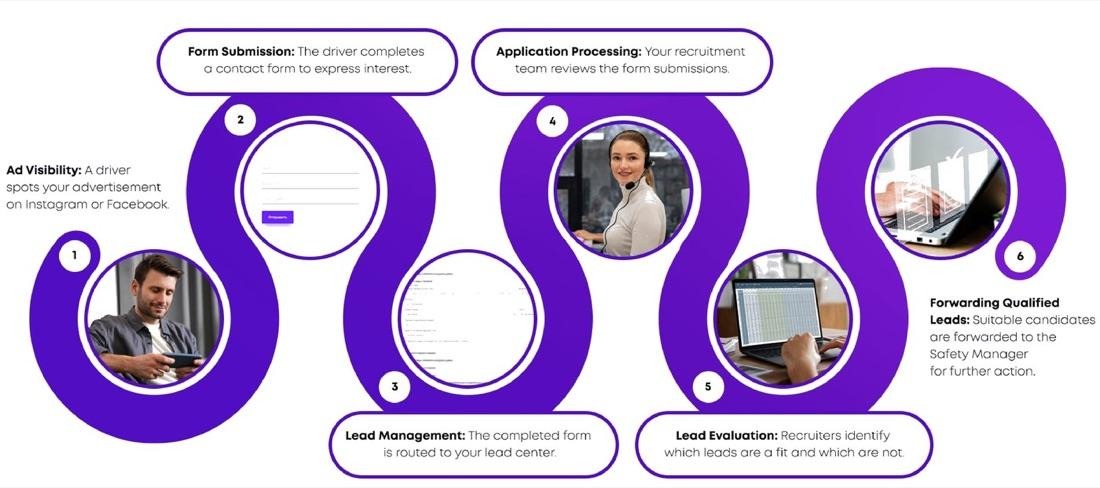
A basic lead-management process should include:
- Assign the application. Make sure each lead has a recruiter or team responsible for it.
- Check the basic requirements. Review the applicant's location, CDL class, experience, and position of interest.
- Make contact. Call suitable candidates and explain the next steps.
- Record the outcome. Update the application status after each interaction.
- Follow up. Make further contact attempts over the next couple of days, in line with company policy and applicable consent requirements.
Use consistent statuses so the recruiting team can see where each application stands. A simple workflow might include New, Contacted, No Answer, Not Qualified, Screening Scheduled, Sent to Safety, and Hired.
A spreadsheet may be enough for a small carrier hiring for one or two positions. Companies recruiting across several locations or for multiple job types may benefit from a recruiting platform or CRM. Every application should have an assigned owner and a recorded outcome.
Lead statuses can also help identify problems in the campaign. If many people submit forms but few answer calls, review the contact process. If most applicants fail the initial requirements, the ad or application form may need to explain the job more clearly.
How Much Do Facebook Ads Cost to Hire a Truck Driver?
Meta does not set a fixed price for hiring a CDL driver. Campaign costs depend on the position, hiring location, competition, creative, and application process. Recruiting owner-operators, for example, may cost more than recruiting company drivers because the offer and candidate requirements are different.
Carriers should look at three stages of campaign performance:
- Cost per application: Advertising spend divided by the number of submitted applications.
- Cost per qualified applicant: Advertising spend divided by the number of applicants who meet the initial requirements.
- Advertising cost per hire: Advertising spend divided by the number of drivers hired through the campaign.
For cost-per-hire reporting, use the same hiring milestone each time. A driver who submits an application is not yet a hire. Carriers might count a hire when the driver completes onboarding or starts work, as long as they apply that definition consistently.
Example of Calculating Advertising Cost per Hire
Suppose a carrier spends $2,000 on a Facebook campaign and receives 100 applications. Thirty applicants meet the initial requirements, and five are hired.
The calculations are:
- $2,000 ÷ 100 applications = $20 per application
- $2,000 ÷ 5 hires = $400 per hire
In this example, 30% of applicants meet the initial requirements, and 16.7% of qualified applicants are hired. These figures help carriers assess both the quality of incoming applications and the recruiting team's ability to move suitable candidates through the hiring process.
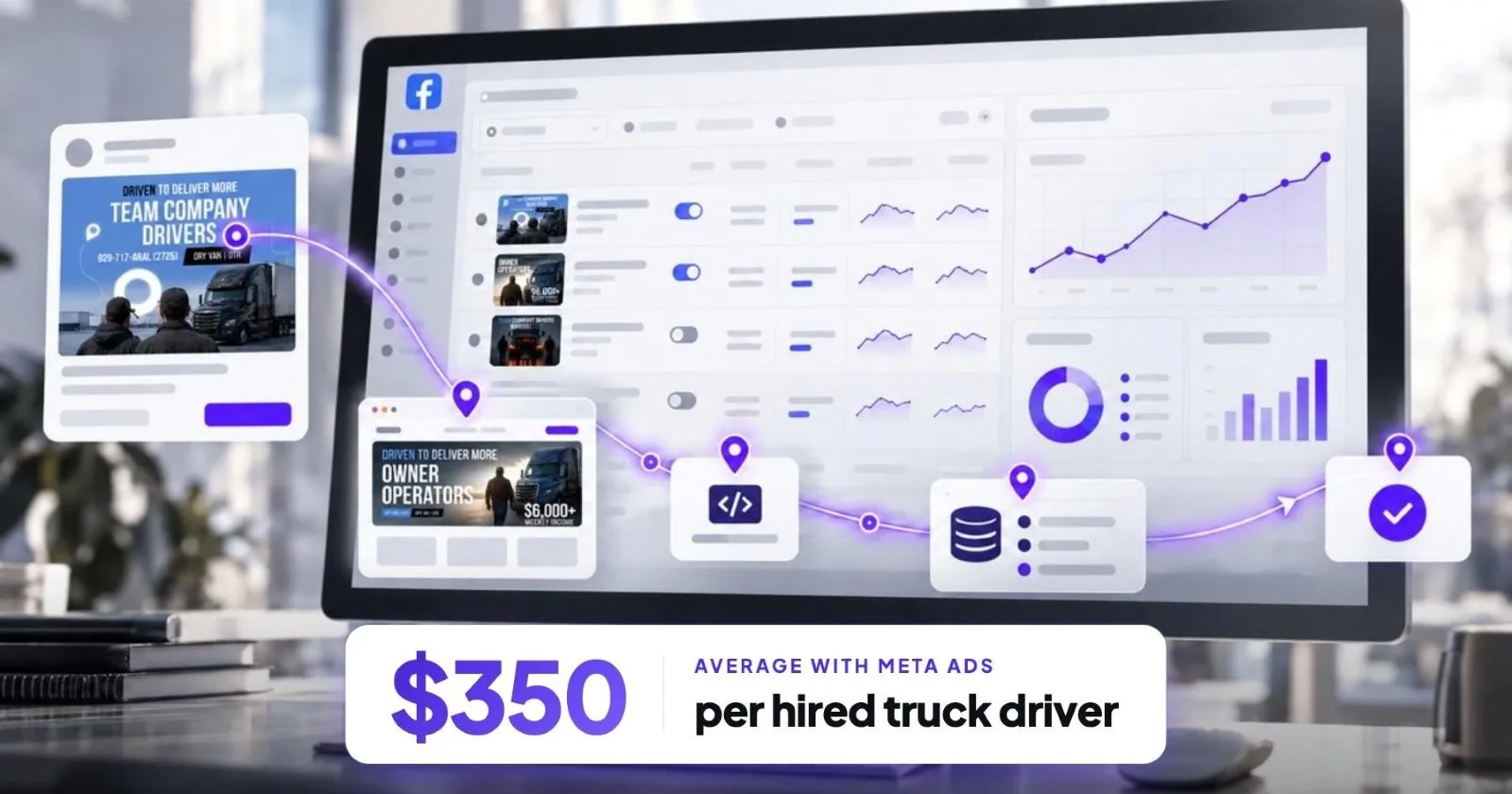
Pixelco reports an average advertising cost of approximately $350 per hired driver across the Meta accounts it manages. Its article on driver recruitment through Meta ads provides the source for that figure. This is close to the $400 advertising cost per hire in the example above. Carriers should compare their own results using the same definition of a hire and separate advertising spend from other recruitment expenses.
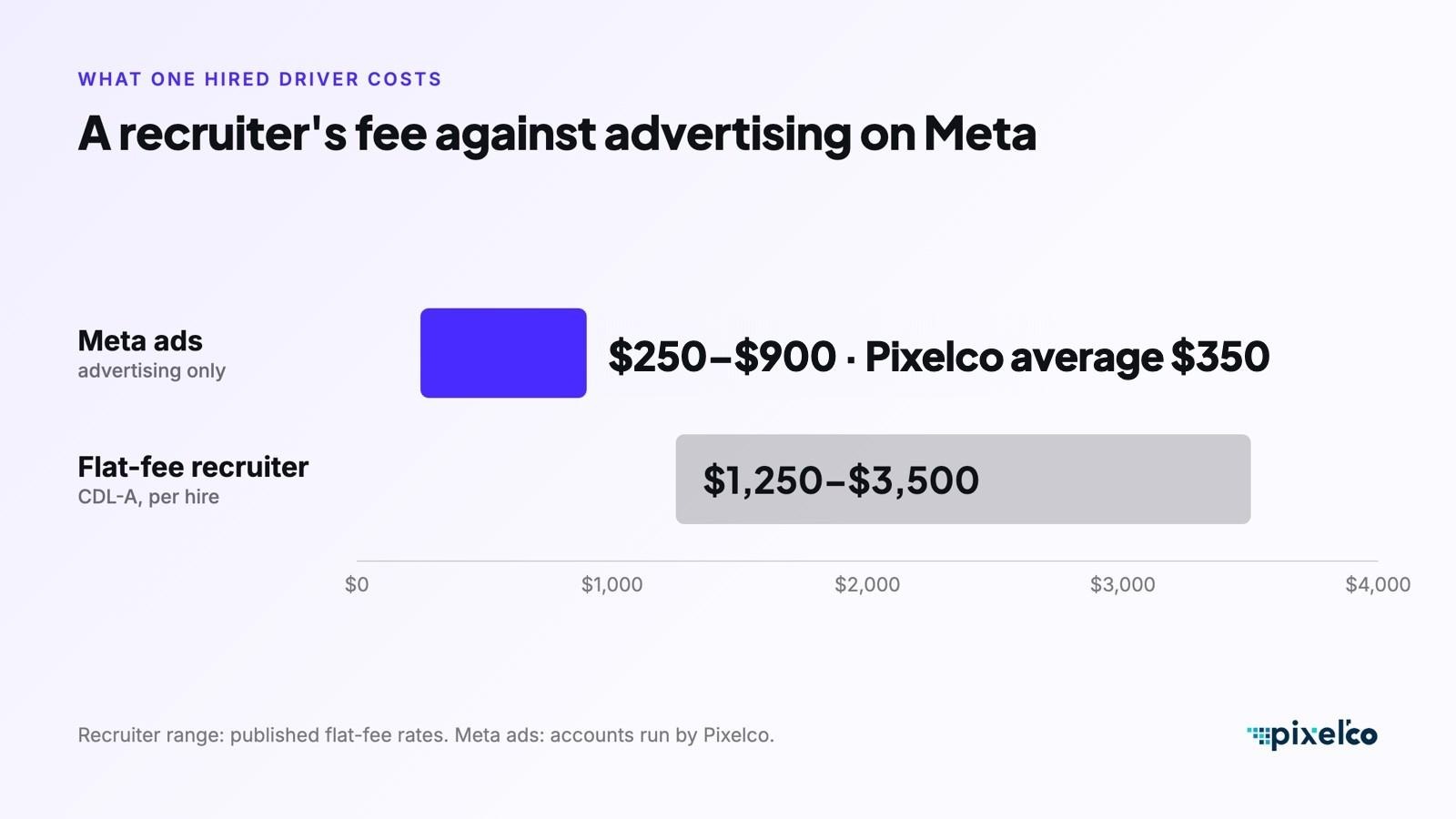
Advertising cost per hire does not include everything a company spends on recruitment. Recruiter time, background checks, screening, onboarding, and agency management fees can add to the total cost. Keep these expenses separate when reviewing campaign performance.
Should a Trucking Company Manage Ads In-House or Hire an Agency?
Managing recruitment campaigns internally requires more than setting up ads. Someone needs to prepare the job offer, produce creatives, monitor campaign performance, review applications, and coordinate with recruiters. The company also needs to understand Meta's employment advertising rules.
An agency can handle campaign setup, creative production, testing, and reporting. The carrier still needs to provide accurate job information, respond to applicants, conduct screening, and make hiring decisions.
Pixelco provides digital marketing and driver recruitment services to trucking companies. Before working with an agency, carriers should ask:
- Is the advertising budget separate from the agency's management fee?
- Will the carrier own and retain access to its Meta advertising account?
- Who creates the ads, images, and videos?
- Where will applications be stored?
- Who is responsible for contacting applicants?
- Does reporting cover qualified applicants and hires, or only clicks and leads?
- How does the agency calculate its reported cost per hire?
The carrier should retain access to its advertising account and applicant data. It should also be able to review actual campaign spending and understand how results are calculated. Carriers considering outside help can book a call with Pixelco to discuss their recruiting requirements.
What Recruiting Ad Mistakes Should Carriers Avoid?
Some campaign problems start with the ad itself. Others appear later, when applications reach the recruiting team. These are the mistakes carriers should watch for:
- Leaving out important job details. If pay, home time, freight type, and requirements are missing, drivers cannot easily decide whether the position suits them. Put the main terms in the ad itself.
- Combining different positions. Company drivers and owner-operators have different expectations and qualifications. Give each position its own message and application questions.
- Making the form too long. Asking for too much information at the first stage can discourage applicants. Collect the details needed for initial screening and handle the rest during recruitment.
- Responding too slowly. New applications should trigger a notification and reach someone who can contact the candidate. A lead that sits untouched for days may no longer be interested.
- Optimizing only for cheap applications. A low cost per lead does not tell the whole story. If most applicants do not meet the requirements, the campaign may be attracting the wrong audience or presenting the job poorly.
- Changing too many campaign elements at once. If the company changes the offer, creative, audience, and form simultaneously, it becomes difficult to identify what improved or weakened performance. Test changes in a controlled way.
- Reusing the same creative for too long. Monitor results and prepare new images or videos when applications begin to slow down.
- Ignoring the company's social media profile. Drivers may check the carrier's page before applying. Outdated posts, missing contact details, or little information about the company can leave candidates with unanswered questions.
Which Recruitment Metrics Should Carriers Track?
Advertising reports should be reviewed alongside the recruiting team's records. The goal is to understand what happens after someone sees the ad and submits an application.
Break the results down by position and hiring location. A local-driver campaign may generate fewer applications than an OTR campaign but a higher percentage of qualified candidates. Looking only at total leads would miss that difference.
Review the numbers regularly with the recruiting team. If applications are coming in but few candidates qualify, revisit the ad and form. If qualified applicants are not progressing, examine response times, screening, and the hiring process. Use those findings when deciding which ads to keep running and where to allocate the next part of the budget
Frequently Asked Questions
Do Facebook ads work for CDL driver recruitment?
Facebook and Instagram ads can help trucking companies reach potential CDL applicants beyond traditional job boards. Results depend on the job offer, location, campaign setup, and follow-up process.
Can trucking companies target only CDL drivers on Facebook?
No. Meta’s employment advertising restrictions limit certain targeting options, so carriers should state CDL and experience requirements in their ads and verify them during screening.
Is a Facebook instant form better than a company careers page?
An instant form is usually easier for applicants to complete, while a careers page offers more control over the application process and screening questions.
What if I have no Facebook page or ad account?
PixelCo creates them using your company’s own assets, and this setup is included in its service.
What is a good cost per hire for truck drivers?
A good cost per hire for truck drivers is typically $250-900 in Meta ad spend, with PixelCo reporting an average of approximately $350 per hire.
Should a trucking company hire an agency to run driver recruitment ads?
An agency may be a good option when a trucking company lacks the internal resources or expertise to manage campaigns. Before signing, clarify the fees, account ownership, lead handling, and reporting.


