



U.S. Diesel Prices Reach a Record $6.51: What It Means for Truckers

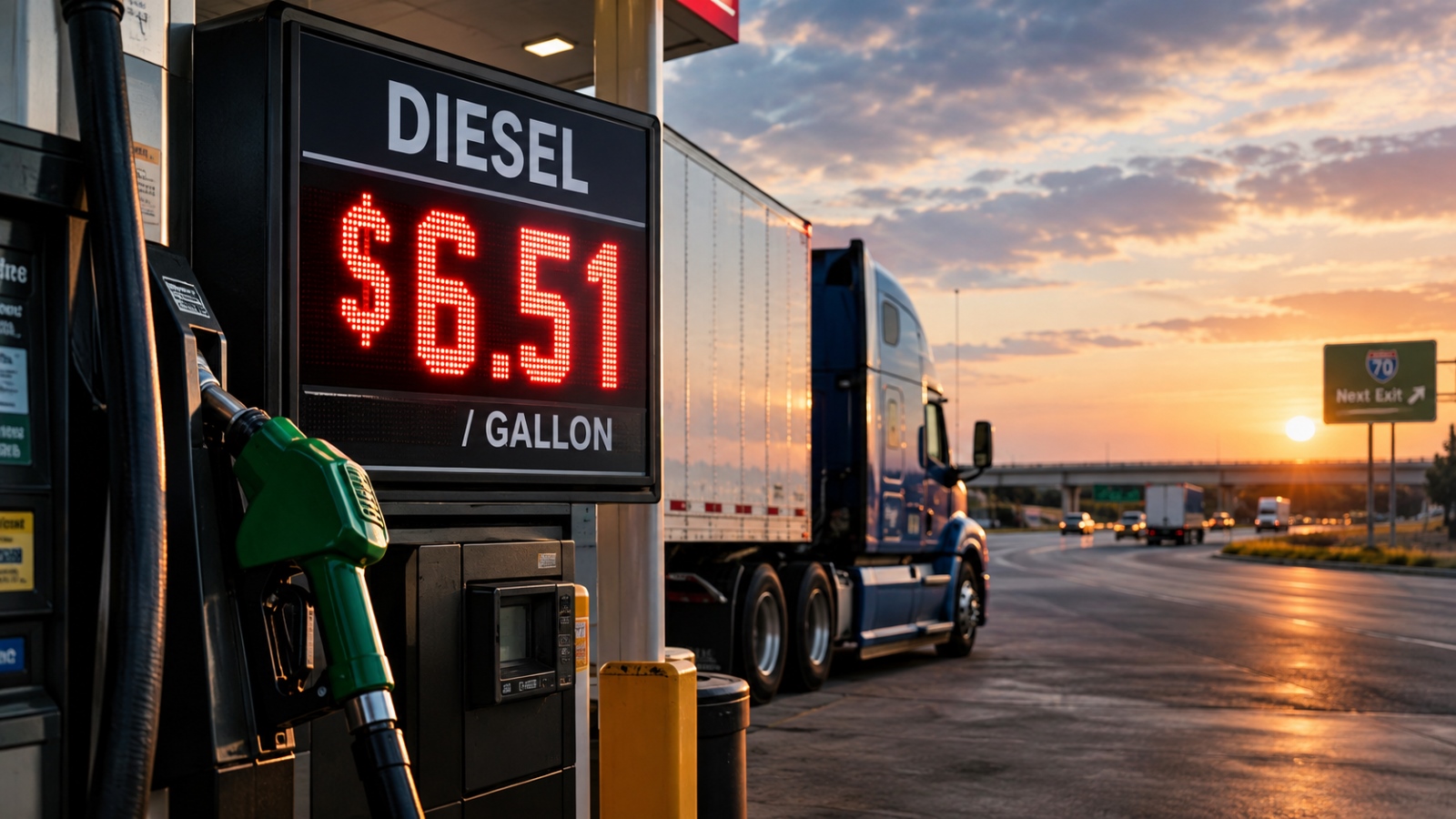
U.S. diesel prices have reached a record $6.51 per gallon, according to the AAA national average on September 21, 2026. The increase has happened remarkably quickly, making fuel an even larger part of the cost of moving freight.
For truck drivers and fleet managers, expensive diesel affects more than the amount paid at the pump. Every additional mile now carries a higher fuel cost, making route choices, fuel stops, and overall trip planning more important than they were when diesel was significantly cheaper.
Key Facts:
- The AAA national average reached $6.5107 per gallon on September 21, 2026, a new record in AAA's data.
- The national average increased by $0.28 per gallon in one week, from $6.2301 to $6.5107.
- Over one month, the average increased by $0.93 per gallon, from $5.5764 to $6.5107.
- Diesel is about 76% more expensive than one year ago, when the AAA national average was $3.6958 per gallon.
- The U.S. Energy Information Administration reported a national on-highway diesel average of $6.285 per gallon for the week of September 14, 2026.
How Much Have Diesel Prices Increased?
The latest AAA figures show how quickly the cost of diesel has changed. The national average has climbed substantially in just a few weeks, while the difference compared with last year is even larger.
From one month ago to September 21, the national average increased by about $0.93 per gallon. Compared with the same time last year, the increase is about $2.81 per gallon.
That difference becomes much more noticeable when you look at the amount of fuel a truck actually purchases. At $6.5107 per gallon, 100 gallons costs about $651. At last year's average of $3.6958, the same 100 gallons would have cost about $370. That is roughly $281 more for the same amount of fuel.
The national average is only a reference point because prices vary by location. AAA updates its figures daily using data from up to 120,000 stations through its partnership with OPIS/WEX, giving drivers and fleets a broad view of retail fuel prices across the country. Diesel prices are shaped by what happens across the fuel supply chain, from crude oil and refining to distribution, retail, and taxes. The U.S. Energy Information Administration (EIA) identifies these as major components of the retail price, while current supply conditions are adding further pressure.
So, what is pushing prices higher right now?
1. Crude oil prices
Diesel prices are closely connected to crude oil because crude is the primary raw material used to produce diesel. EIA says crude oil accounted for about 51% of the monthly average U.S. retail on-highway diesel price from 2004 through 2025.
2. Refining margins
Refining costs are another important part of the price paid at the pump. EIA reported that U.S. refinery utilization reached about 97% for the week ending September 11, 2026. At the same time, high refinery output does not necessarily mean domestic supply is abundant when substantial volumes of distillate are being exported.
3. Exports and low inventories
The U.S. has been producing large amounts of diesel while also exporting substantial volumes. EIA reported that distillate net exports had remained near or above the previous five-year high since February. At the same time, domestic distillate inventories were about 13% below the 2021-2025 seasonal average as of the week ending September 11.
When inventories have less of a cushion, changes in production, exports, or supply disruptions can have a greater effect on prices.
4. Taxes and retail costs
Taxes, transportation, distribution expenses, and retail margins also contribute to the final price at the pump. These costs vary across states and markets, which is one reason diesel prices can differ significantly depending on where a truck fuels.
5. Global supply pressures
Diesel is part of a global market, so events outside the United States can affect prices at American truck stops. Geopolitical tensions, disruptions affecting major shipping routes, refinery outages, and changes in fuel exports can all influence global crude and refined-product supplies. When the global market is already tight, additional disruptions can put further pressure on prices.
Why Can Diesel Prices Vary So Much by Region?
The national average does not tell the whole story. A truck traveling across several states can encounter substantially different diesel prices along the same trip. EIA data for the week of September 14, 2026, illustrate these regional differences:
That makes local fuel information more useful when planning a long trip. Even a 10-cent difference per gallon can become meaningful when a fleet purchases thousands of gallons.
What Does $6.50 Diesel Mean for Truck Drivers?
The easiest way to understand the impact is to look at the cost of a typical fuel purchase. At the AAA national average of $6.5107 per gallon:
These are simple calculations based on the AAA national averages. Actual fuel costs depend on the truck's fuel capacity, fuel economy, route, and local pump prices. The bigger issue is that fuel is consumed throughout every trip. When diesel costs more, unnecessary mileage becomes more expensive too.
For example, if a truck gets 6 miles per gallon, an additional 50 miles requires about 8.3 gallons of fuel. At $6.5107 per gallon, that adds roughly $54 in fuel alone. That is why detours and inefficient routing deserve more attention when diesel prices are high. The cost is not limited to the fuel itself. Extra mileage can also mean additional driving time, wear and tear, and schedule disruptions.
Why Route Planning Matters More When Fuel Is Expensive
When diesel costs more than $6 per gallon, route planning becomes closely connected to cost control.
A route that looks only slightly longer on a map can require additional fuel. At the same time, the shortest possible route is not necessarily the right route for a commercial truck. Low-clearance bridges, weight restrictions, road conditions, and truck-specific restrictions can force a vehicle onto a different route.
The goal is not simply to find the fewest miles. It is to find a safe, truck-appropriate route while avoiding unnecessary mileage.
1. Plan around truck restrictions
A route that works for a passenger vehicle may not work for a tractor-trailer. Low bridges, weight restrictions, and other commercial vehicle limitations can turn a seemingly short route into an expensive detour. Truck-specific navigation can help drivers plan around these restrictions before they start driving. Trucker Guide can be used as a Trucker Path alternative to plan truck routes while taking truck-specific road limitations into account.
2. Build fuel stops into the route
Fuel stops should be part of the trip plan rather than something decided at the last minute. Before leaving, identify potential fueling locations along the route and consider how each stop fits into the overall trip. A station that requires a significant off-route drive may not be the cheapest option once the additional mileage is considered.
Trucker Guide can help drivers locate truck stops and other services along their route, making it easier to include stops in the overall plan.
3. Combine multiple needs into one stop
A long-haul driver may need fuel, food, parking, maintenance, or other services during the same trip. Whenever practical, combining several needs into one location can reduce unnecessary additional mileage. For example, stopping at a truck stop where you can fuel, take a break, and access other needed services may be more efficient than making several separate stops.
4. Check local fuel prices
The national diesel average is useful for understanding the broader market, but it does not tell you what a particular truck stop will charge. Before fueling, compare available options along your route when possible. Fuel cards, fleet tools, and apps can provide additional information about nearby locations and prices.
A small difference at the pump can become significant when multiplied across a large fuel purchase or an entire fleet.
5. Balance mileage with safety
High diesel prices can make drivers pay closer attention to mileage, but cutting miles should never mean ignoring truck restrictions or safe routing. A longer route may sometimes be necessary because of a low-clearance bridge, weight restriction, road condition, or other truck-specific issue. The cost of a few additional gallons is much easier to manage than the potential consequences of taking an unsuitable route.
What Should You Check Before You Start Driving?
Before you start driving, run through these five checks to make sure fuel, routing, and necessary stops are all part of the same plan.
The point is simple: don’t plan the route around miles alone. Plan around the entire trip. Try Trucker Guide and make smarter truck route planning part of your routine.
Frequently Asked Questions
What is the current U.S. diesel price?
AAA reported a national average diesel price of $6.5107 per gallon on September 21, 2026, the highest diesel average displayed in its current historical record.
How much has diesel increased in the past year?
AAA's national average increased from $3.6958 per gallon one year ago to $6.5107 on September 21, 2026, an increase of approximately $2.81 per gallon, or about 76%.
How much did diesel increase in the past month?
AAA's national average increased from $5.5764 to $6.5107 per gallon over the one-month comparison shown on September 21, an increase of approximately $0.93 per gallon.
Why are diesel prices so high?
EIA says diesel prices are influenced by crude oil costs, refining costs and margins, distribution and retail costs, taxes, supply and demand, inventories, transportation costs, and seasonal factors.
Is $6.5107 the price at every truck stop?
No. $6.5107 is the AAA national average, so the actual price at a particular truck stop can be higher or lower depending on location and local market conditions.
Can route planning lower fuel costs?
Route planning cannot change the price of diesel, but it can help drivers avoid unnecessary mileage, account for truck-specific restrictions, and organize fuel and service stops as part of the overall trip.
How can Trucker Guide help with fuel planning?
Trucker Guide is a Trucker Path alternative that provides truck-focused navigation and helps drivers find truck-relevant locations and services along their route.


