



2026 Update: New Federal Rule for Non-Citizen Truckers and CDLs


A new federal rule is now reshaping who can legally hold a non-domiciled commercial driver’s license, and it is already having a major impact on the trucking industry. On March 16, 2026, the Federal Motor Carrier Safety Administration’s final rule took effect, tightening eligibility and requiring states to pause or restrict non-domiciled CDL issuance if they could not meet the new federal standards.
So, what is the point of this rule? In short, the rule is designed to strengthen road safety by making sure every non-domiciled CDL holder is properly documented, legally authorized to work, and verified under stricter federal review.
Quick Summary:
- FMCSA finalized the non-domiciled CDL rule on February 12, 2026, and it became effective on March 16, 2026.
- States that could not meet the new federal requirements were told to pause issuance of non-domiciled CDLs.
- The rule significantly tightens eligibility for non-domiciled CDL applicants and renewals.
- Federal guidance links CDL eligibility to stronger identity, residency, and work-authorization verification.
- Reporting on the rule says it could affect a large number of non-domiciled CDL holders, depending on state implementation and driver status.
Why the Rule Was Needed
The rule came after FMCSA identified serious concerns about how non-domiciled CDLs were being handled in some states. The federal government’s goal was to restore consistency and make sure CDL issuance is based on verifiable eligibility, not gaps in oversight or uneven state procedures.
You May Also Like: Imported Truck Prices May Soon Change: What It Means for Fleets
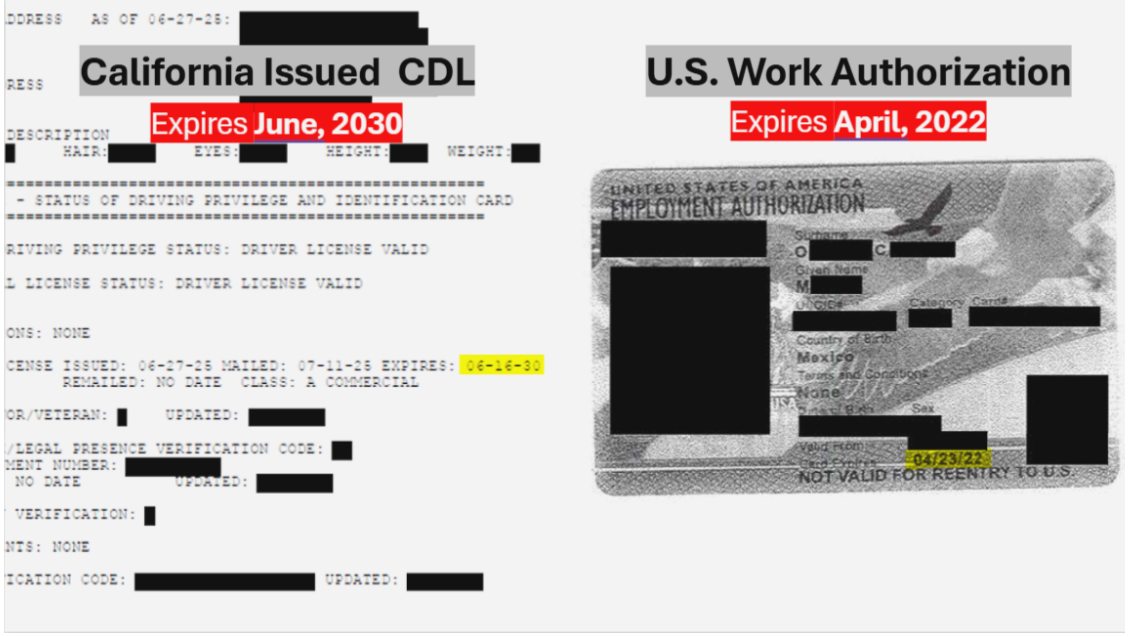
That matters because a commercial driver license is not just a permit to drive. It is a safety credential tied to public trust, highway safety, and legal work authorization. If the licensing process is weak, the entire system becomes less reliable, which is why the federal government stepped in with a stricter rule in 2026.
The result is a much tighter framework for states and drivers. Instead of relying on looser state-by-state interpretations, FMCSA is pushing for a more controlled process with fewer exceptions and more verification at every step.
What Changed In the Federal CDL Rules For Non-Citizens in 2026?
The biggest change is that non-domiciled CDL issuance and renewal now face far more federal scrutiny. States that cannot meet the new requirements must stop issuing those licenses, and drivers must now fit within a narrower set of eligibility rules.
In practical terms, the rule means:
- States need to verify eligibility more carefully before issuing or renewing a non-domiciled CDL.
- Drivers may face additional documentation checks before they can be approved.
- Licensing decisions are now tied more closely to federal standards instead of local practice.
- States that cannot comply risk being blocked from continuing issuance.
This is a major shift for drivers who were used to a more flexible system. It also means carriers need to pay attention, because a driver who loses eligibility or cannot renew on time may suddenly become unavailable for dispatch.
What Does the New Rule Mean For Non-Citizen Truckers?
This rule directly affects drivers who are not U.S. citizens and are operating under a non-domiciled CDL. In 2026, the licensing process is more restrictive, more documented, and more closely monitored than before.
For drivers, the main concern is simple: if your status is not clear, current, and verifiable, your ability to keep driving could be at risk. That makes it essential to keep every document aligned and up to date, especially when renewal time comes around.
Truckers should also understand that state delays or compliance problems can create real disruptions. Even if a driver is eligible in theory, state systems that have not fully adjusted to the rule may pause issuance or renewal, which can leave drivers stuck waiting. That is why checking paperwork early is now part of basic job protection.
You May Also Like: FMCSA Announces Pilot Programs to Enhance Hours-of-Service Flexibility
Industry Response and Real-World Impact
The trucking industry has responded with a mix of support, caution, and concern. Some groups see the rule as a necessary correction that improves safety and closes loopholes, while others worry about the effect on driver availability and freight movement.
The biggest real-world concern is workforce disruption. Reporting on the rule says it could affect a large number of drivers, and that means some fleets may face shortages, scheduling pressure, or turnover problems while compliance gets sorted out. That kind of disruption can ripple through carriers, shippers, and supply chains.
At the same time, supporters argue that stricter licensing is worth the tradeoff if it improves road safety and makes the CDL system more trustworthy. In other words, the rule may be painful in the short term, but federal officials are treating it as a long-term safety fix.
What Should Non-Citizen Drivers and Carriers Do Now?
Drivers with a non-domiciled CDL should review their status immediately and make sure all documents are current and consistent with federal requirements. That includes checking renewal timing, eligibility status, and any state-specific instructions that now apply under the new rule.
Carriers should also audit their driver files now rather than later. If a fleet depends on drivers who may be affected, the company needs to know that before a renewal problem turns into an empty seat or an interrupted route.
A good compliance habit in 2026 is to treat licensing as a live issue, not a one-time event. The drivers and fleets that stay ahead of paperwork will be the ones that avoid the biggest problems.
Frequently Asked Questions
Can a non-US citizen get a CDL?
Yes, in many cases. A non-U.S. citizen can obtain a CDL if they are legally present in the U.S. and can prove lawful immigration status and work authorization. Requirements vary by state and must comply with FMCSA rules.
What is a non-domiciled CDL?
It is a commercial driver’s license issued to a driver who is legally authorized to be in the U.S. but does not have permanent residency in the state (or country rules tied to “domicile”). It allows qualified drivers to operate commercial vehicles under federal and state compliance standards.
What are the non-domiciled CDL requirements?
Drivers must prove legal presence and work authorization, pass a DOT medical exam, meet age requirements (usually 21 for interstate driving), and provide identity documents verified under federal standards set by FMCSA. States may also require additional residency and documentation checks under the 2026 rule framework.
Can a non-domiciled CDL driver operate in the U.S.?
Yes. If the CDL is valid and the driver meets federal and state compliance rules, they can operate commercially in the U.S. Interstate operation still requires full compliance with federal safety, logging, and licensing standards.
Is the U.S. stopping issuing visas for truck drivers?
No. The U.S. is not broadly stopping visas for truck drivers. However, visa eligibility and CDL issuance are being more tightly regulated and verified, meaning approval standards are stricter and documentation requirements are higher than before.


