



What Is Lead Time in Shipping? A Practical Guide for U.S. Logistics

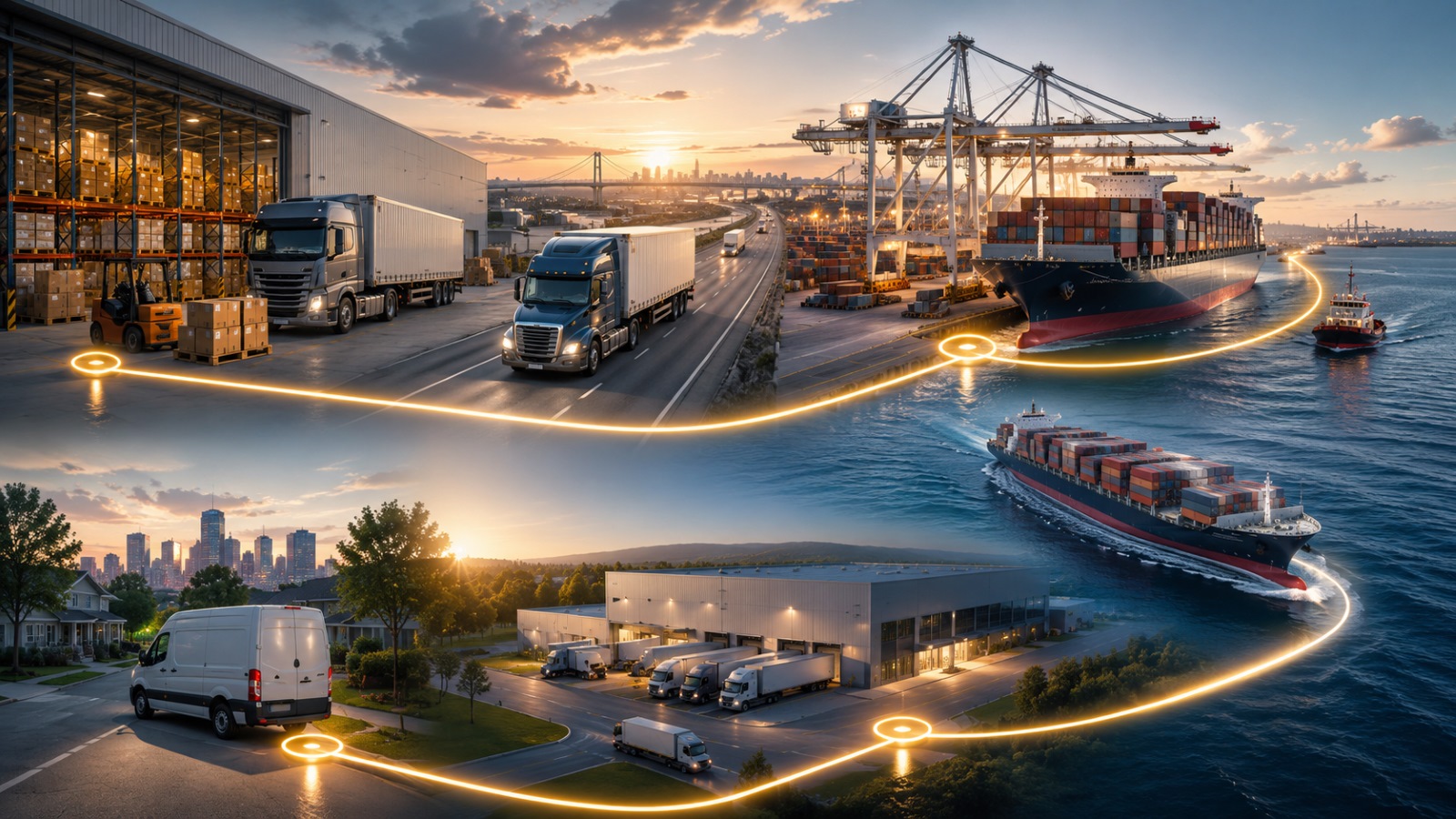
Lead time in shipping is one of the most important timing metrics in logistics, yet it is often misunderstood. It is the total time between placing an order and delivering the goods to the final destination.
In U.S. supply chains, lead time is not just about speed. It is about predictability, planning, and control. A shipment that is consistently delivered in ten days is often more valuable operationally than one that fluctuates between five and twenty days.
Key Facts:
- Lead time in shipping is the full order to delivery window, typically ranging from 2 to 5 days domestically and 15 to 45 plus days internationally depending on transport mode and routing complexity.
- Shipping lead time includes multiple stages, with the longest share usually coming from main transit which takes 2 to 45 plus days and port or customs handling which takes 2 to 5 days per checkpoint.
- Transit time is only part of total lead time and often represents about 30 to 60 percent of the full shipment timeline while the rest is consumed by processing, warehousing, and clearance delays.
- U.S. trucking lead times generally range from 1 to 7 days, but variability in routing, congestion, and scheduling can significantly extend total delivery time.
- Operational issues such as documentation errors, port congestion, and capacity shortages can increase lead time by 20 to 40 percent during peak seasons.
- Improvements in warehouse efficiency, inventory visibility, and carrier consistency can reduce total lead time by 15 to 30 percent without changing the transport mode.
Why Does Lead Time Matter?
Lead time directly affects how businesses operate day to day. In U.S. logistics, where freight moves through tightly connected networks of carriers, warehouses, ports, and distribution centers, timing disruptions quickly spread.
When lead time is long or inconsistent, businesses are forced to carry more inventory, absorb higher storage costs, and deal with unexpected shortages. When it is stable and predictable, supply chains become easier to manage and significantly more efficient.
What Is Included in Shipping Lead Time?
Shipping lead time has several connected stages, each contributing a portion of the total timeline.
What Is the Difference Between Lead Time and Transit Time?
Lead time and transit time are closely related in shipping, but they measure very different parts of the logistics process. Mixing them up is common, especially in freight planning, but the distinction is actually pretty straightforward once you break it down.
Lead time is the full end-to-end duration of a shipment. It starts when an order is placed or cargo becomes ready and ends only when the shipment reaches its final destination. It includes everything: order processing, warehouse preparation, pickup, transportation, customs clearance, and final delivery.
Transit time, on the other hand, is only one part of that journey. It measures the time spent physically moving goods between the origin and destination, whether by truck, rail, air, or ocean.
A simple way to think about it is this: transit time is the movement time, while lead time is the full clock. Here’s a practical breakdown example.
In this example, the total lead time is 19 days, while transit time alone is 8 days. Many transit delays come from routing inefficiencies and incorrect navigation systems. This is why professional drivers rely on tools built specifically for trucking conditions rather than general mapping apps.
What Factors Increase Lead Time?
Several factors can extend shipping lead time in both domestic and international logistics.
Port congestion often slows down loading and unloading operations. Weather conditions can delay trucking routes and ocean schedules. Customs inspections may add unexpected clearance time. Carrier capacity shortages can delay pickups and bookings. Documentation errors can result in holds at terminals or borders. Seasonal demand spikes, especially during retail peaks, also create system-wide slowdowns.
In trucking operations specifically, delays often occur due to route restrictions, weigh station stops, and infrastructure limitations.
These factors are often interconnected, which is why delays in one part of the chain can affect the entire shipment timeline.
How Can Businesses Reduce Lead Time?
A lot of delays actually happen before the truck even moves.
So if businesses want faster delivery, they usually start with the basics: knowing exactly what they have in stock and what they need. Better inventory planning means fewer last-minute surprises, fewer emergency shipments, and less scrambling when demand spikes.
Warehouses also play a huge role. If picking and packing are slow or disorganized, everything downstream slows down too. The faster an order gets staged and ready to go, the sooner it can actually leave the building. Even small improvements here can shave off hours or sometimes a full day.
Then there’s transportation. Better routing, cleaner scheduling, and choosing reliable carriers can cut down a lot of wasted time between stops. In U.S. trucking, especially, timing can get messy fast if dispatching isn’t tight.
Paperwork is another sneaky one. International shipments often lose time just sitting around while documents clear. When everything is prepared early and handled digitally, things move a lot more smoothly through ports and customs.
And finally, carrier consistency matters more than people think. A slightly slower but reliable carrier often beats a “fast on paper” option that keeps running into delays.
Simple ways businesses actually speed things up:
👉🏻 Keep inventory visibility tight so there are no surprises
👉🏻 Speed up warehouse picking and packing
👉🏻 Plan routes and loads more efficiently
👉🏻 Handle documents early and digitally
👉🏻 Stick with carriers that show consistent performance
These steps fix the basics, but leaders push it even further.
When lead time is stable, everything becomes easier to plan: inventory, trucking capacity, warehouse flow, and customer delivery expectations. When it is unpredictable, even fast transportation cannot fully fix the disruption.
In modern U.S. logistics, the real advantage is not only moving freight quickly, but moving it consistently with fewer delays between steps.


