



Underinflated Tires: Small Pressure Drop, Big Trucking Problems

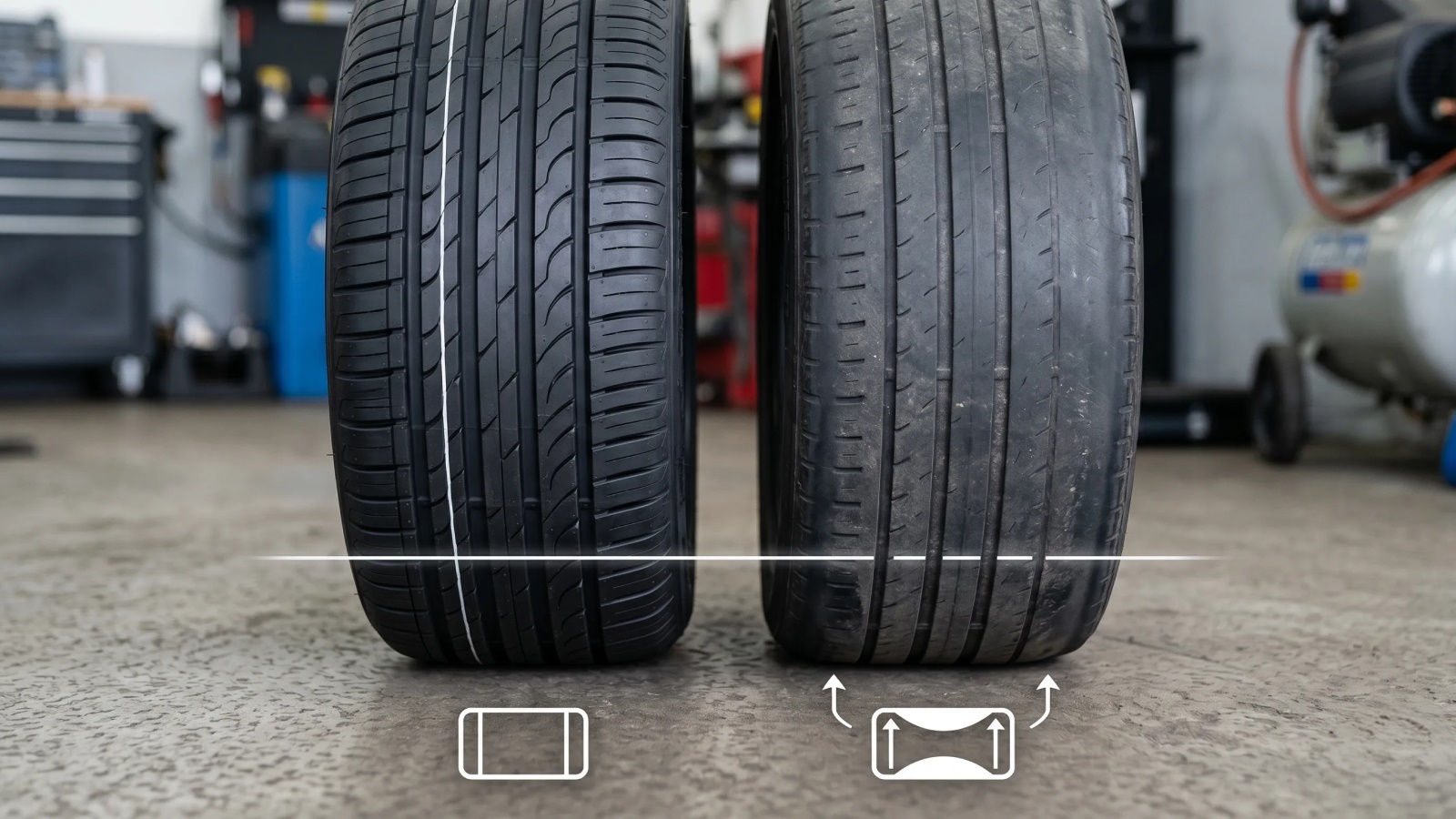
At first, it may not seem like a serious issue, but even a small pressure drop can quickly change how a vehicle performs on the road.
When pressure decreases, the tire can no longer maintain its proper shape. This leads to reduced stability, increased rolling resistance, and higher stress on both the tire and the vehicle, setting the stage for more serious safety and mechanical problems over time.
Key Facts:
- Underinflated tires can increase fuel consumption by about 1% to 3% due to higher rolling resistance and energy loss.
- Low tire pressure increases heat buildup inside the tire, which can weaken internal components and raise the risk of blowouts.
- Tire lifespan can decrease by approximately 20% to 30% when tires are consistently underinflated.
- Incorrect pressure reduces load stability and can negatively affect steering response, braking distance, and highway handling.
- Uneven wear patterns, especially shoulder wear, are a common long-term result of driving on underinflated tires.
What Happens When Tires Are Under-Inflated?
Under-inflated tires are tires that contain less air pressure than the manufacturer’s recommended level. This condition increases tire flex, heat buildup, and rolling resistance, which can negatively affect vehicle safety, fuel efficiency, and tire lifespan.
During daily operation, this issue develops gradually rather than all at once. As pressure drops, the tire sidewall begins to flex more than intended. That extra movement generates heat and places additional stress on internal components such as belts and plies. As heat continues to build, the tire’s structural integrity begins to decline mile after mile.
The main effects include:
👉 Reduced load-carrying capacity
👉 Slower steering response
👉 Longer sing distances
👉 Increased tire flex and heat buildup
👉 Poor stability at highway speeds
👉 Higher risk of sudden blowouts under heavy load
In commercial trucking, this becomes especially critical because failures often occur during peak stress conditions like long highway runs, high temperatures, or fully loaded operations.
Another overlooked effect is how the tire feels to the driver. Underinflated tires often create a “soft” or delayed steering response. The vehicle may require constant correction, which increases driver fatigue over long distances.
Underinflated Tires and Safety in Different Conditions
Road and weather conditions can turn a small pressure issue into a serious safety risk very quickly.
In snow, underinflated tires struggle to maintain proper tread stiffness. Instead of cutting through packed snow, the tire tends to float on the surface. That reduces grip and makes directional control less predictable.
On wet roads, the problem shifts to water evacuation. A properly inflated tire pushes water through its tread channels efficiently. When pressure is low, that process weakens, which increases the chance of hydroplaning even at moderate speeds.
These changes are not isolated. They show up in real driving situations as reduced confidence and delayed vehicle response.
Drivers may notice:
👉 Longer braking response and reduced stopping control
👉 Less precise steering, especially at highway speeds
👉 Increased risk of trailer swing or jackknife in combination vehicles
👉 Unstable handling during sudden lane changes or emergency maneuvers
There are also less obvious effects that many drivers overlook.
Lower pressure reduces tread block stiffness. This means the tire cannot maintain steady contact with uneven or icy surfaces, which leads to inconsistent traction.
Braking distance increases not only because of reduced grip, but also because the tire itself deforms more under load. Some of the energy that should be used to stop the truck is instead absorbed by tire flex.
Cornering stability also suffers. The sidewall flex creates a delay between steering input and actual tire response. In an emergency, even a small delay can matter.
Cold weather adds another layer of risk. Tire pressure naturally drops as temperatures fall. If tires are already underinflated, winter conditions make the situation worse before the vehicle even starts moving.
Slush and mixed road conditions become more difficult to handle as well. The tire struggles to clear snow, water, and debris from the tread, which reduces effective road contact.
Load behavior also changes. With low pressure, weight distribution across axles becomes less stable, especially during braking or downhill driving. This can affect overall balance and control.
Even safety systems are impacted. ABS and stability control rely on consistent tire behavior. Underinflation introduces irregular tire response, which can reduce how effectively those systems perform.
All of this leads to a simple conclusion. Underinflation is not just a maintenance issue. It directly changes how a vehicle reacts in the exact moments where control matters most.
Tire pressure is not one fixed number for every truck. It depends on load, axle position, and tire rating. However, the semi-truck tire PSI chart below gives a realistic baseline used across many commercial setups.
How Does Tire Pressure Affect Performance in Different Load Conditions?
Fuel Efficiency and Operating Costs
Fuel economy is directly tied to tire pressure. Under-inflated tires can increase your fuel consumption by at least 1 to 3 percent, and even more when pressure drops significantly below recommended levels.
The core issue is rolling resistance. A softer tire deforms more as it moves, which means more energy is lost with every rotation. The engine has to work harder to maintain speed, especially under load.
For fleets, this becomes a measurable and recurring expense that directly affects cost per mile.
Key operational impacts of underinflation on fuel and costs:
👉 Higher rolling resistance increases fuel burn on every mile, not just under heavy load.
👉 Fuel loss compounds with weight, so fully loaded trucks see a bigger efficiency drop.
👉 Stop-and-go routes amplify the effect due to repeated acceleration cycles.
👉 Engines operate outside optimal efficiency ranges more often due to added resistance.
👉 Tire deformation can slightly affect ride height, increasing aerodynamic drag over long hauls.
👉 Increased heat buildup accelerates tire wear, adding replacement costs to fuel losses.
👉 More torque is required during acceleration, leading to higher fuel spikes from a stop.
👉 Pressure imbalance across axles creates uneven drag and additional fuel waste.
👉 Seasonal temperature drops reduce PSI, causing hidden increases in fuel consumption.
👉 Telematics data from fleets consistently shows MPG improvement after correcting tire pressure.
There is also an indirect cost. Increased resistance places additional strain on drivetrain components, which can lead to more frequent maintenance over time.
All of this leads to a practical conclusion. Tire pressure is one of the easiest variables to control, yet it has a direct and measurable impact on fuel cost per mile.
Keeping tires properly inflated is not just routine maintenance. It is a core part of cost control in trucking.
Under-Inflated Tires Wear and Long-Term Damage
Under-inflated tires wear unevenly because the outer edges carry more of the load while the center loses proper contact with the road. This creates a shoulder wear pattern that accelerates tread loss and reduces usable tire life much faster than normal.
The issue goes deeper than surface wear. The long-term effect of under inflated tires is primarily driven by heat. When a tire runs below the correct pressure, internal flexing increases with every rotation. That repeated stress generates heat that weakens the bonds between internal components such as belts, plies, and rubber compounds.
Over time, this heat damage becomes cumulative and irreversible. Even if pressure is corrected later, the internal structure may already be compromised.
If you examine what is the long-term effects of under-inflated tires, it includes:
👉 Reduced overall tire lifespan, often by 20 to 30 percent in consistently underinflated conditions
👉 Loss of structural integrity due to the breakdown of internal bonding materials
👉 Increased risk of tread separation, especially at highway speeds under load
👉 Sidewall fatigue and micro-cracking caused by continuous over-flexing
👉 Higher operating temperatures that accelerate oxidation and rubber degradation
👉 Reduced ability to retread the tire due to casing damage, which is critical for fleet cost control
👉 Irregular wear patterns that cannot be corrected with rotation or alignment
👉 Increased likelihood of sudden failure after prolonged use, even without visible warning signs
👉 Higher cost per mile due to early replacement and reduced total mileage per tire
From a fleet perspective, casing preservation is one of the most important economic factors. Underinflation directly reduces the number of times a tire can be retreaded, which significantly increases long-term operating costs.
Another important detail is load distribution. When tires are underinflated, weight is not evenly shared across all tires on an axle. This causes some tires to carry more load than others, accelerating wear inconsistently across the set.
Keeping tires properly inflated is one of the simplest maintenance steps in trucking, yet it has one of the biggest impacts on safety, fuel economy, and tire life.


