



What Are the Cross-Border Freight Rules for the USA to Canada?

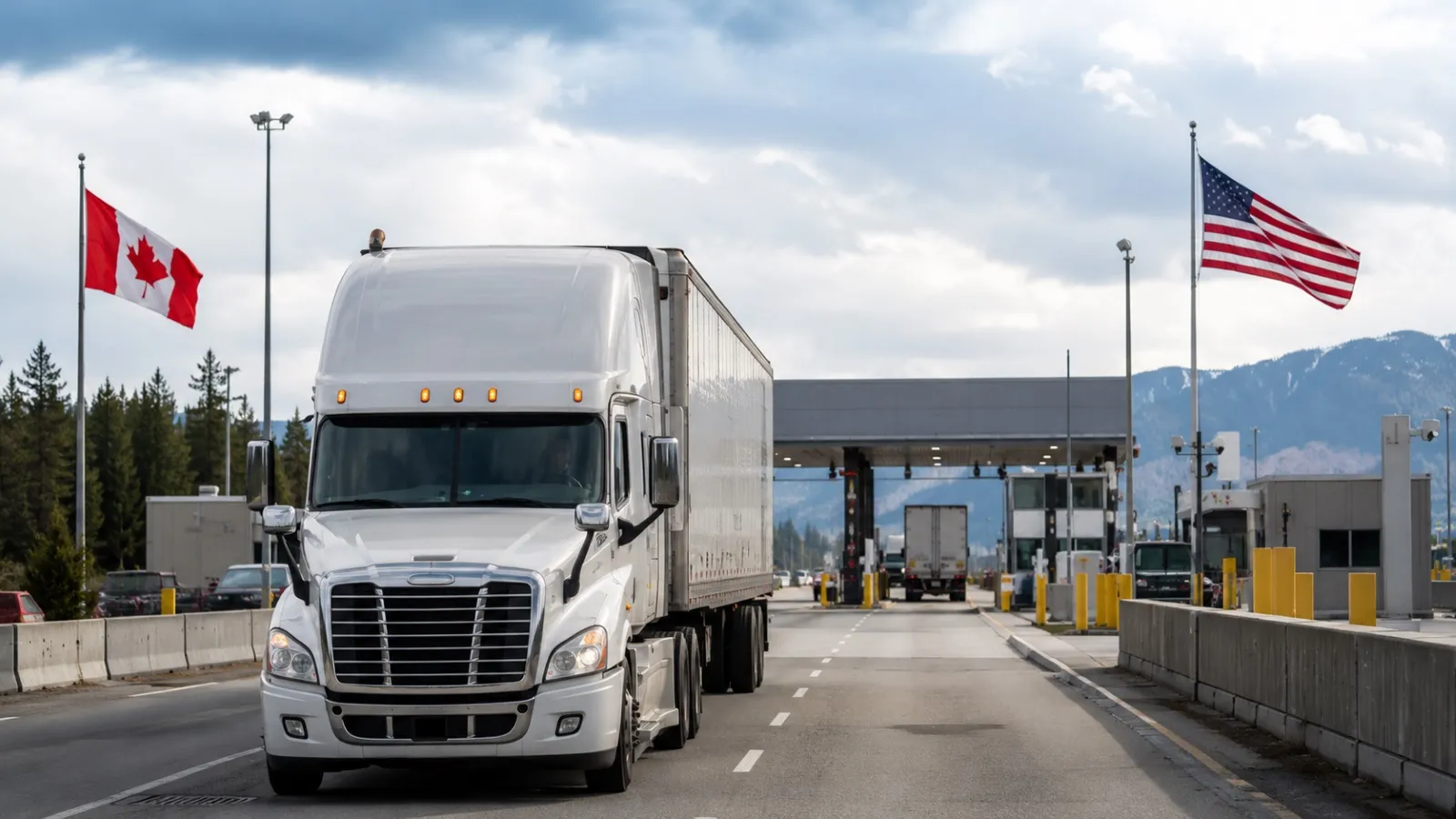
Cross-border trucking between the United States and Canada in 2026 is not just about moving freight from one country to another. It is about navigating two regulatory systems, two sets of road-transport expectations, and two very different government agencies that each control a different part of the journey.
On the U.S. side, carriers must follow FMCSA rules. On the Canadian side, CBSA* handles border and customs enforcement, while Transport Canada oversees road-transport standards for carriers, drivers, commercial vehicles, and electronic logging devices.
That means a shipment can be perfectly legal in one country and still run into trouble at the border if paperwork, timing, or compliance details do not line up.
The Canada Border Services Agency, or CBSA, is the Canadian government agency that handles border and customs services. It manages the flow of people and goods into Canada, enforces border and trade rules, and helps protect public safety while facilitating legitimate travel and trade.
Key Facts:
- In 2026, trucking between the United States and Canada means following FMCSA rules in the U.S. and CBSA plus Transport Canada requirements in Canada.
- ELDs automatically record driving time and track duty status, but they do not change the core Hours-of-Service rules.
- The biggest change in 2026 is a stronger reliance on digital compliance systems and accurate electronic records.
- CBSA handles the border and trade side of the process, including reporting requirements, importing goods, and trade compliance.
- Transport Canada sets road-transport rules for carriers, drivers, commercial vehicles, work and rest hours, and electronic logging devices.
- Cross-border compliance depends on clean ELD records, correct border declarations, and consistent shipment information from start to finish.
Why is Cross-Border Trucking Different in Both Countries?
Domestic trucking is already complicated, but cross-border freight adds another layer of responsibility. Instead of following one rulebook, trucking companies have to understand how U.S. and Canadian requirements overlap.
The truck may start its trip under one country’s road rules and then cross into another system where the border, customs, and enforcement process changes immediately. This is why cross-border operations depend so much on preparation. A carrier cannot assume that because a load is valid in the United States, it will automatically be accepted in Canada without review.
Canadian authorities may check the shipment description, origin, importer information, carrier records, and supporting documents before clearance. If anything is inconsistent, the shipment can be held for further inspection.
That makes cross-border freight a compliance exercise as much as a transportation one. The best operations treat it that way from the start.
Which Rules Apply on Each Side of the Border?
The important thing to understand is that ELDs do not replace the Hours-of-Service rules. They record duty status and driving time, but the rules themselves still come from the applicable regulator. In other words, the device helps enforce compliance, but it does not create compliance on its own.
That distinction matters because a driver can have a perfectly functioning ELD and still be out of compliance if the log, duty status changes, or cross-border timing are wrong. The technology helps, but the responsibility remains with the carrier and driver.
What Does CBSA Control at the Border?
CBSA plays the border and trade side of the process. The agency supports legitimate trade while enforcing customs and trade rules, and it uses trade compliance verification to check whether commercial goods meet Canadian requirements.
In cross-border trucking, CBSA is the primary authority responsible for ensuring shipments are properly declared and supported by the correct documents.
That usually includes:
- Accurate shipment descriptions.
- Correct customs declarations.
- Matching supporting records.
- Proper importer and carrier information.
- Any other documents needed to clear the load without delays
For carriers and drivers, CBSA matters because even a shipment that is fine on the U.S. side can still face delays if the Canadian paperwork is incomplete, inconsistent, or flagged for review.
Why Does Paperwork Consistency Matter?
Cross-border freight lives or dies by consistency. The commercial invoice, bill of lading, customs filing, and carrier records should all match. If one document says something different from the others, even by a small amount, that inconsistency can lead to questions at the border.
This is especially important in 2026 because border systems are increasingly focused on verification. A shipment that is misdescribed, under-documented, or filed too late may not simply be delayed. It may be sent for secondary review. Once that happens, the clock stops running the way the carrier wants it to.
The practical lesson is that border paperwork should never be treated as a back-office afterthought. It should be built into dispatch, compliance, and load planning from the beginning. The people preparing the shipment should all be using the same exact details before the truck even leaves the yard.
What Should Carriers Focus on in Cross-Border Trucking?
Carriers should focus on three things: clean ELD records, the right Hours-of-Service rules for Canada and the U.S., and consistent border paperwork. In practice, that means making sure dispatch, drivers, and compliance staff are all using the same shipment details before the truck ever reaches the border.
They should also pay close attention to timing. If the log, the customs filing, and the shipment record do not match, the load can get delayed even if the freight itself is legitimate. Small errors like a wrong description, a missing reference number, or an unclear duty-status change can create problems quickly.
Another important point is to treat the U.S. and Canadian systems as separate, even though they work together. A trip that is compliant in the U.S. still needs to be checked again against Canadian border and transportation requirements once it crosses.
This is where the cross-border compliance process comes together, and it is exactly the kind of issue explored in the video.
What Is the Role of ELDs and Hours-of-Service Rules?
One of the most misunderstood parts of cross-border trucking is the role of ELDs. Many people think an ELD determines whether a driver is compliant, but that is not quite right. The device records duty status and driving time, but the actual Hours-of-Service limits still come from the governing rules on each side of the border.
That means the ELD is a compliance tool, not a permission slip. If a driver exceeds allowed driving time, skips a duty-status change, or records time incorrectly, the ELD does not solve the problem. It only documents it.
This matters even more in cross-border freight because the trip may involve different regulators, different enforcement expectations, and different timing pressures. Drivers need to know where the trip is being regulated, when the rules set change, and how their logs should reflect the actual movement of the load.
A clean log can support the trip, but only if the driver and carrier are using it correctly.
What Are the Common Delay Points?
Most cross-border freight delays are not caused by dramatic violations. They are caused by small mistakes that pile up. A shipment may be delayed because the description is too general, a supporting document is missing, the importer information is incomplete, or the records do not match.
The most common trouble spots include:
- Shipment descriptions that are too vague.
- Customs data that does not match the invoice.
- Missing or incomplete importer details.
- Carrier information that does not line up across documents.
- Timing issues between log records and shipment movement.
These problems are frustrating because they are often preventable. Freight companies usually know the load is legitimate. The issue is that border and transport systems need proof, not assumptions.
Why Does Cross-Border Trucking Matter in 2026?
In 2026, cross-border trucking is still a high-value part of North American trade, but the margin for error is small. Freight moves quickly when the records are clean, the logs are accurate, and the border filings make sense. It slows down when any one of those pieces falls out of alignment.
That is why the most successful carriers think of compliance as part of operations, not as a separate department. The trip starts with dispatch, continues through the log, and ends only after the freight clears the border correctly. When every step is coordinated, the whole move becomes easier.
For shippers, carriers, and drivers, the message is simple: accuracy is speed. The more consistent the paperwork and records are, the fewer surprises there are at the border.
Keeping records accurate from start to finish is what helps freight move smoothly.


