



How Should CDL Drivers Drive on Black Ice? Safety Tips for Semi-Trucks

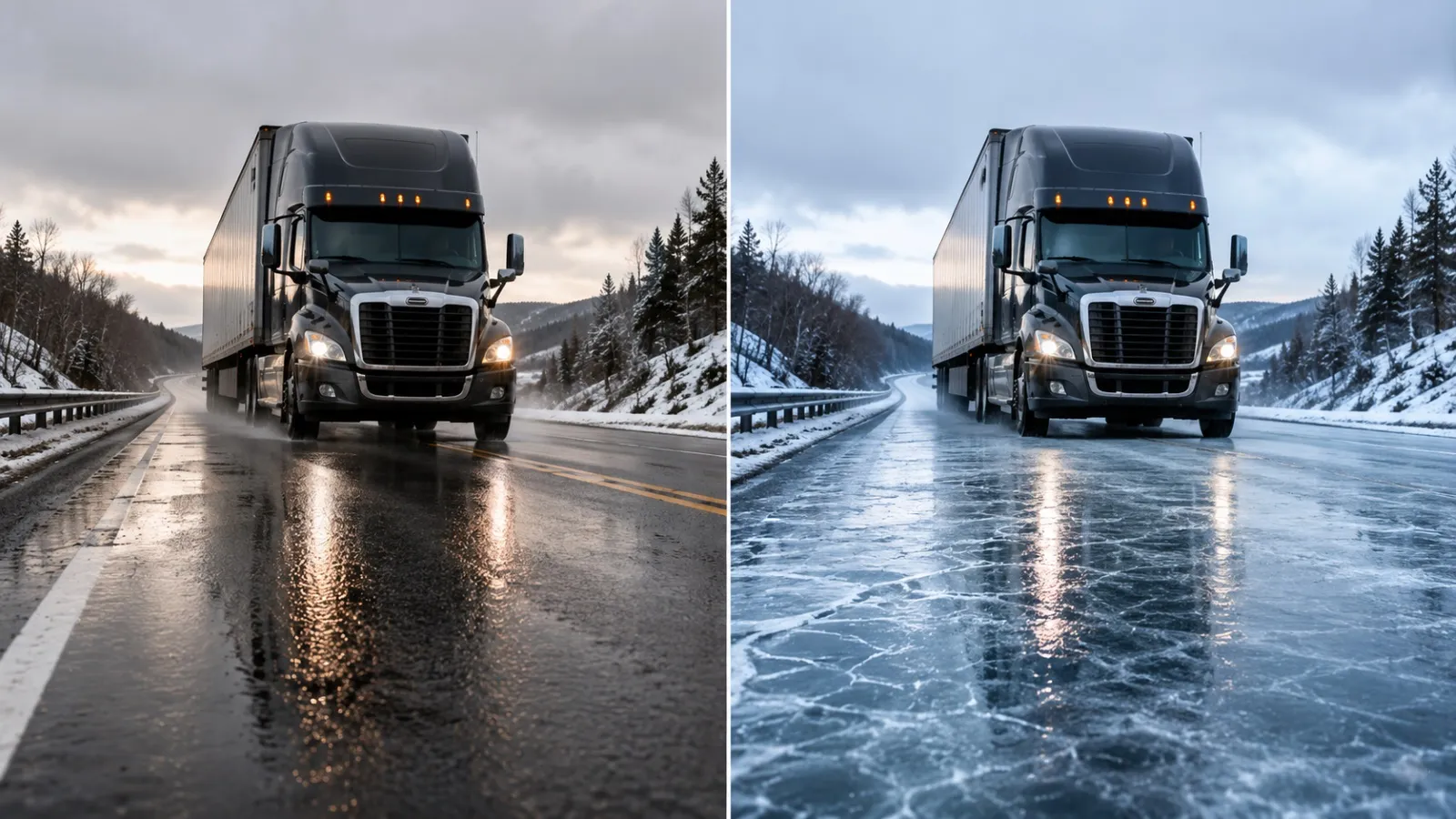
Black ice is a thin, nearly invisible layer of ice that forms when moisture freezes on a road surface.
Because black ice can form without obvious signs on the road, drivers may not notice it until they are already on a slippery surface. This makes understanding its risks an important part of staying safe during winter driving.
Key Facts:
- 24% of weather-related crashes occur on snowy, slushy, or icy pavement, making winter traction loss a major safety concern.
- 32°F to 36°F (0°C to 2°C) is the temperature range where black ice commonly forms because moisture can freeze quickly on road surfaces.
- 80,000 lbs (40 tons) is the maximum federal weight limit for a fully loaded tractor-trailer, increasing momentum and making recovery more difficult on ice.
- 300+ feet is the approximate dry-road stopping distance for a truck traveling at 55 mph. Ice can increase stopping distance several times.
- 6 steps can help CDL drivers recover from a slide: stay calm, release the accelerator, avoid hard braking, look where you want to go, make small steering corrections, and allow the truck to stabilize.
Why Is Black Ice Dangerous?
Black ice creates a hidden traction problem. The road may appear normal, but tire grip can decrease dramatically.
According to the Federal Highway Administration (FHWA), approximately 24% of weather-related crashes occur on snowy, slushy, or icy pavement, and winter driving conditions contribute to thousands of crashes each year. For commercial drivers, the risk increases because trucks require more distance and time to stop.
How Does Black Ice Form?
Black ice forms when a thin layer of moisture freezes on the surface of a road, creating a clear layer of ice that blends in with the pavement underneath. It usually develops when temperatures are close to freezing, and the road surface becomes colder than the surrounding air. This allows water from rain, melting snow, fog, or condensation to freeze directly onto the pavement.
Black ice is most common when temperatures are around 32°F to 36°F (0°C to 2°C) because conditions can change quickly during this range. Roads may appear only wet, but the surface can already be covered with a thin layer of ice that significantly reduces tire traction.
Truck drivers should be especially cautious in areas where pavement freezes faster or where ice is difficult to see.
How Should Truck Drivers Drive on Black Ice?
The safest way to drive on black ice is to avoid losing control before it happens. Once a heavy commercial vehicle begins sliding, the driver has very limited time and space to recover. The best strategy is to reduce risk before entering areas where ice may be present.
Truck drivers should reduce speed when approaching potentially icy sections of road and leave additional space between vehicles. A tractor-trailer requires much more distance to stop on slippery pavement, and following too closely can leave no room to react if traffic slows suddenly.
Smooth vehicle control is critical in icy conditions. Sudden braking, sharp steering movements, or rapid acceleration can cause tires to lose traction and may lead to a skid, trailer swing, or jackknife situation. Drivers should also avoid using cruise control on slippery roads because automatic acceleration can cause the drive wheels to spin when traction changes unexpectedly.
A truck traveling too fast for conditions may have almost no opportunity to recover once the tires lose contact with the road. Lower speeds, gentle steering, and controlled braking give drivers the best chance of maintaining stability on black ice.
Stopping distance depends on speed, vehicle weight, tires, and road conditions. Ice can dramatically increase the distance required to stop.
Stopping Distance Comparison
What Should You Do If Your Truck Starts Sliding on Ice?
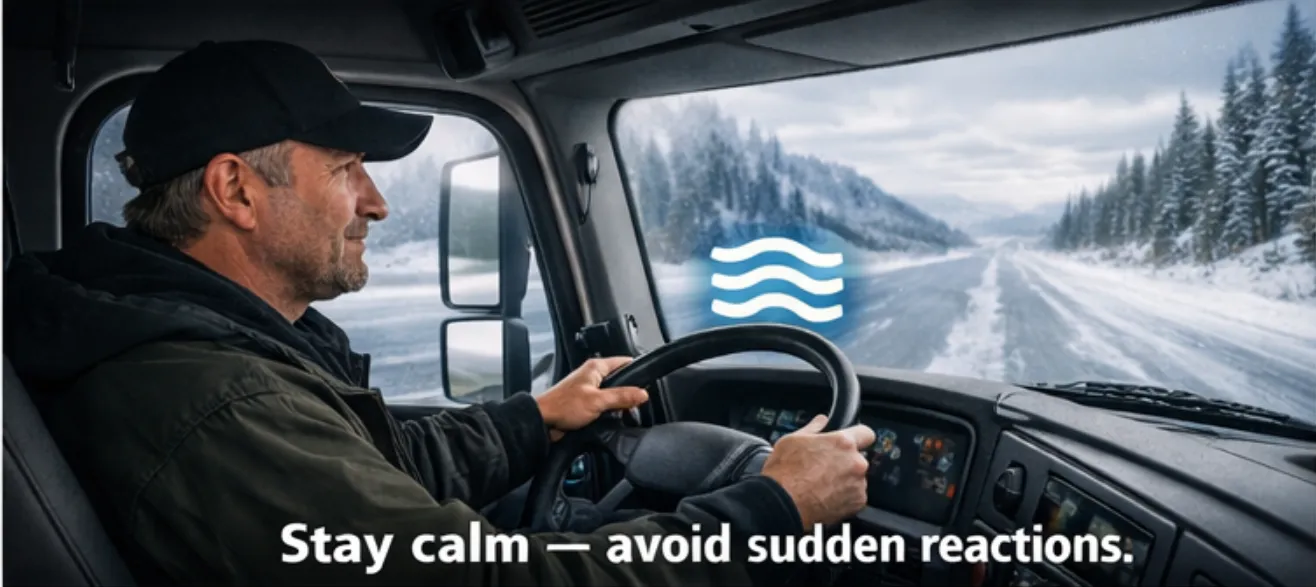
If your truck begins sliding on ice, the most important thing is to stay calm and avoid sudden reactions. A tractor-trailer has significant weight and momentum, so aggressive steering or braking can quickly make the situation worse.
Follow these steps to help regain control:
1. Stay calm and avoid overreacting.
Panic reactions often lead to sudden steering or braking, which can increase the slide. Focus on keeping the vehicle stable and making controlled movements.
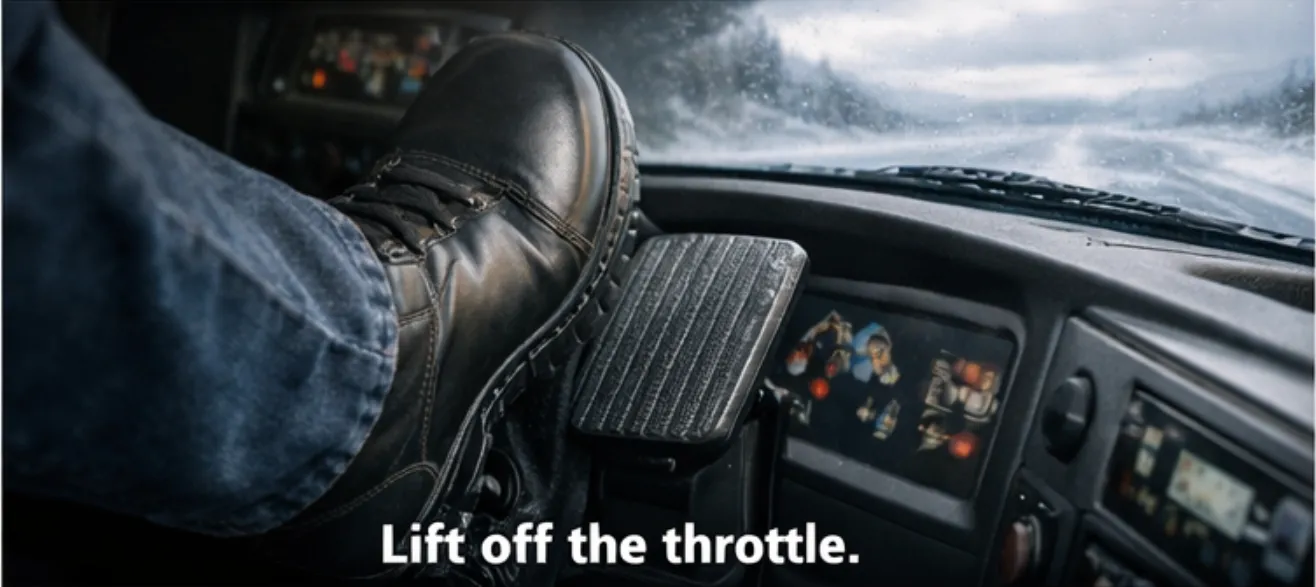
2. Release the accelerator.
Letting off the throttle allows the tires to slow down naturally and may help them regain traction. Sudden acceleration can cause the drive tires to spin and worsen the loss of control.
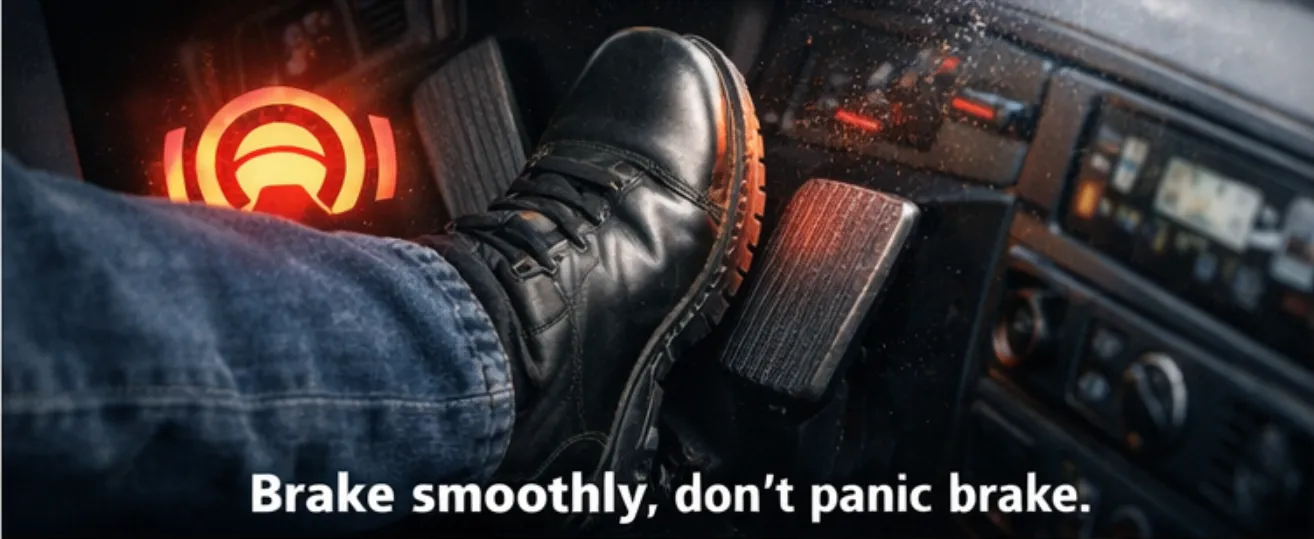
3. Avoid hard braking.
Slamming on the brakes can reduce steering control and may cause the truck or trailer to slide further. If braking is necessary, apply it smoothly and gradually.
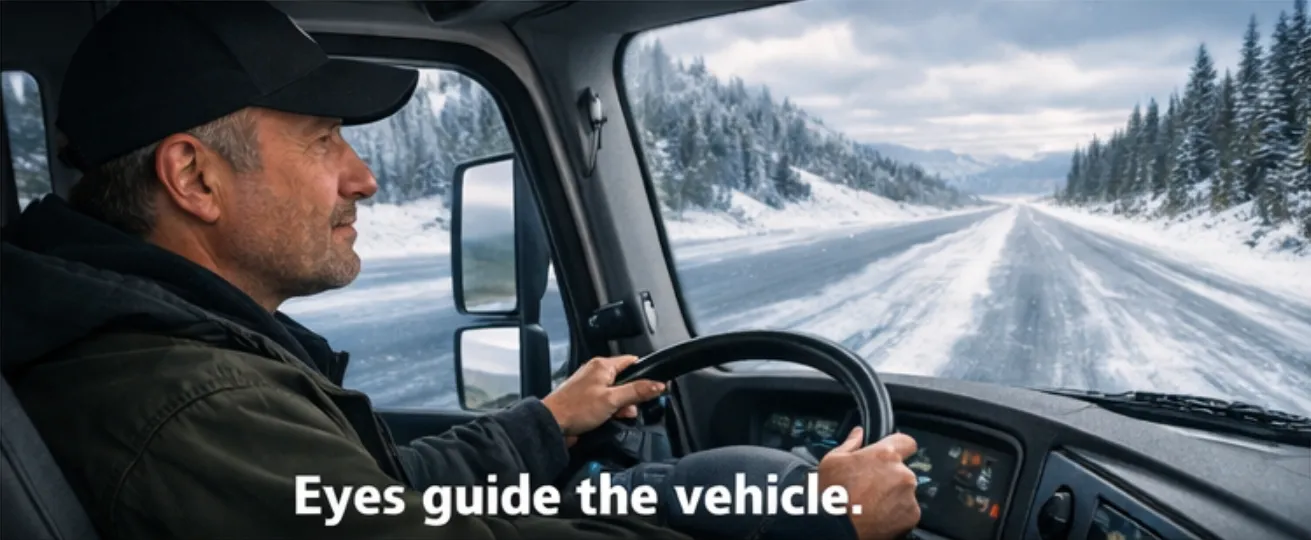
4. Look where you want the vehicle to go.
Drivers naturally steer toward where they are looking. Focusing on the safe path instead of the obstacle can help create smoother steering responses.
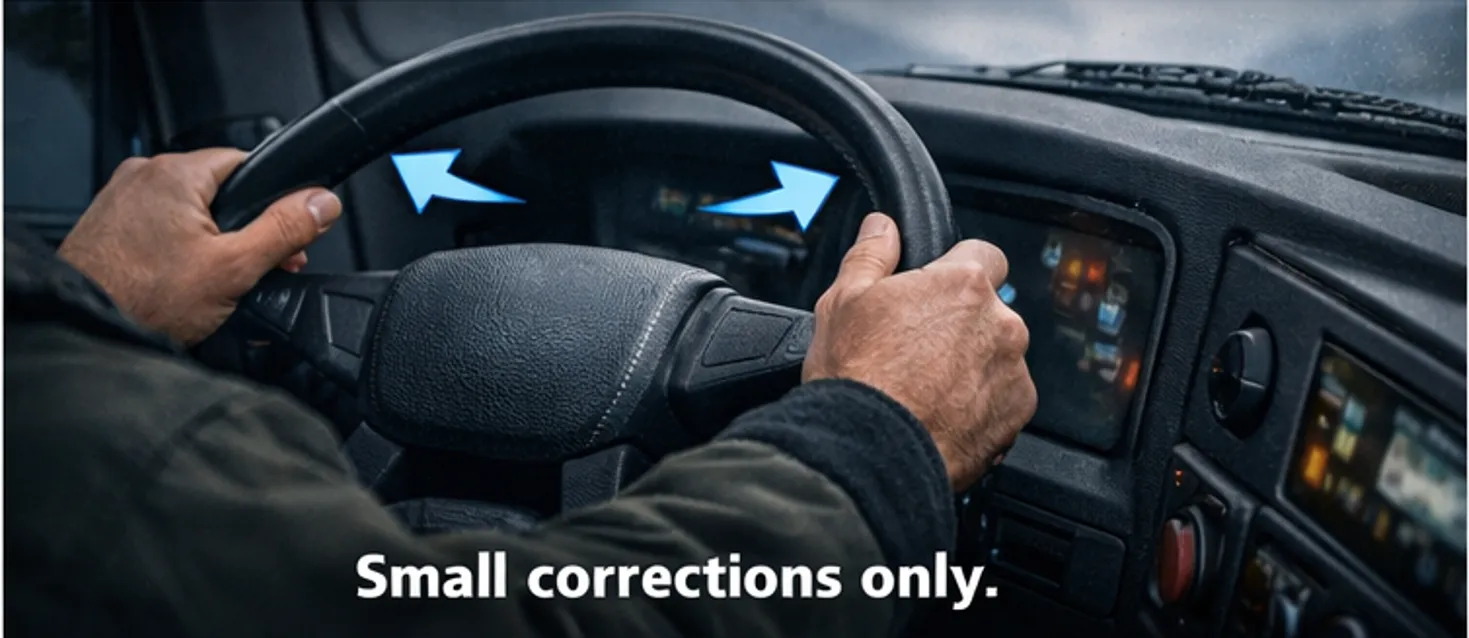
5. Make small steering corrections.
Gentle adjustments are safer than large movements. Overcorrecting can cause the tractor to swing in the opposite direction or create trailer instability.
6. Allow the truck and trailer to stabilize.
A semi-truck does not respond like a passenger vehicle during a skid. The trailer’s weight and momentum can continue pushing the vehicle even after the driver begins correcting the slide.
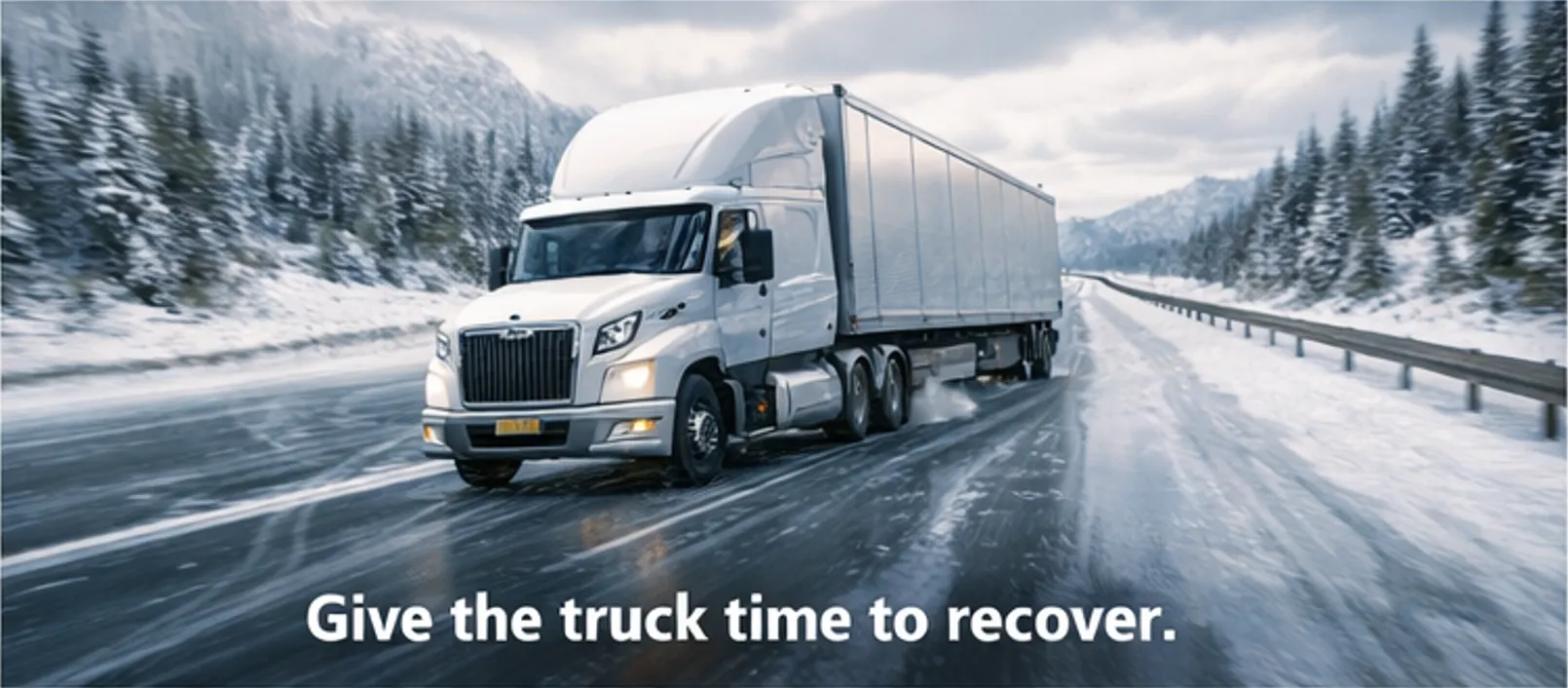
Large steering corrections are one of the biggest risks during an icy skid. With a tractor-trailer, a sudden reaction can lead to trailer swing, jackknifing, or a complete loss of control.
The best response to black ice is prevention: reduce speed, increase following distance, and make every steering, braking, and acceleration input as smooth as possible.
Why Are Semi Trucks More Dangerous on Black Ice?
Semi trucks are more difficult to control on black ice because their size, weight, and design create additional challenges when traction is lost. A passenger vehicle may recover from a short slide relatively quickly, but a tractor-trailer carries much more momentum and requires significantly more time and space to regain stability.
A fully loaded tractor-trailer can weigh up to 80,000 pounds (40 tons) under federal weight limits. When that amount of weight begins moving on a slippery surface, even small changes in steering, braking, or acceleration can have a much larger effect on vehicle control.
Black ice is especially dangerous for commercial trucks because the driver may lose traction before realizing the road surface is frozen. Once the tires begin sliding, the trailer can continue moving independently of the tractor, creating additional risks such as trailer swing, lane departure, or jackknifing.
Why Trucks Lose Control Faster on Black Ice
The risk becomes even greater when trucks are traveling downhill, entering curves, carrying heavy loads, or driving on roads that have not been treated. In these situations, the combination of speed, weight, and reduced traction can leave very little room for recovery.
For professional drivers, the safest approach is to manage the risk before a slide happens. Reducing speed, increasing following distance, and avoiding sudden vehicle movements are the most effective ways to maintain control when black ice is present.
Is Sliding on Ice an At-Fault Accident?
Yes, a vehicle sliding on ice can still result in an at-fault accident. While black ice and winter weather conditions can contribute to a crash, drivers are still responsible for adjusting their driving behavior to match the conditions.
The presence of ice does not automatically remove responsibility. After a winter weather accident, investigators, insurance companies, and safety departments may look at whether the driver took reasonable precautions before losing control.
For commercial truck drivers, important factors may include:
- Speed for road conditions: Drivers are expected to reduce speed when roads are slippery or visibility is reduced. A speed that is safe on dry pavement may be unsafe on icy roads.
- Following distance: Trucks require much more stopping distance, especially on frozen pavement. Driving too closely can make it impossible to avoid a collision once traction is lost.
- Vehicle maintenance: Proper tires, brakes, and equipment condition play an important role in maintaining control during winter conditions.
- Weather awareness: Professional drivers are expected to monitor changing conditions and adjust their plans when hazardous weather develops.
- Driving decisions before the slide: Sudden braking, aggressive steering, excessive speed, or failing to adjust to road conditions may contribute to determining whether the accident was preventable.
For CDL drivers and trucking companies, a black ice accident may also raise questions about whether proper winter driving procedures were followed. A driver who encounters unexpected ice while operating carefully may be viewed differently from a driver who continued at an unsafe speed despite hazardous conditions.
The safest way to avoid an at-fault winter accident is to recognize the risk early and make adjustments before traction is lost.
What Should CDL Drivers Do Before Driving in Black Ice Conditions?
CDL drivers should prepare before entering winter conditions because commercial vehicles have limited recovery options once traction is lost. Before starting a winter route, CDL drivers should:
- Complete a pre-trip inspection: Check tires, brakes, lights, windshield equipment, and other safety systems before departure.
- Review the route and weather conditions: Identify areas where freezing temperatures, storms, road restrictions, or untreated roads may affect travel.
- Plan for delays: Winter weather can cause unexpected closures and slower travel times. Professional drivers should allow additional time instead of rushing to maintain schedules.
- Verify winter equipment requirements: Some states require commercial vehicles to carry or use tire chains or other traction devices during certain conditions.
- Know when conditions are unsafe: Experienced drivers must recognize when stopping, delaying, or changing plans is the safest decision.
A safe winter trip begins before the truck leaves the parking area. For CDL drivers, preparation and judgment are essential parts of preventing black ice accidents.
When roads become icy, slowing down, staying alert, and knowing when conditions are unsafe can make the difference between reaching the destination safely and becoming part of a preventable crash.
Frequently Asked Questions
What is black ice and why is it dangerous?
Black ice is a thin, nearly invisible layer of ice that forms when moisture freezes on a road surface. It is dangerous because it can greatly reduce tire traction while making the road appear normal.
Why is black ice called black ice?
Black ice gets its name because it is transparent and allows the dark pavement underneath to show through. This makes the road look wet rather than frozen.
How does black ice form?
Black ice forms when moisture from rain, melting snow, fog, or condensation freezes on a cold road surface. It commonly develops when temperatures are close to freezing.
What should truck drivers do if their truck starts sliding on black ice?
Drivers should stay calm, release the accelerator, avoid sudden braking, and make small steering corrections. Smooth actions help the truck and trailer regain stability.
Is sliding on ice considered an at-fault accident?
A slide caused by ice can still be considered an at-fault accident if the driver failed to adjust to road conditions. Drivers are expected to reduce speed, maintain control, and use caution in hazardous weather.


