



Brake Safety Week 2026: Are Your Truck Brakes Ready for CVSA Inspections?

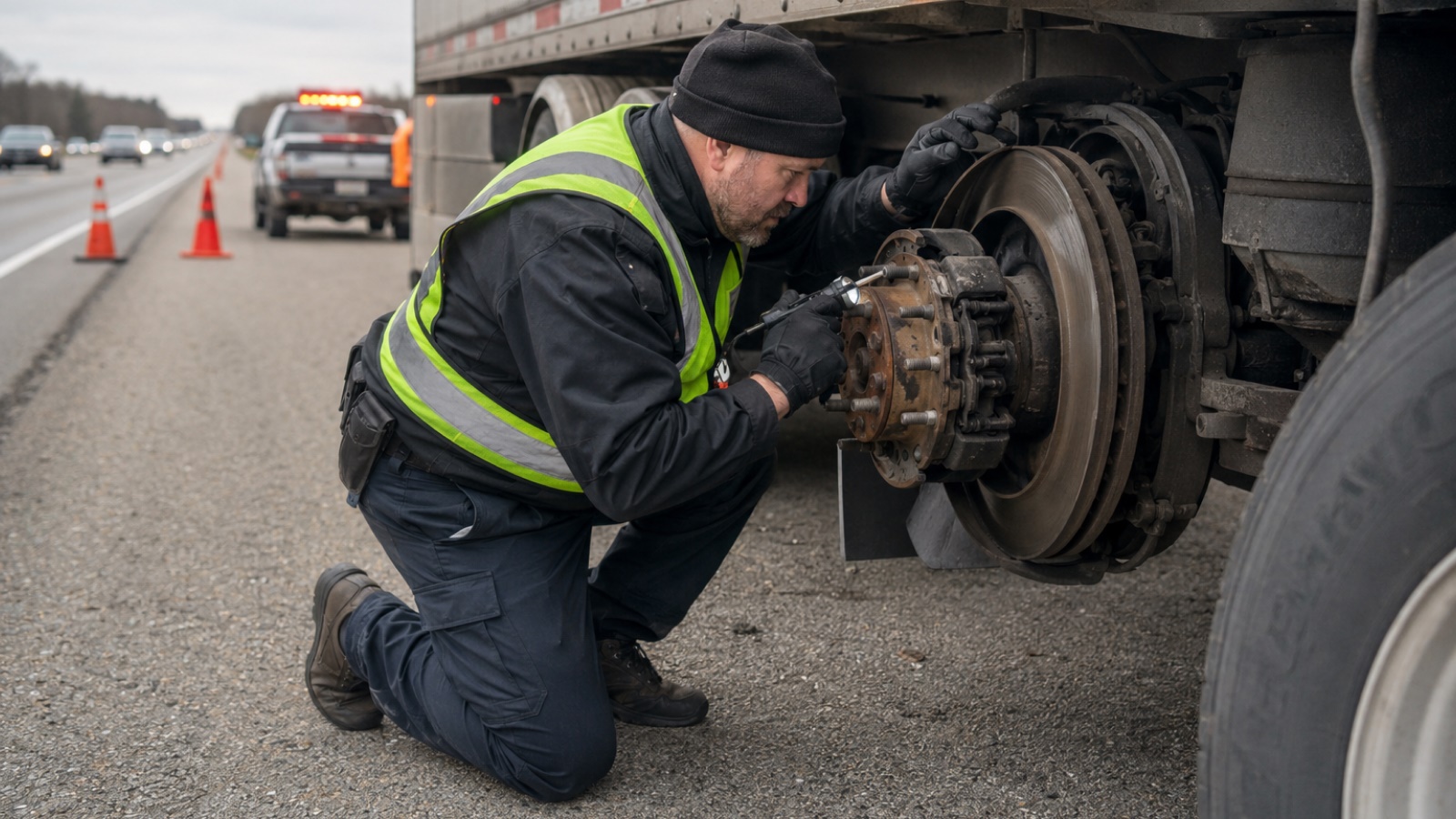
Brake Safety Week returns August 23 to August 29, 2026, with inspectors across North America focusing on commercial vehicle brake systems. This year, the main focus is on brake drums and rotors, two components that often reveal wear issues before a driver feels anything wrong behind the wheel.
Vehicles with serious brake defects will be placed out-of-service immediately until repairs are completed.
Quick Summary:
- Brake Safety Week 2026 runs August 23–29 across the U.S., Canada, and Mexico, focusing on commercial vehicle brake inspections.
- Inspectors will place special emphasis on brake drums and rotors, key components that directly affect stopping performance and safety.
- During Brake Safety Week 2024, 16,725 vehicles were inspected, and 2,149 were placed out of service, a 12.8% failure rate.
- Across recent years, the brake-related out-of-service rate has stayed consistent at about 12–13%, meaning roughly 1 in 8 trucks fails inspection.
- Common violations include cracked drums, worn rotors, rust buildup, and metal-to-metal brake contact, often caused by gradual wear over time.
- CVSA inspections aim to combine enforcement and education, reducing crash risks while encouraging regular brake maintenance and early defect detection.
What Is Brake Safety Week 2026?
Brake Safety Week is an annual CVSA enforcement and education campaign built around roadside inspections of commercial vehicles.
Brakes remain one of the most frequently cited vehicle violations during roadside inspections. When braking components fail, the consequences can be severe. A truck driving at highway speeds requires a significant stopping distance under normal conditions. Any reduction in braking efficiency can increase the risk of collisions, injuries, property damage, and fatalities.
The purpose of Brake Safety Week is twofold.
First, inspectors identify unsafe vehicles and remove them from service until repairs are made. Second, the initiative educates drivers, mechanics, owner-operators, and fleet managers about the importance of regular brake inspections and preventive maintenance.
What Will Inspectors Check During Brake Safety Week 2026?
Every inspection covers the full brake system, but this year, inspectors are really watching drums and rotors.
According to CVSA, defects in drums and rotors can significantly affect braking performance. Cracked drums, broken rotor surfaces, excessive wear, and severe corrosion can reduce stopping power and increase the likelihood of brake failure.
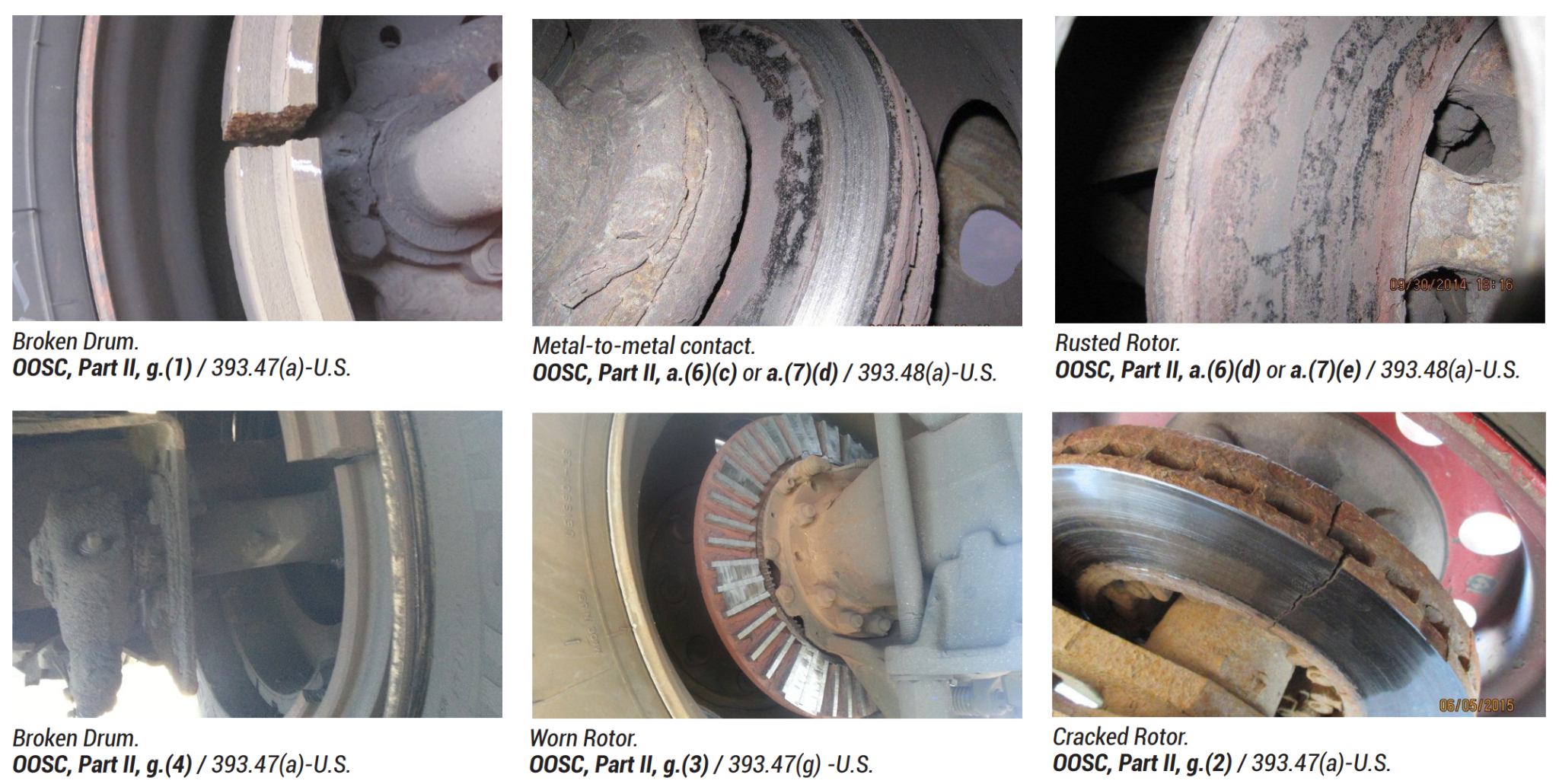
During inspections, officers may also look for:
- Cracked or broken brake drums
- Missing sections of brake drums
- Damaged brake rotors
- Excessive rotor wear
- Heavy rust across rotor friction surfaces
- Evidence of metal-to-metal brake contact
- Exposed rotor cooling vents
- Other conditions that reduce braking effectiveness
Inspectors also encourage drivers to monitor visible brake components during daily inspections. Small issues that go unnoticed during pre-trip inspections can quickly develop into costly repairs or out-of-service violations.
How Can Drivers and Fleets Prepare for a CVSA Brake Inspection?
Preparation begins long before an inspector conducts a roadside inspection.
Drivers should make brake inspections part of every pre-trip and post-trip routine. Visible portions of drums and rotors should be examined for cracks, missing pieces, abnormal wear patterns, and signs of excessive corrosion. Any unusual condition should be documented and reported immediately.
Particular attention should be given to brake rotors. Heavily rusted rotors across the entire friction surface may indicate that a brake is not functioning properly. Deep grooves on the rotor surface can signal worn brake pads and metal-to-metal contact between braking components. Left unaddressed, these issues can quickly escalate into serious safety concerns.
Maintenance teams should ensure all brake repairs comply with manufacturer specifications. Improper repairs, incorrect replacement parts, or shortcuts during maintenance can create compliance issues and increase the risk of inspection failures.
Fleet managers can further reduce risks by reviewing maintenance records, scheduling preventive inspections, and ensuring that all driver-reported defects are corrected promptly. Driver Vehicle Inspection Reports (DVIRs)* should be carefully reviewed and addressed before vehicles return to service.
Driver Vehicle Inspection Reports (DVIRs) are formal checklists that commercial drivers complete to document the condition of their vehicle, usually at the start and/or end of a shift.
A proactive maintenance program is often the most effective way to avoid roadside violations, expensive repairs, and unplanned downtime during Brake Safety Week.
How Many Trucks Fail Brake Safety Week Inspections?
CVSA inspection data demonstrates that brake violations remain a significant challenge throughout the trucking industry.
During Brake Safety Week 2024, inspectors conducted 16,725 commercial vehicle inspections across North America. Of those vehicles, 2,149 were placed out-of-service for brake-related violations, resulting in an out-of-service rate of approximately 12.8%.
Recent results show a similar pattern.
What Are the Brake Safety Week Failure Rates by Year?
These numbers reveal a consistent trend: roughly one out of every eight commercial vehicles inspected during Brake Safety Week is removed from service because of brake-related defects.
More recent enforcement efforts have highlighted the importance of drum and rotor maintenance. The data clearly shows that brake maintenance remains one of the most important responsibilities for drivers and fleets seeking to avoid enforcement actions.
Why Are Brake Violations Still a Major Concern for the Trucking Industry?
Brake-related violations impact far more than roadside inspections.
When a truck is placed out-of-service, drivers may lose valuable driving time, deliveries can be delayed, and fleets may face unexpected repair expenses. Repeated violations can also negatively affect a carrier's safety profile and contribute to increased regulatory scrutiny.
Beyond financial consequences, brake defects present serious safety risks. Commercial vehicles often operate at maximum legal weights and travel thousands of miles each week. Proper brake performance is essential for maintaining control during emergencies, navigating steep grades, and operating safely in adverse weather conditions.
This is why CVSA continues to prioritize brake safety through annual enforcement campaigns and educational initiatives. While modern braking systems are highly effective, they depend on routine inspections, preventive maintenance, and prompt repairs to perform as intended.
For drivers and carriers alike, investing in brake maintenance is often far less expensive than dealing with the consequences of a violation, crash, or roadside breakdown.


